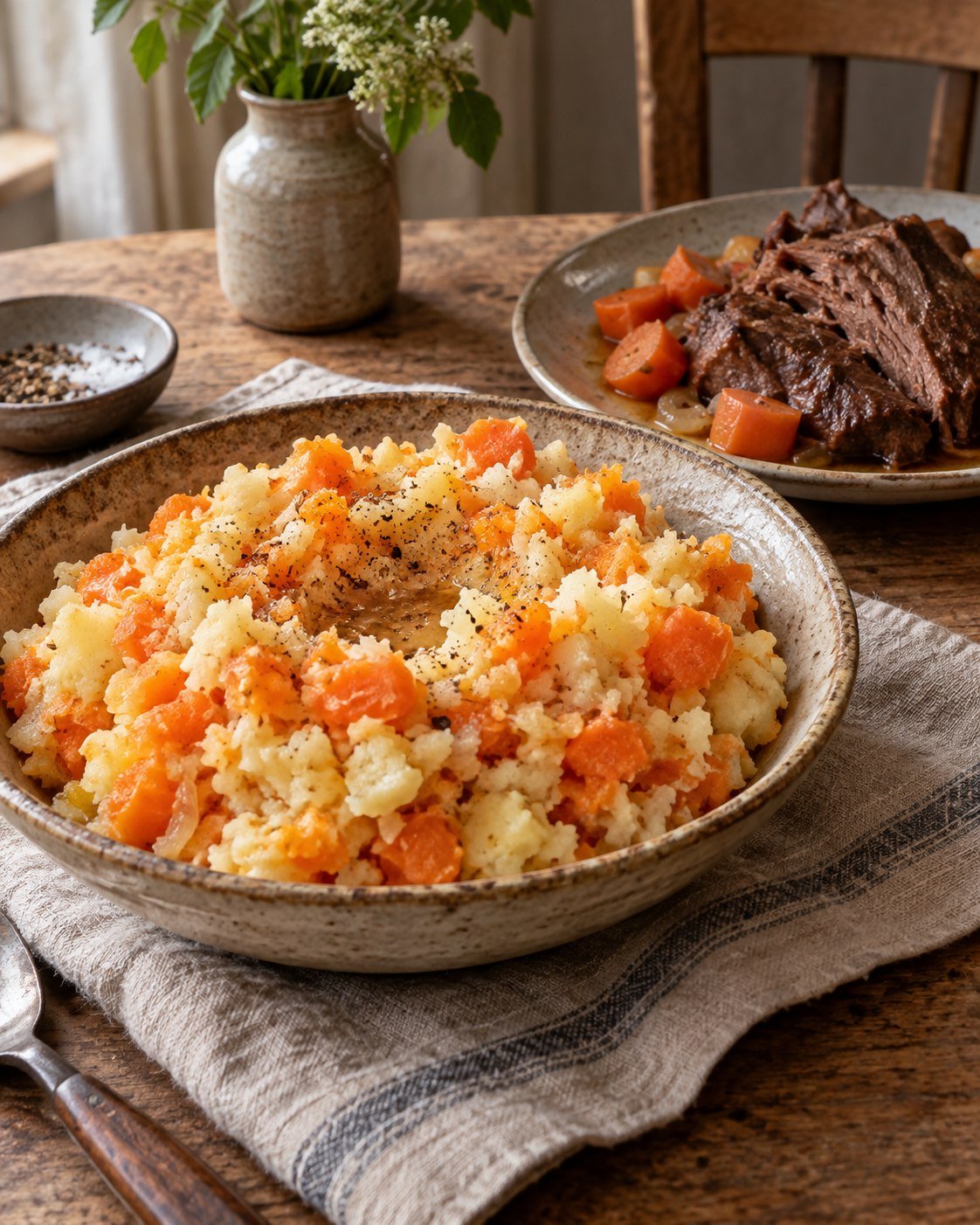
Leiden hutspot: the mash that acquired potatoes later
On 3 October, Leiden eats hutspot. The legend places an orphan boy beside a Spanish cooking pot. There would not have been any potatoes in it in 1574.
Leiden's Relief commemorates 3 October 1574. An abandoned pot is said to have been found near the Lammenschans. Geschiedenis van Leiden recounts that story and adds a correction: the pot of the time was more likely a soup of carrots, onions and spices. Potatoes were not yet part of the meal. Klapstuk, a cut of beef, could be added if meat was available. Herring and white bread belong to the same feast day; hutspot is the wintry remembrance that later became a mashed dish.
The proportions in today's pot are carrots, potatoes and onions. You can cook klapstuk alongside it and use some of the cooking liquid when mashing. The recipe below uses water; if you use a stock cube, the flavour changes and you also need to check the allergens on the label.
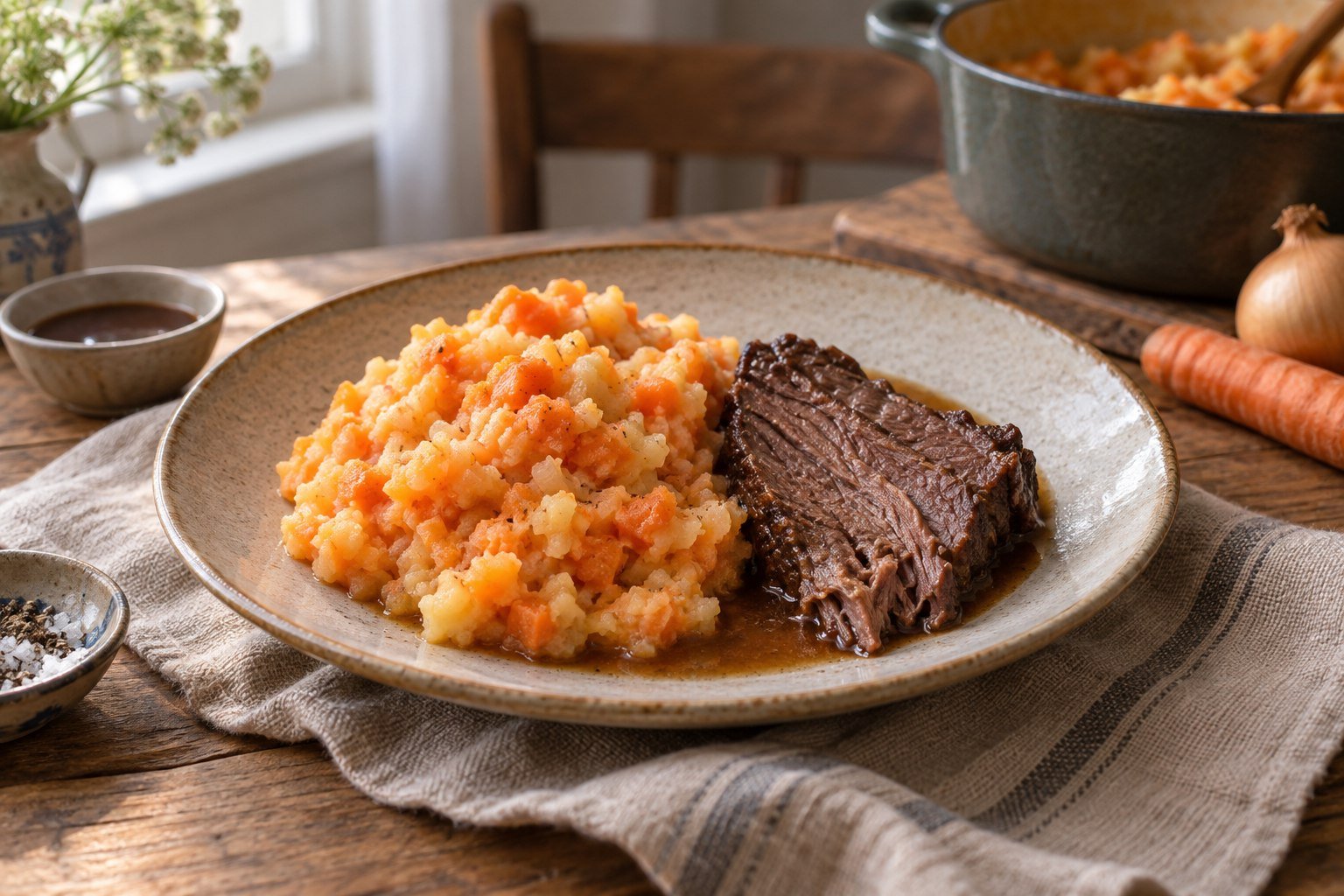
At home, an ordinary potato masher is enough. Mash it as coarsely or finely as you like and add the cooking liquid little by little. The sweet carrots, milder onions and potatoes come together in a meal that needs little embellishment.
You do not have to wait until 3 October. The story belongs to Leiden; a pot of hutspot is just as fitting on an ordinary cold evening.
Get cooking
4
- 500 g klapstuk (to be served separately)
- 300 ml water
- 2 tsp salt
- 700 g waxy potatoes
- 600 g winter carrots
- 400 g onions
- Simmer the klapstuk gently in the water with salt for about 2 hours. Remove the meat and reserve the cooking liquid.
- Cook the potatoes, carrots and onions until tender in some of the cooking liquid.
- Mash coarsely. Make a well and pour in some cooking liquid. Serve the meat alongside.
Recipe not kitchen-tested. Allergens: . Check the labels of all products used.
A true Leiden dish is orange from carrots, not yellow from potatoes alone.