Why the Eastern Scheldt storm surge barrier is usually open
A barrier that is almost always open may sound like a job half done. In Zeeland, that is the essence of the design.
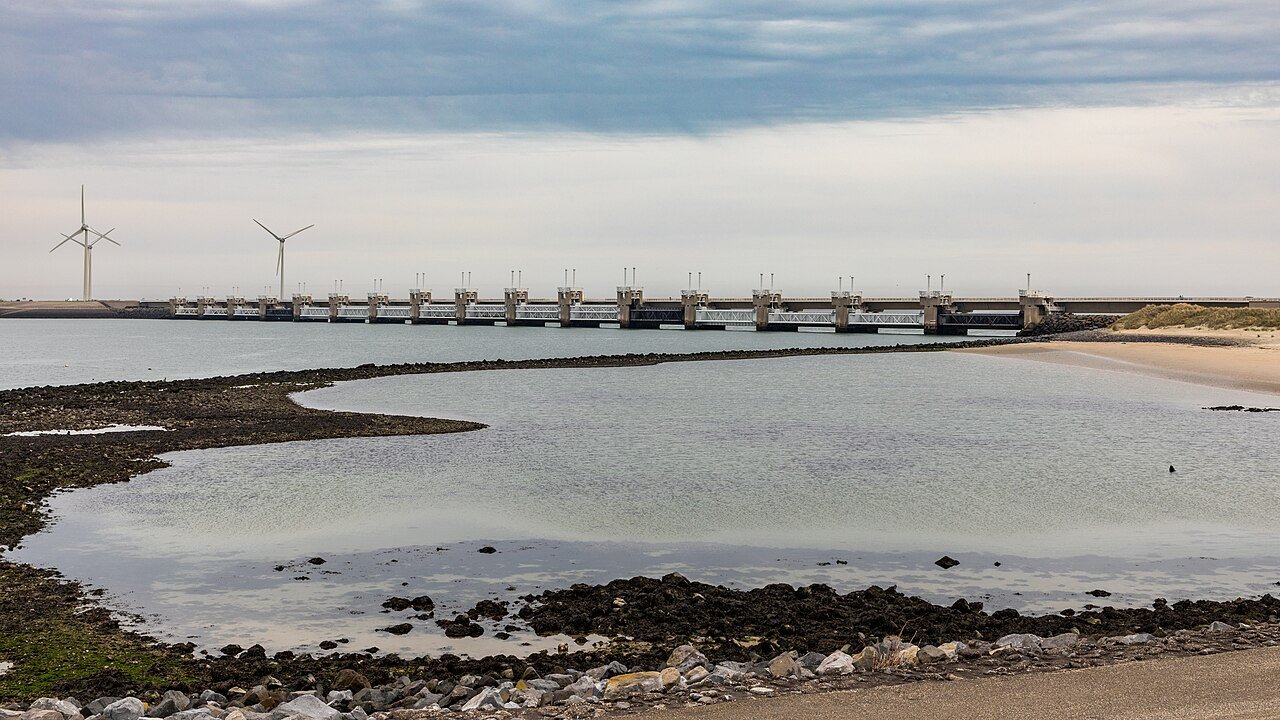
Drive along the N57 between Schouwen-Duiveland and Noord-Beveland and you cross a dam that was never meant to be a solid wall. Steel gates hang between concrete piers. Under normal weather conditions, those gates are raised. The tides continue to flow in and out of the Eastern Scheldt. The water remains salty. Only when extremely high water threatens are the gates lowered.
Rijkswaterstaat closes the barrier when a water level of three metres above NAP is expected. It is operated from the Ir. J.W. Topshuis on Neeltje Jans. Lowering the 62 gates takes about 75 minutes, so that currents and waves do not become too violent. If the barrier fails to close, an automatic emergency closure system takes over. On average, the barrier closes about once a year because of high water. Test closures are separate from this.
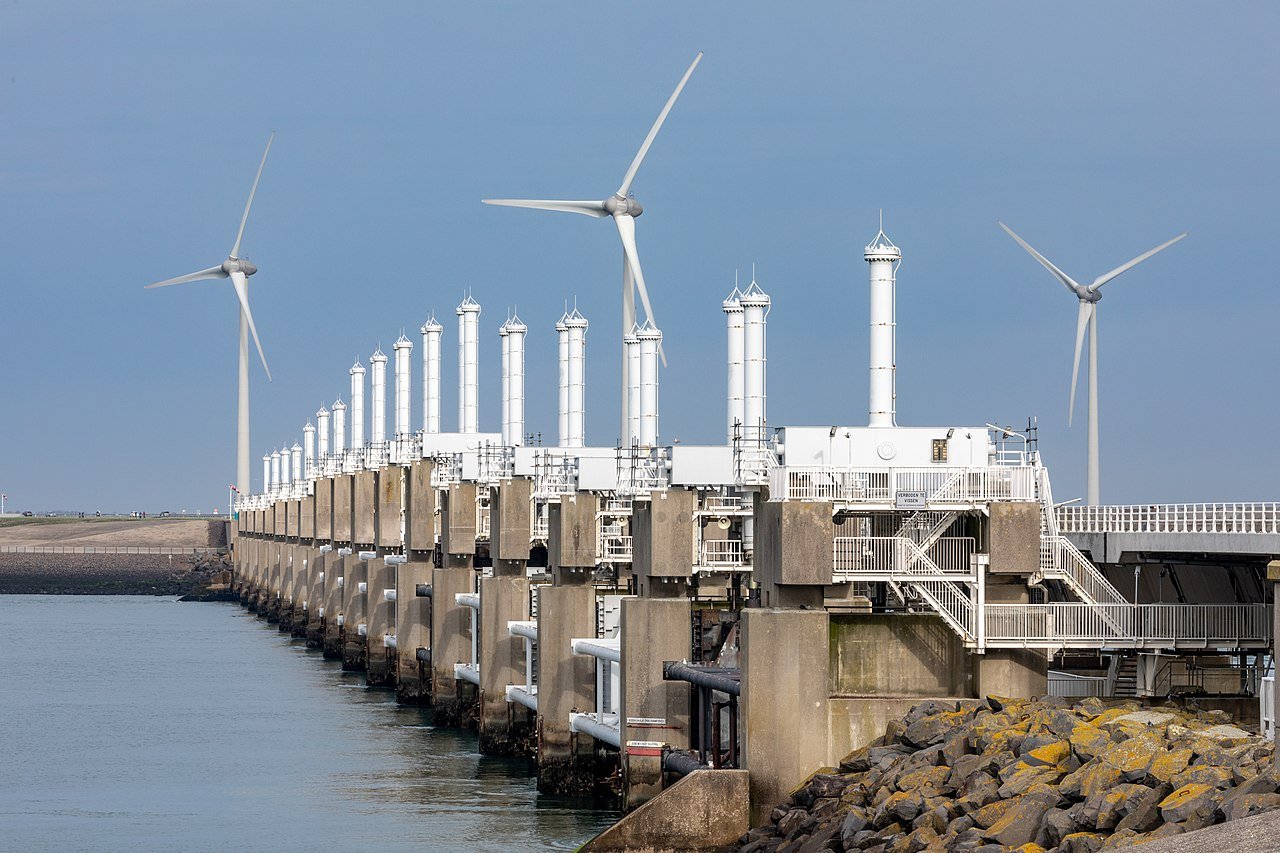
That open position is not an oversight. After the 1953 storm surge, a closed dam seemed the obvious solution. Because of nature and fisheries, however, a movable storm surge barrier was chosen. Rijkswaterstaat dates the start of construction to 1976; the barrier was officially opened on 4 October 1986. This allowed the Eastern Scheldt to remain a saltwater estuary. Oosterschelde National Park describes the consequence for nature: even so, less water flows in and out than before the barrier was built. The Oesterdam and Philipsdam made the basin smaller, ensuring that the remaining tide stayed strong enough for mudflats, tidal flats and shellfish.
Look at the water itself. At flood tide it churns on the Eastern Scheldt side of the openings; at ebb tide, on the North Sea side. That movement sustains mussels, oysters and birds. A closed dyke would have made the system fresh or still, as happened with other Delta Works. Here, the Netherlands chose safety with tides.
For visitors, the lesson is visible from Neeltje Jans: the largest barrier of the Delta Works does its job most often by not being there. The raised gates are proof that the sea is still allowed to breathe here, until the forecast reaches three metres above NAP.
A fresh perspective
Rijkswaterstaat does not close the gates until a level of NAP +3 metres is expected; on average, that happens about once a year.
Stand by one of the tidal openings and compare both sides of the piers: the churning side shows whether the tide is coming in or going out.