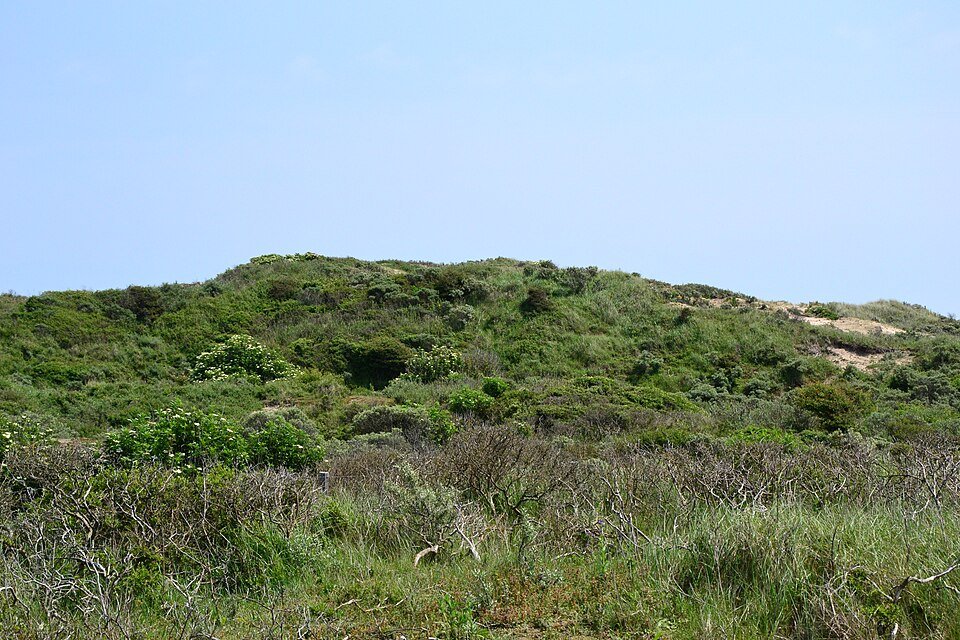
Why dunes store drinking water
Beneath the sand of the Dutch coast, fresh water lies on top of salt water. Drinking-water companies use this reservoir as both a filter and a reserve.
Along the coast, groundwater is naturally often too salty for the tap. Beneath the dunes, things are different. Rain that infiltrated over centuries formed a freshwater reservoir that floats on the heavier saline groundwater. Waternet, PWN and Dunea extract drinking water there. That reservoir alone is too small for the Randstad. That is why they pump pre-treated river water into the dunes: from the Lekkanaal, the IJsselmeer or the Afgedamde Maas.
In infiltration channels, that water seeps down through the sand. Bacteria and viruses struggle to survive without oxygen and food during this long passage. How long the journey takes varies from one extraction site to another. PWN speaks of weeks at Castricum and Heemskerk, followed by pumping up and further purification. Waternet lets water travel through the Amsterdamse Waterleidingduinen for months on average: its brochure gives a minimum of sixty days and an average of ninety, with a strategic reserve of two to three months. That is not a national average. It is the timetable of those particular dunes.
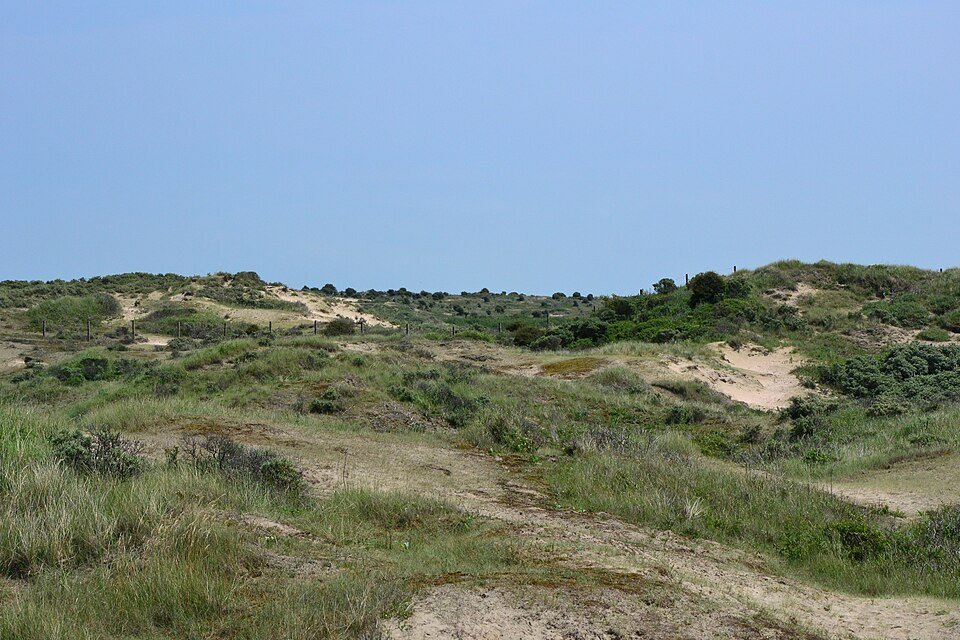
The dunes, then, are not an ornamental pond. They are a slow sand filter between river and tap. In the past, things went wrong when water was only extracted. Until the middle of the twentieth century, natural dune water was pumped up. The freshwater reservoir shrank and dune valleys dried out. Since infiltration began, the rough principle has been: what comes out goes back in. PWN says extraction and infiltration have been kept in balance to protect nature and the water reserve. The wet dune valleys have partly recovered.
For you as a walker in the Amsterdamse Waterleidingduinen or near Castricum, the elongated pools are not random ponds. They contain river water on its way through the system. Do not drink from the channel; it is not tap water yet. But the landscape you are walking through is also one of the quietest parts of the drinking-water machine.
The dunes store water because sand is slow and fresh water is lighter than salt water. Those two properties turn a strip of coast into a reservoir.
A fresh perspective
PWN lets dune water pass through in weeks; Waternet measures the journey through the same dune belt more in months.
In a water-supply dune area, look for the narrow, straight infiltration channels in the high sand: that is where the underground journey begins.