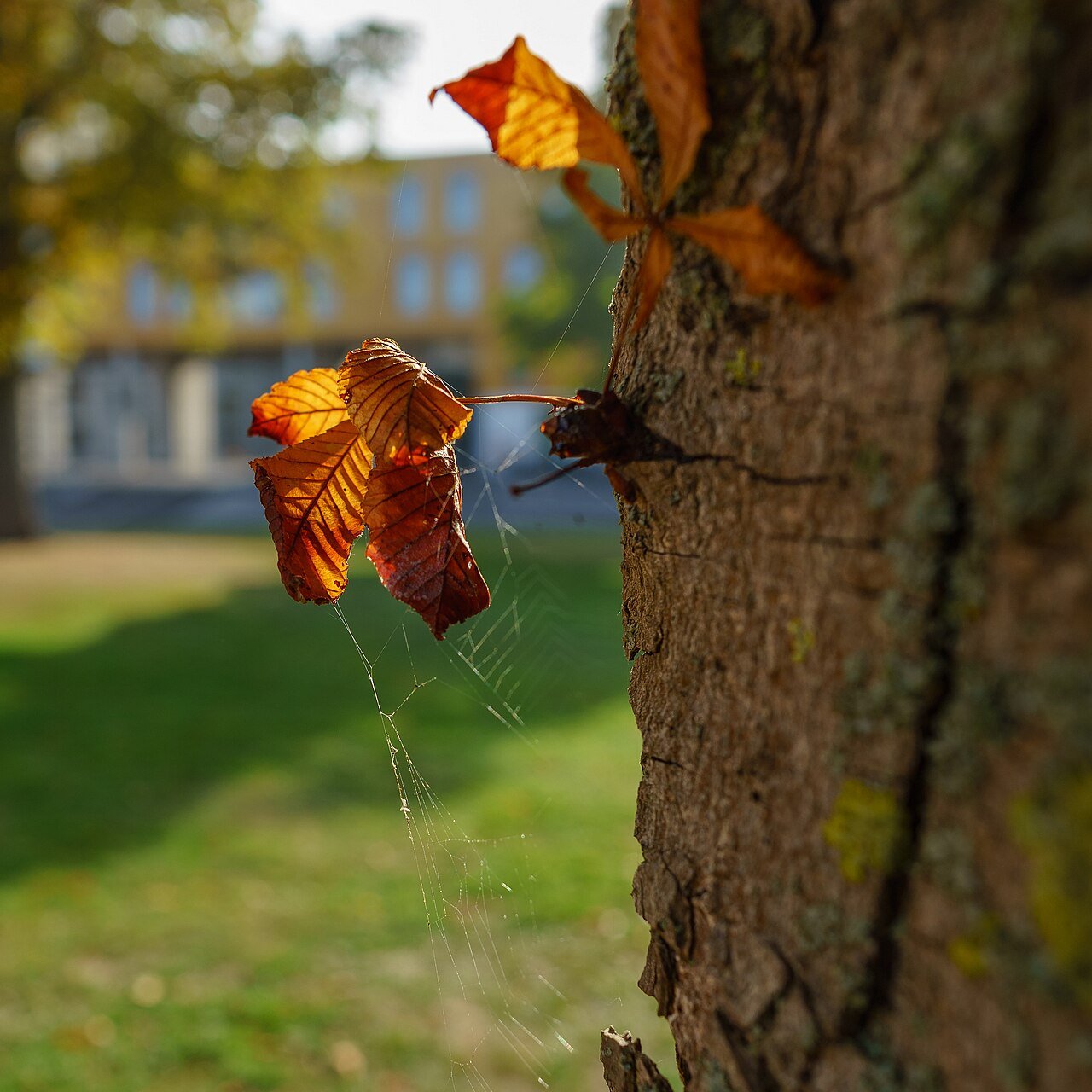
Why autumn leaves change colour before they fall
Yellow and orange are present in the leaf for almost the entire year. You only see them when the green disappears.
A green leaf is a factory. Chlorophyll captures sunlight and helps convert water and carbon dioxide into sugars. That pigment reflects green light, which is why the leaf looks green. Other pigments are already present. Weeronline and NPO Kennis refer to that group as carotenoids: yellow to orange pigments that help protect the leaf from excessively bright light in summer. As long as chlorophyll is abundant, it overwhelms the other colours. Red to purple often comes from anthocyanins, which some species produce in additional amounts.
In autumn, the days become shorter. Photosynthesis in the leaf becomes less useful to the tree, and it retrieves valuable substances into its branches and trunk. A corky layer develops at the base of the leaf stalk; the supply stops. Chlorophyll is broken down and its building blocks are stored. The carotenoids then become visible. Red is the exception: Weeronline notes that in some species this colour is produced separately, probably as protection while the leaf is still returning useful substances to the tree. Brown follows later, when cell walls remain.
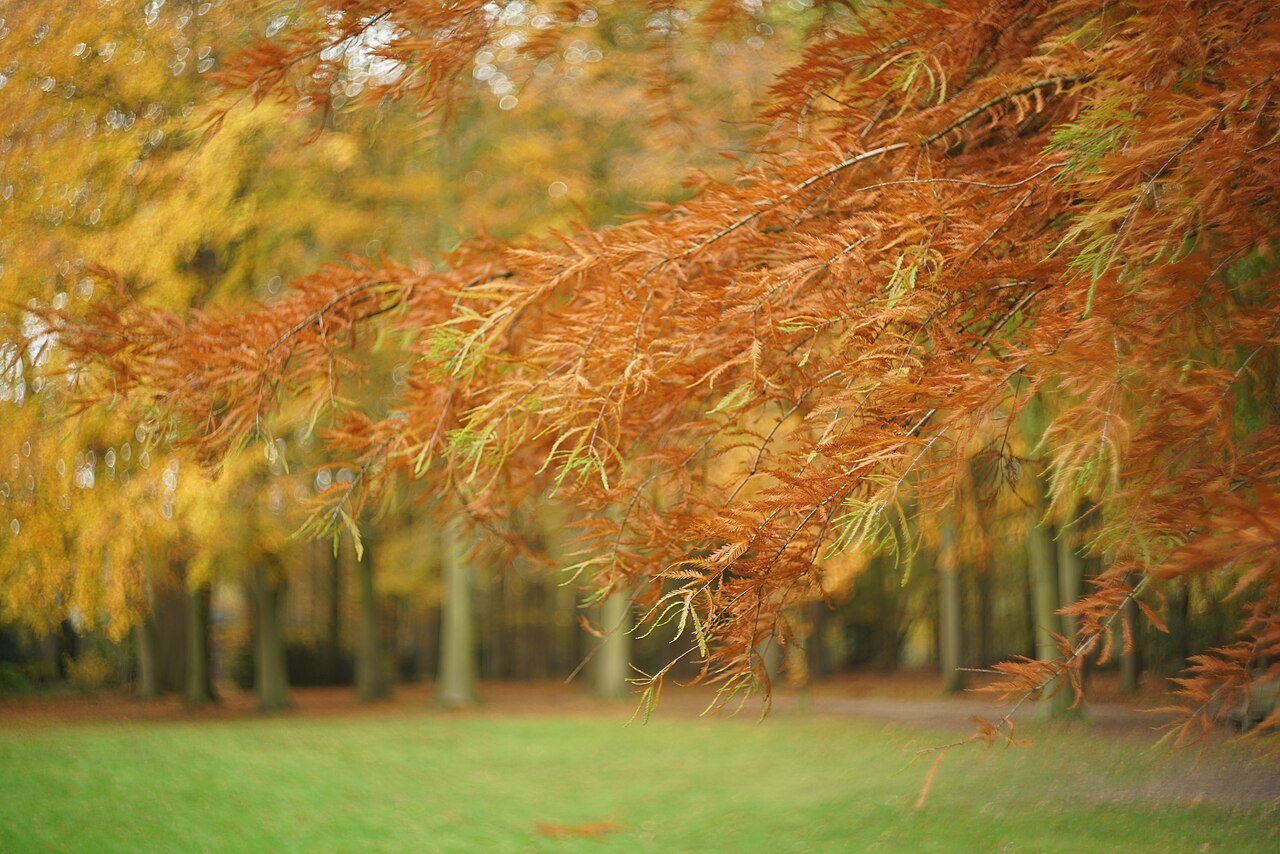
So autumn is not painting the forest. It is clearing up. NRC has plant scientist Aart van Bel explain that low temperatures without severe frost can help pigment formation, while a warm, dry autumn can dampen the display. The genetics of the species remain the main factor. Birch may change colour early, beech and oak later. The golden colour you see in a beech leaf was already there in July, only then it was still hidden beneath a green blanket.
When the leaf finally falls, the tree is finished with it for that season. Below a few degrees, roots take up water less easily; leaves would continue to lose water through evaporation. By shedding them, the tree conserves moisture. The colour was the visible part of a quiet relocation.
The breakdown of chlorophyll does not proceed at the same rate everywhere.
A fresh perspective
Carotenoids are present in the leaf throughout the growing season; they only become dominant when chlorophyll disappears.
Hold a yellow beech leaf up to the light: the veins sometimes remain green for longer.