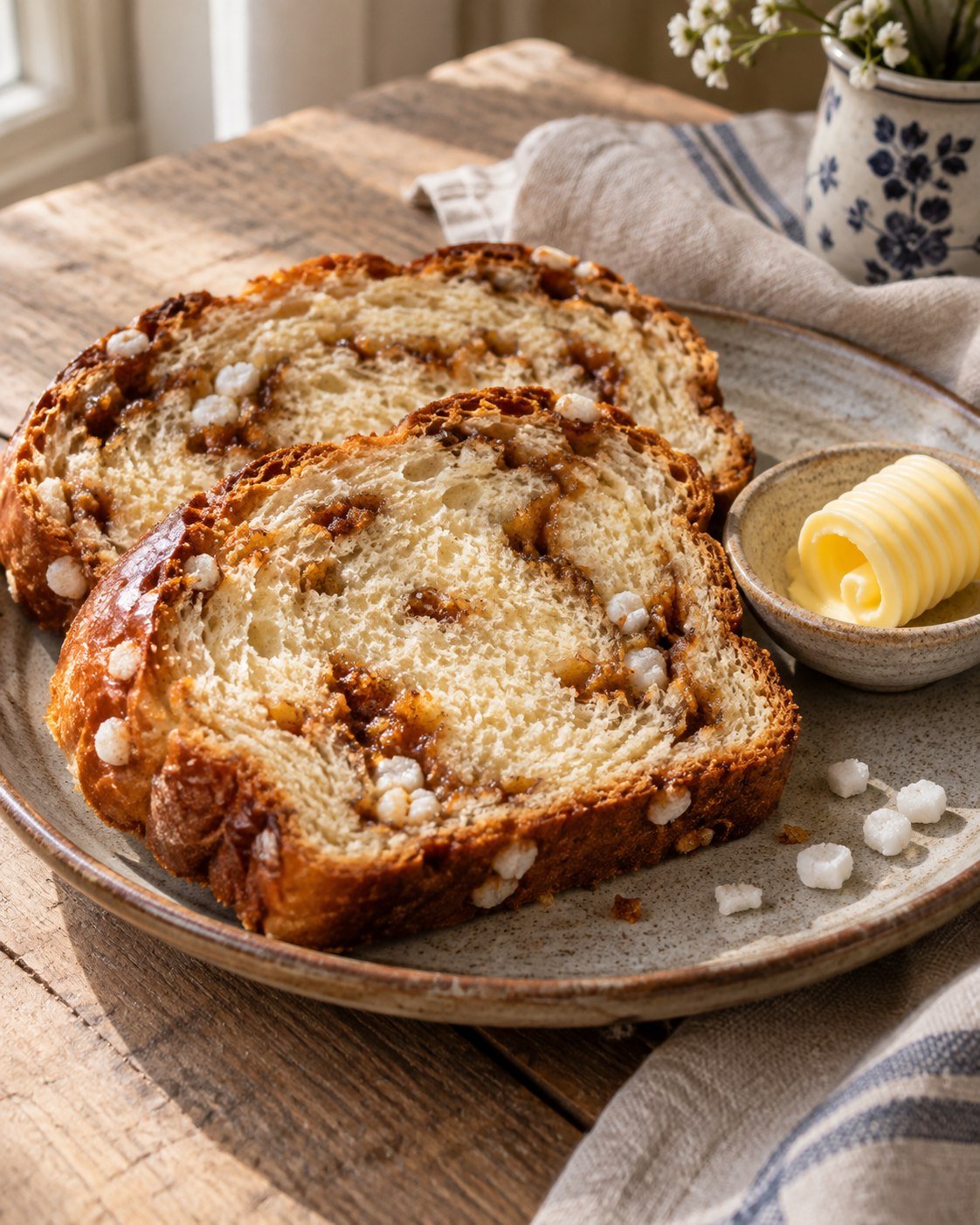
Frisian sugar bread: white bread with a heart of sugar
A Frisian sûkerbôle contains lumps of sugar that melt in the oven into sticky pockets. That is the point, rather than adding extra syrup to an ordinary loaf.
Frisian sugar bread is white bread with pearl sugar or coarse nib sugar baked into it, often with cinnamon and sometimes ginger syrup. The large pieces of sugar make it different from bread that merely tastes sweeter. They remain recognisable as soft, sticky patches within the airy dough.
Tradition has it that the bread was given to mothers who had given birth to a daughter; for a son, there was currant cake. Cinnamon and ginger were considered strengthening. That is a custom, not proven medicine. The shape shifted from round to a loaf baked in a tin. In the Dutch Republic, sugar was initially a luxury sold in cones; only when refining became cheaper could it find its way into dough.
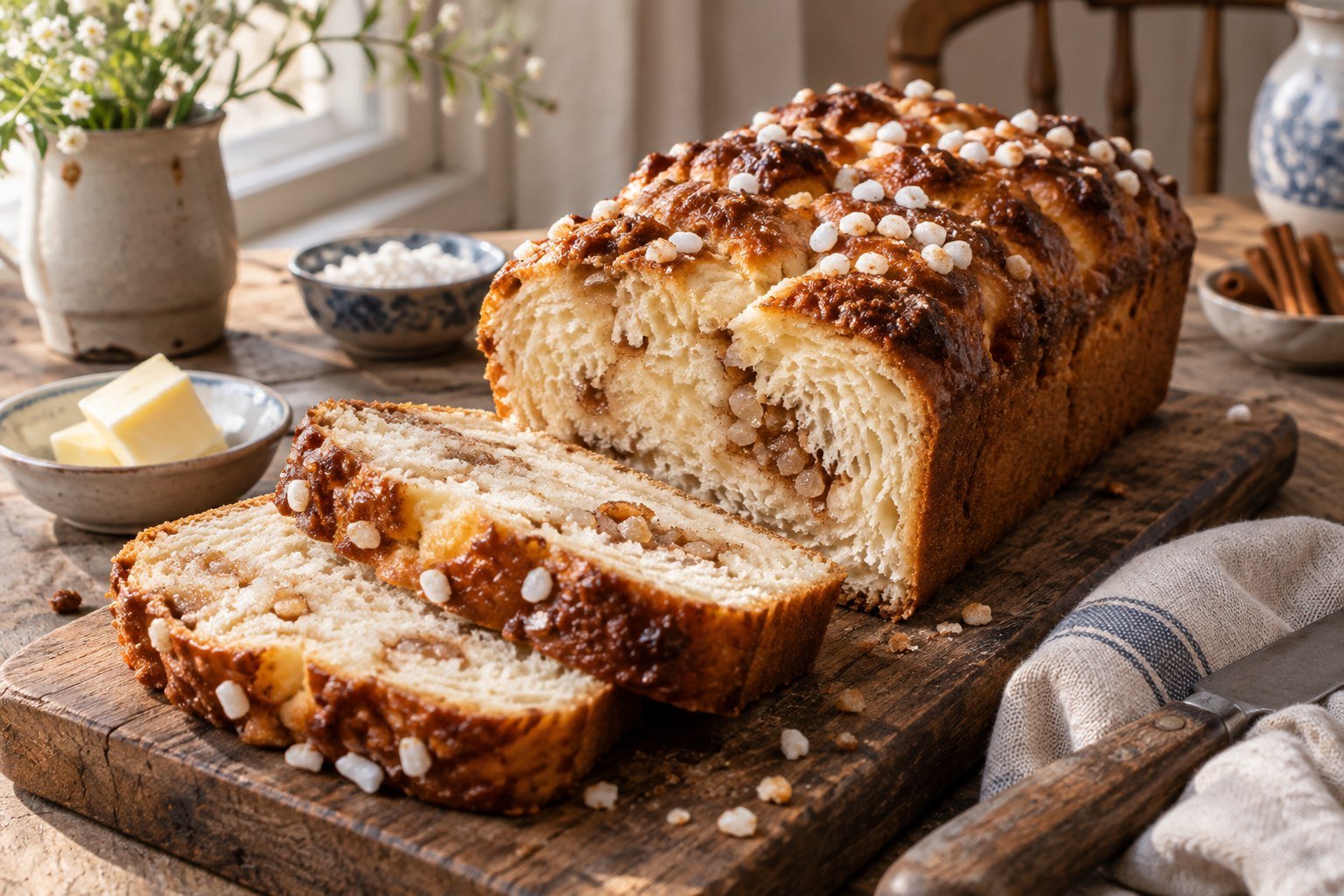
Below is a recipe for one loaf. Work the sugar pieces into the dough only towards the end, so you do not immediately knead them into smaller pieces. The crust may become firm while the inside remains sticky in places: that is precisely where the sugar is.
Cut thick slices. The idea is a bite that tastes sweet first and then develops into cinnamon.
Get cooking
1 loaf
- 350 g wheat flour
- 7 g dry yeast
- 8 g salt
- 30 g butter
- 200 ml lukewarm milk
- 200 g pearl sugar
- 1 tsp cinnamon
- Knead the flour, yeast, salt, butter and milk into a smooth dough. Leave to rise for 45 minutes.
- Briefly work in the pearl sugar and cinnamon. Shape into a loaf. Leave to prove for another 30 minutes.
- Bake for about 35 minutes at around 190 °C. Remove from the tin immediately.
Recipe not kitchen-tested. Allergens: gluten, milk. Check the labels of all products used.
Look at a cut slice: glossy pockets of melted pearl sugar, not an evenly sweet crumb.