Why house numbers alternate: even on the left, odd on the right — or the other way round
Walk into a Dutch street and the numbers alternate: 1 opposite 2. That is not carelessness. It is a late-nineteenth-century way of making a house easy to find.
At first, the Netherlands numbered districts, not streets. Cities used numbering for their administration even before today's street-based system existed everywhere. Often the numbering ran around the block: along one side and back along the other. Before that, district letters were used, such as A 103. Until 1875, Amsterdam had neighbourhood letters with continuous property numbers; the street name mattered less. French administrators had introduced numbers earlier in cities such as Utrecht, mainly to organise the quartering of troops.
By the end of the nineteenth century, the Parisian model gained ground: even numbers on one side, odd numbers on the other. Amsterdam switched to numbering by canal or street in 1875. Utrecht followed in its outer districts in 1879 and in the city centre in 1891: odd on the right, even on the left when moving from the town hall towards the municipal boundary. Breda adopted the same principle in 1897, viewed from the Grote Markt. Quays with buildings on only one side received consecutive numbers. Which side has the even numbers varies by municipality; Zeist does it the opposite way from Utrecht.
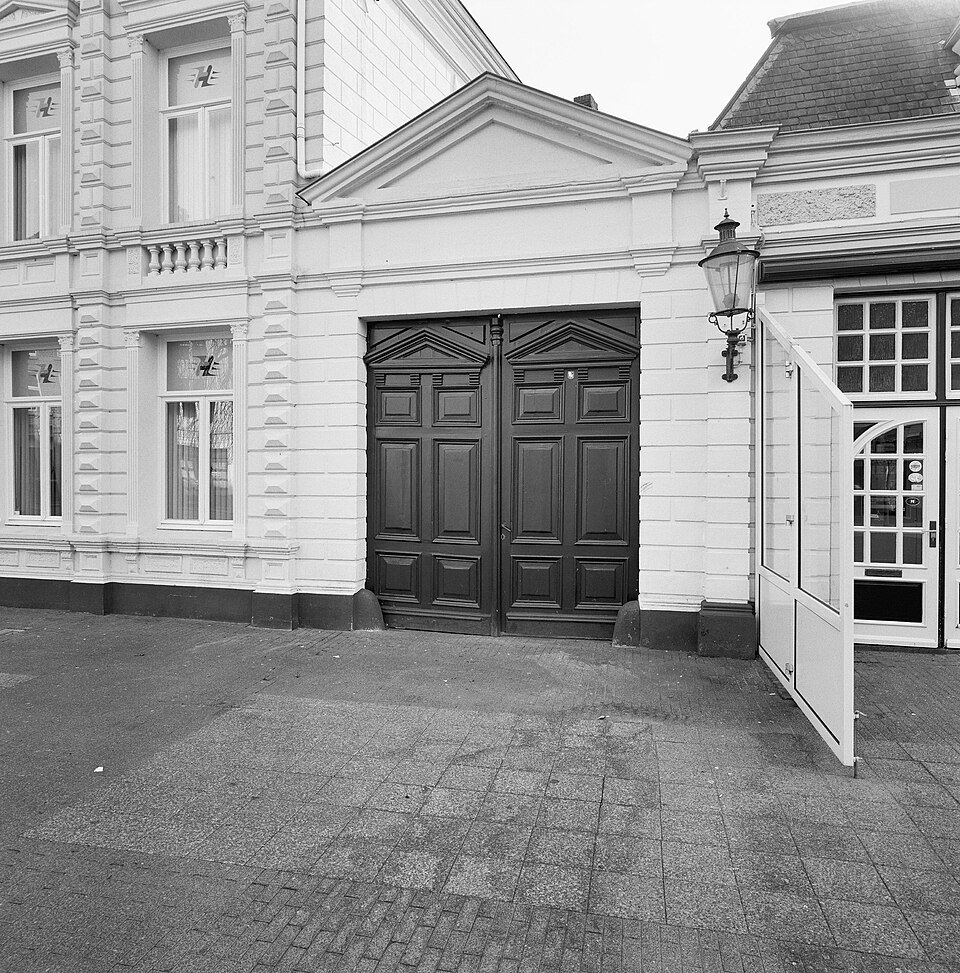
The alternating pattern has a practical purpose. If you are standing at number 6 and looking for 52, you keep walking along the same side. An added building can become 12a without renumbering the entire street. Numbering around the block caused problems whenever a new house was inserted. The number plate on the façade is therefore a matter of policy. The jump across the road tells you how the city made itself easier to navigate.
A fresh perspective
In 1897, squares in Breda had to be numbered clockwise; churches deliberately received no number.
Work out from the city centre which side has number 1; that choice was determined locally.