Waterloopbos: where harbours were recreated in the forest
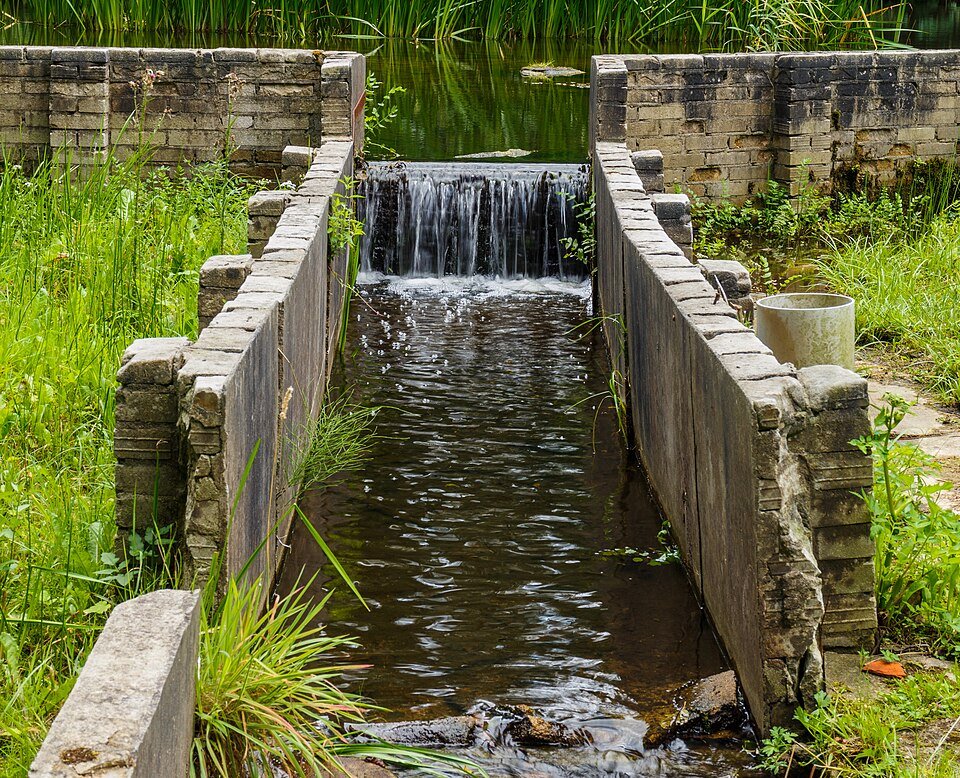
Among the trees near Marknesse lie concrete basins and winding channels. This is not an ornamental park pond. They are scale models of hydraulic works.
Without computers, you had to see how water flowed. The De Voorst Hydraulics Laboratory used the Noordoostpolder. Its low elevation and water supply made the site suitable for experiments with flowing water. From the 1950s until its closure in 1996, hundreds of studies were carried out here. The Delta Works, the Port of Rotterdam and IJmuiden, as well as Lagos, Istanbul and Bangkok, were given models in the forest. Wave machines set the water in motion. Researchers observed how a quay absorbed waves or how sediment accumulated in an estuary.
When computer models took over from the basins, the field laboratory disappeared. In the early 1990s, bungalow development threatened the site. Local residents, and later Natuurmonumenten, preserved the ruins. In 2016, the Waterloopbos was designated a national monument. Some of the models are being conserved, while others are becoming overgrown with alder and reeds. The Netherlands as a country of hydraulic engineering has an open-air archive here: concrete among the undergrowth, a little sluice without a ship.
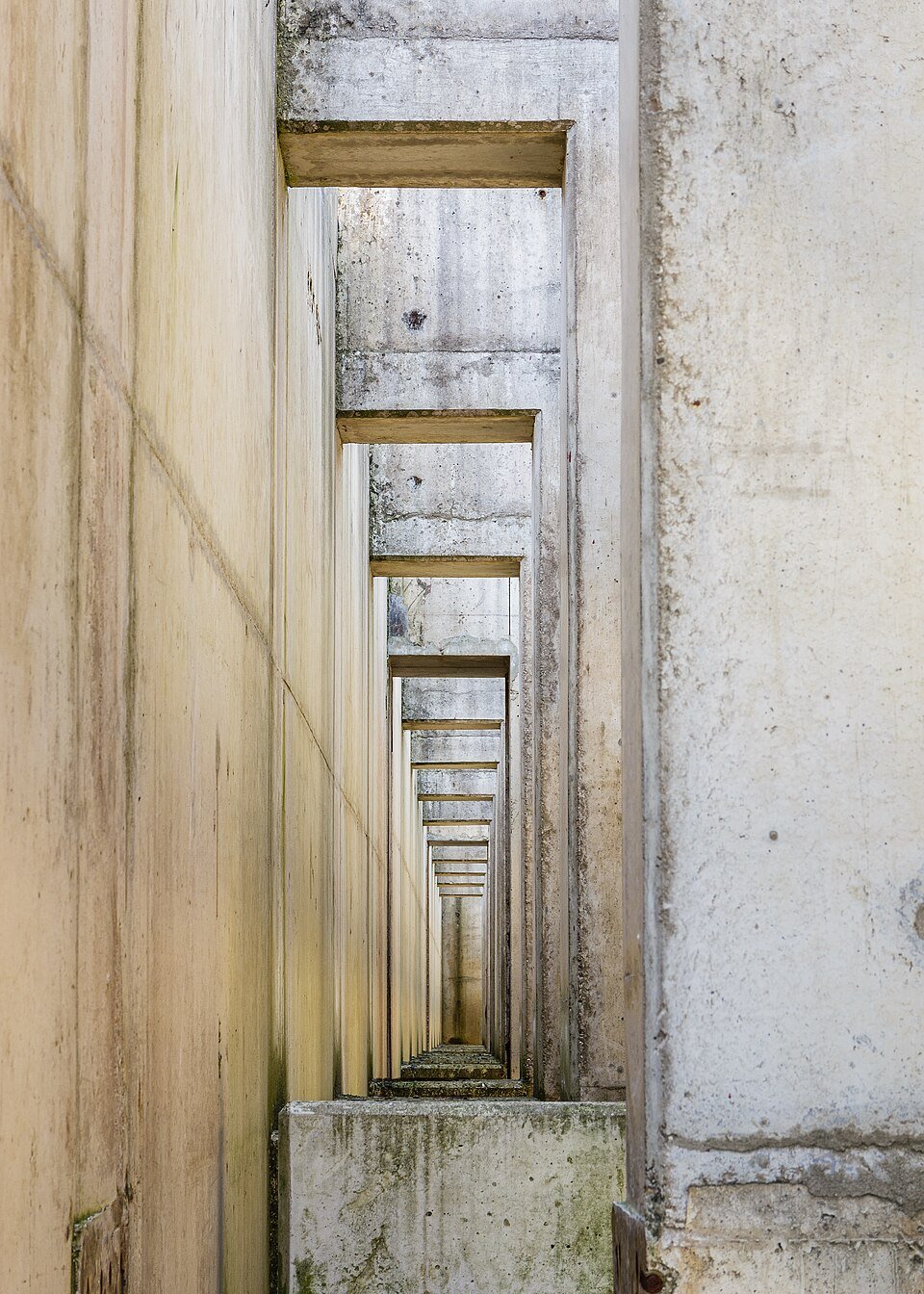
The forest makes tangible what would otherwise disappear into reports. Every basin represented a question that was too large for paper. Now the question is how to let ruins and nature remain together.
Follow a marked trail. Straight walls among the greenery reveal a machine where now only the wind ripples the water.
Look for remains of the wave basin: straight walls amid the forest.