Tides in the Eastern Scheldt: the table that disappears twice a day
Forget the gates in the storm surge barrier for a moment. The tide itself covers and exposes mudflats, tidal flats and salt marshes — and with them the birds' food supply.
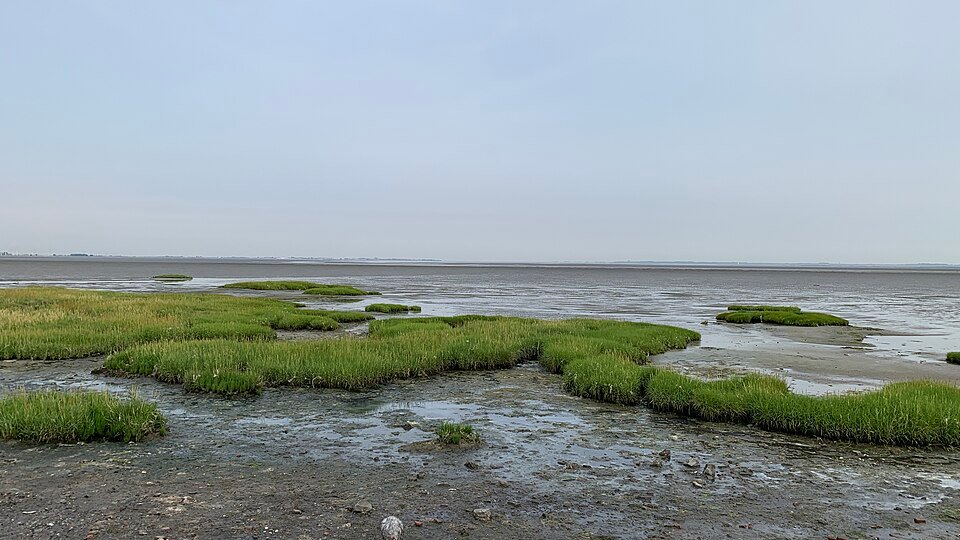
The rhythm of the Eastern Scheldt is roughly six hours of flood tide and six hours of ebb. A mudflat is wet, unvegetated foreshore that is submerged at every high tide. If such a mudflat is completely surrounded by water, it is called a tidal flat. Worms and shellfish live in the sediment. Birds can feed on them only when the ground is exposed. Seals rest on tidal flats; people should not walk there. If a mudflat accumulates enough sediment to become sufficiently high, glasswort and cordgrass begin to grow. That is how a salt marsh develops. How often a salt marsh floods depends on its elevation and the water level; higher sections are mainly inundated during high tides. It is saline, a breeding area and a high-tide refuge: when the mudflats are submerged, birds wait behind the dyke or on the salt marsh.
The barrier allows salt water and tides to enter. This story is about what those tides reveal. At ebb tide, a small harbour empties. At flood tide, things are quieter above the water. The difference between high and low tide is substantial in Zeeland; wind and the moon shift the water level. Current access to salt marshes and dyke paths is set out by the national park or land manager.
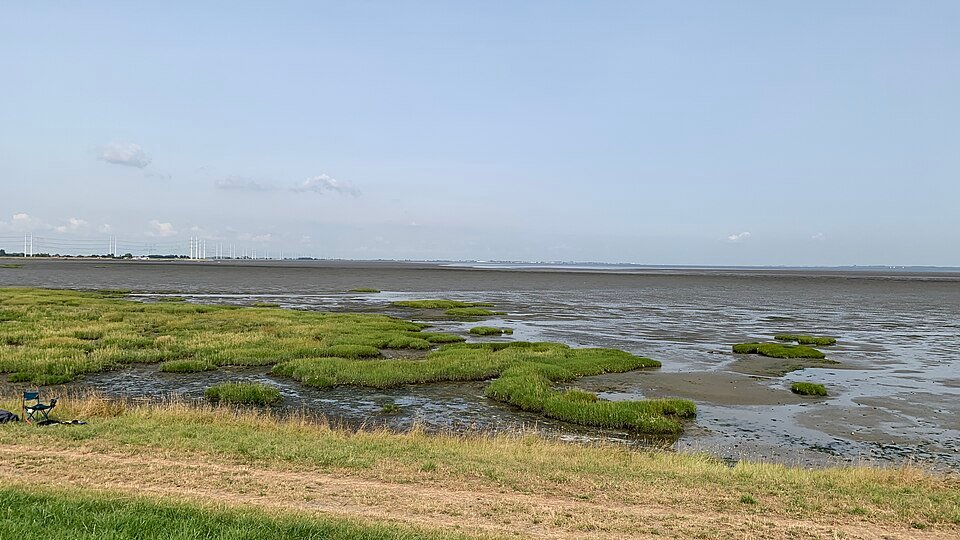
Read the dyke as a grandstand. The stage disappears twice every twenty-four hours.
A fresh perspective
A salt marsh is a raised mudflat that is submerged only during particularly high water.
From a dyke, watch the same tidal flat as the tide goes out: the dark edge slowly retreats.