Ramspol storm surge barrier: how the inflatable dam near Kampen enters the storm season
On Tuesday 6 October, Rijkswaterstaat will close the barrier between the Ketelmeer and the Zwarte Meer as a test. How three rubber bellows form a dam 10 metres high, and what the major maintenance achieved.
Hollandmagazine editorial team ·
On Monday 21 September 2026, Rijkswaterstaat announced that it will close the Ramspol storm surge barrier as a test on Tuesday 6 October. This happens every year at the start of the storm season. Specialists then check that all systems are working, so that the barrier is ready when the water really rises.
The barrier lies between the Ketelmeer and the Zwarte Meer, near Kampen. It is an inflatable dam: at high water, it closes off the Zwarte Meer from the Ketelmeer. According to Rijkswaterstaat, without this barrier large parts of the Noordoostpolder and Overijssel could flood during a severe north-westerly storm.
Why the water piles up here
The danger comes from the IJsselmeer. In strong winds or storms from the north-west, water from the IJsselmeer is blown onto the Ketelmeer. This happens in a kind of funnel: the piled-up water looks for a way through to the Zwarte Meer. By throwing up a dam there in time, the water cannot flow any further into the Zwarte Meer.
The barrier closes automatically, Rijkswaterstaat explains. If the sensors at Ramspol measure a water level more than 50 centimetres above NAP (the Dutch reference level) and the level stays that high for one minute, the computer activates the inflatable dam. The water must also be flowing inland. Powerful pumps then blow 3.5 million litres of air and 3.5 million litres of water from the navigation channel into the bellows within an hour. Rijkswaterstaat itself compares the sight to a giant bicycle tyre rising out of the water. Ships can then no longer pass.
This is not an everyday occurrence: according to Rijkswaterstaat, the barrier closes about once or twice a year.
Three bellows of rubber fabric
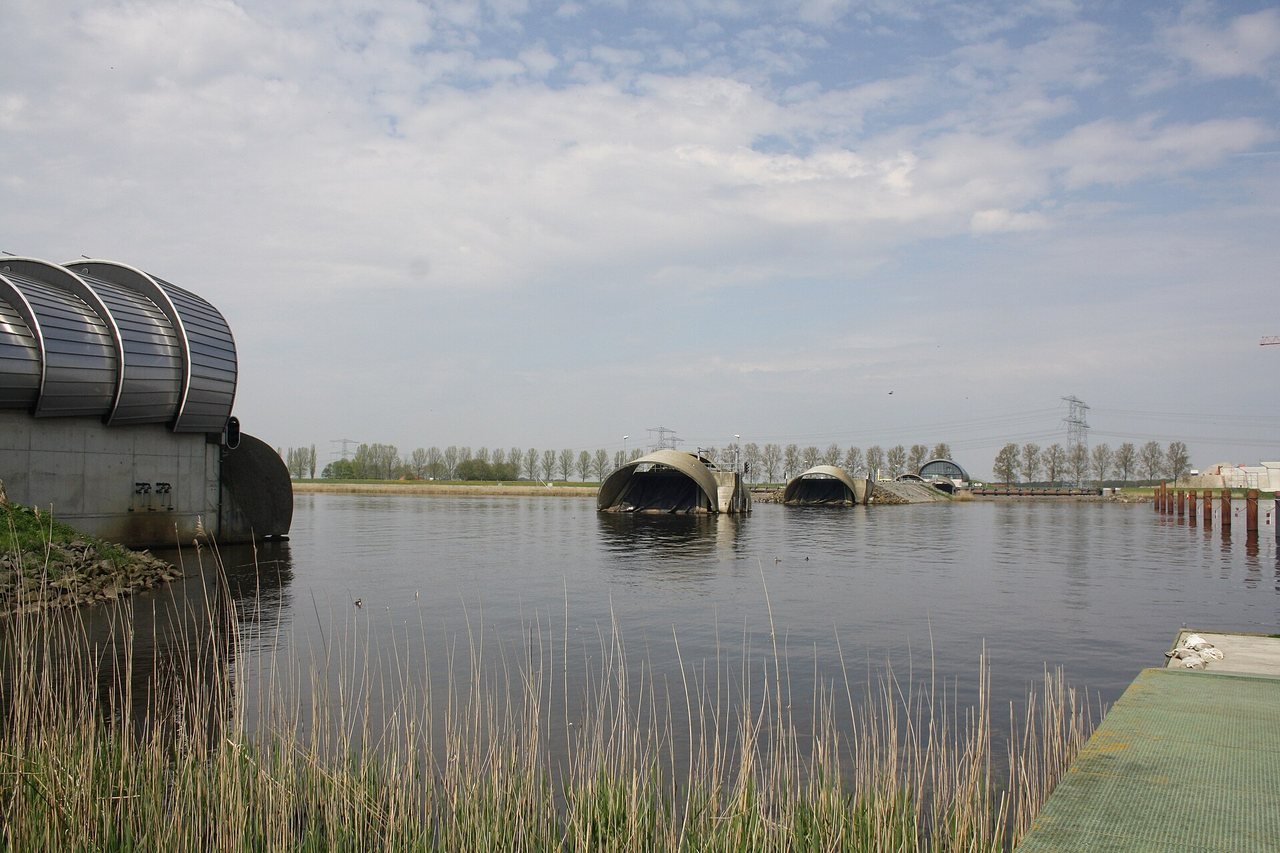
The barrier consists of three bellows made of heavy, extremely strong rubber fabric, each about 80 metres long. When inflated, together they form a barrier about 10 metres high and 240 metres long. Outside of storms, the bellows lie folded in concrete trays in the channel, and ships simply sail over them.
Ramspol is the only inflatable dam in the world that serves as a storm surge barrier. The barrier has been operational since December 2002. According to Rijkswaterstaat, this type was chosen because otherwise some 115 kilometres of dyke would have had to be raised. In 2014, Rijkswaterstaat took over management from the water board.
Major maintenance below the waterline
The test on 6 October follows shortly after the biggest maintenance job since the barrier came into use in 2002, Rijkswaterstaat reports. On 8 September 2026, Rijkswaterstaat completed the work on the guide roller system, earlier than planned. At the bottom of each bellows are 80 guide rollers. They ensure that after a closure the fabric sinks back neatly and without damage and comes to rest folded on the bottom. After 24 years, the bearings were due for replacement; in total, those of 240 rollers have been renewed.
The work was unusual, Rijkswaterstaat writes. First, a bellows was inflated with air and pumped empty of water. Then mechanics could get inside, under overpressure and below the waterline, via a shaft and an airlock. Between them and the water outside was a rubber fabric about 1.6 centimetres thick. Each guide roller, including bearing housings and axle journals, weighs some 660 kilos. Because water safety came first, the bellows had to be ready for use again within 48 hours during the work.
The new guide rollers are expected to last about 25 years. According to Rijkswaterstaat, the bellows fabric is in excellent condition and is expected to last until around 2042.
For anyone who wants to watch the test: according to Rijkswaterstaat, the closure can be followed well from a viewpoint below the south side of the Ramspol bridge, on the Balgweg in Kampen, and on the north side from the dyke along the Ramsgeul. The site and the barrier building are not open to the public. The closure begins at around 8 a.m.
The little brother in the Roer
Inflatable dams also exist on a small scale. In Roermond, Waterschap Limburg is working on the Hoge Bat inflatable dam in the Roer from 21 September to 16 October 2026. That weir divides the water of the Roer between the Hambeek and the Stedelijke Roer and is 57 metres long in total. The water board is replacing its two rubber membranes of 28.5 metres each. These are rubber bags full of water: by topping them up or letting them drain, the weir keeps the water at the desired level. The water board is working on one half at a time; the other half continues to regulate the level.
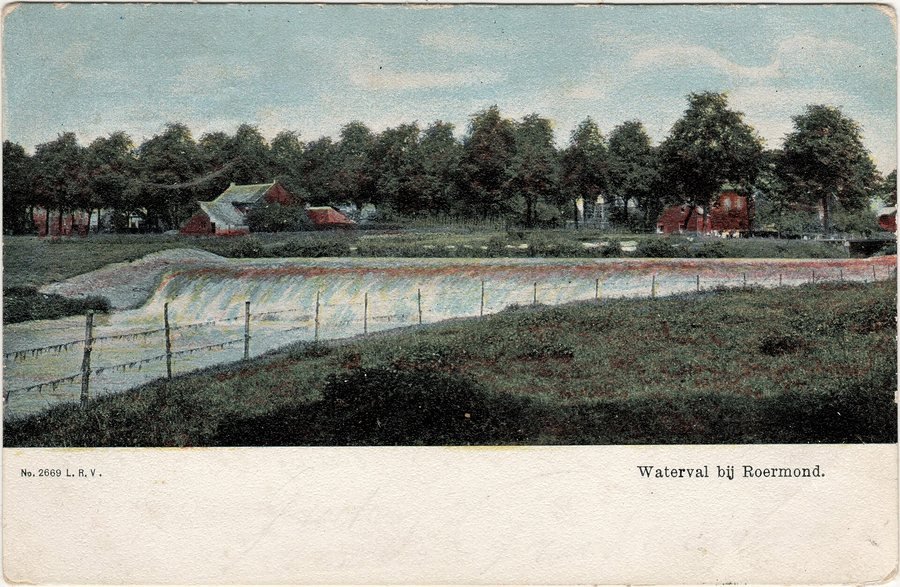
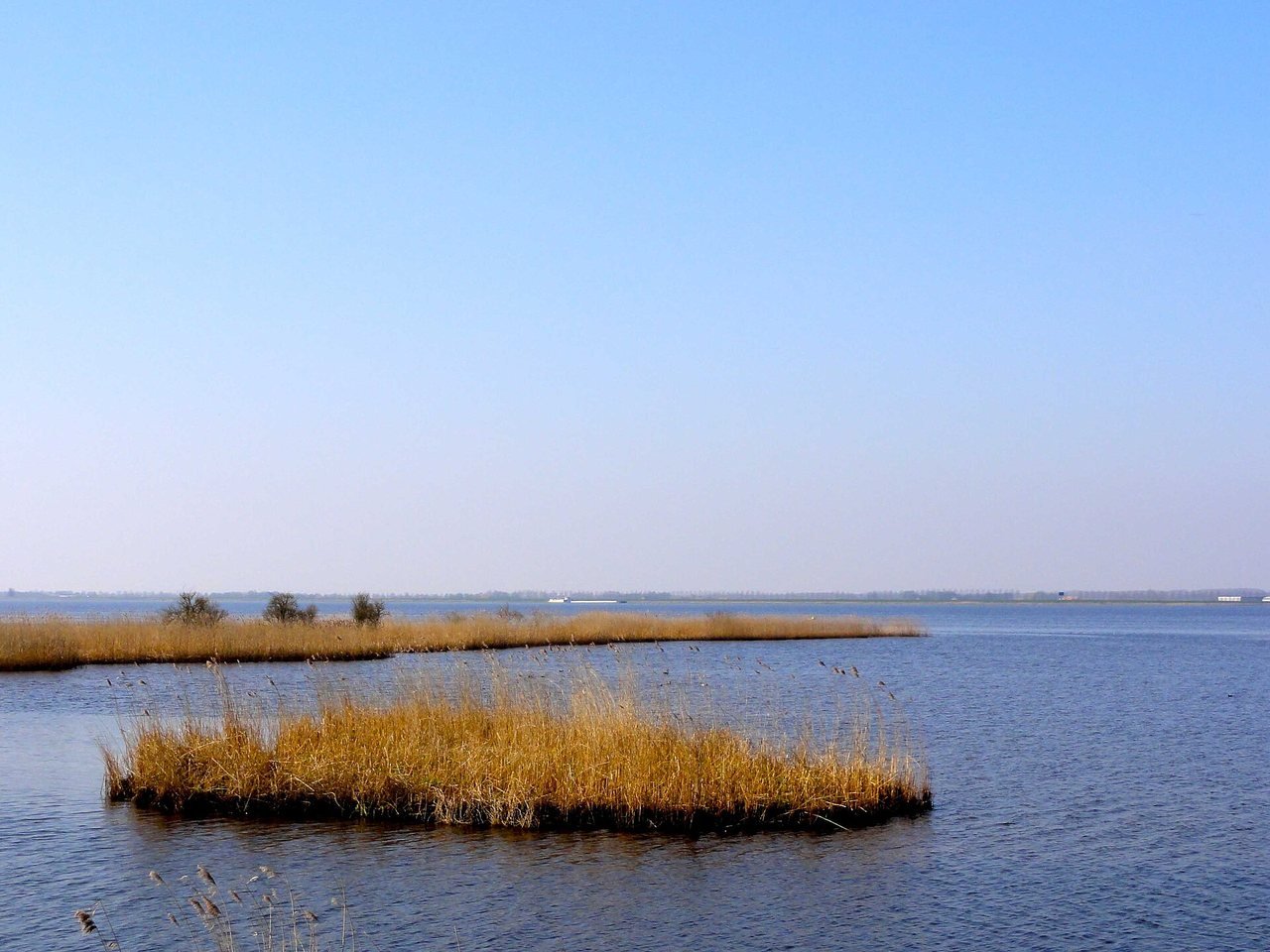
Photo: Fields of bulrushes in the Zwarte Meer under a clear blue sky, March 2012. In a storm, the Ramspol storm surge barrier closes this lake off from the Ketelmeer. Gouwenaar / Wikimedia Commons (CC0)