Indian summer at the end of September: where the warmth comes from and what the North Sea does with it
After a cool Thursday, weather services expect days of 20 degrees or more. What an Indian summer is, how the warm air reaches us, and why the North Sea is only at its warmest in August.
Hollandmagazine editorial team ·
Thursday 24 September 2026 is a cool day. In a report on 23 September, Weeronline called that Thursday the coolest day of the week, with 16 to 19 degrees from north to south. After that, the weather turns. For Friday 25 September, the KNMI expects plenty of sun and highs from 20 degrees in the north to locally 24 degrees in the south-west. According to the KNMI, the weekend will also stay sunny and dry, and from Monday it will be (very) warm for the time of year.
How long it will last is less certain. According to Weeronline, it may reach 25 degrees locally inland on Sunday. Some scenarios even show well over 25 degrees on a large scale around the turn of the month, although the uncertainty is then high. For 1 to 8 October inclusive, the KNMI gives a 60 per cent chance of mostly dry and sunny weather with above-normal temperatures, and a 40 per cent chance of more changeable weather with normal temperatures.
What an Indian summer is
Meteorologists start autumn on 1 September. A sunny spell with high temperatures after that date is called Indian summer weather, Weer.nl explains. Weather like this can still turn up until mid-November, while afternoons between September and the end of November cool on average from about 20 to 10 degrees.
Such a spell goes by many names. In Dutch, a summery spell around 29 September is called a sint-michielszomer (St Michael’s summer), and in early October people speak of a kranenzomer (crane summer). In the Netherlands, warm and sunny autumn weather is also called an oudewijvenzomer, an ‘old wives’ summer’.
Where the warmth comes from
Persistent summery weather arises when high-pressure areas stay put and block the way for depressions coming in from the ocean, the KNMI explains. If such a high-pressure area shifts towards Central Europe, the wind turns south-east to south and it gets warmer. That fits Weeronline’s forecast: from Friday the wind blows from the south and warm air flows in from southern Europe.
The contrast with the night before is large. In the night into Friday, the sky clears and the wind drops. Weeronline expects it to be colder than 10 degrees in most places until about nine in the morning, and inland there may locally be ground frost. According to the KNMI, it may cool to 5 degrees in the east and north-east, while on the coast it will stay around 10 degrees.
The North Sea as a heat battery
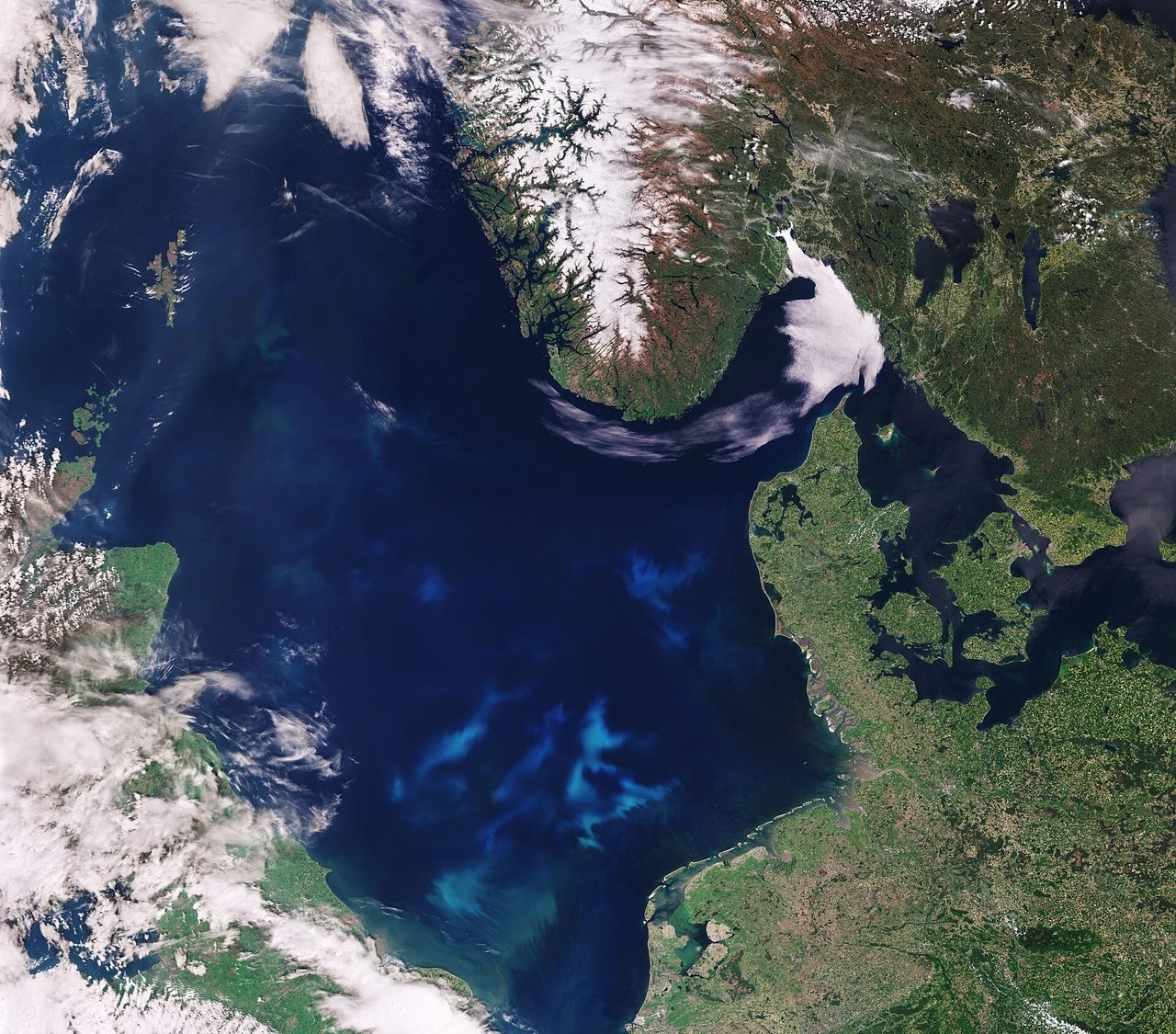
That the coast comes off warmer fits with what the KNMI writes about the sea. The institute describes the North Sea as a heat battery. In summer, the seawater captures solar energy and holds on to it as heat. Because water can hold a great deal of heat, and waves and wind mix that heat down over tens of metres, the North Sea is not warmest in June, when the sun is highest, but only in August.
On the coast, according to the KNMI, the sea temperature rises from less than 2 degrees in February to more than 20 degrees in August. The sea warms up more slowly than the land in spring and summer, but also cools down much more slowly in autumn and winter. In October, the North Sea is on average 4 degrees warmer than the land. The sea gives that stored heat back in winter, which makes for mild winters.
There is also a downside. With a westerly wind, the warm seawater supplies the fuel for showers, especially on the coast. In the autumn months, up to 40 per cent more precipitation falls there than the average for the country, the KNMI reports.
The battery is getting fuller. According to the KNMI, the North Sea has warmed by about 1.7 degrees over the past 40 years, and off the Dutch coast by some 0.4 degrees per decade. And according to the KNMI, the summer of 2026, averaging 19.3 degrees against a normal 17.5, was the warmest since measurements began in 1901. The European climate service Copernicus calls this summer the warmest ever measured in Western Europe.

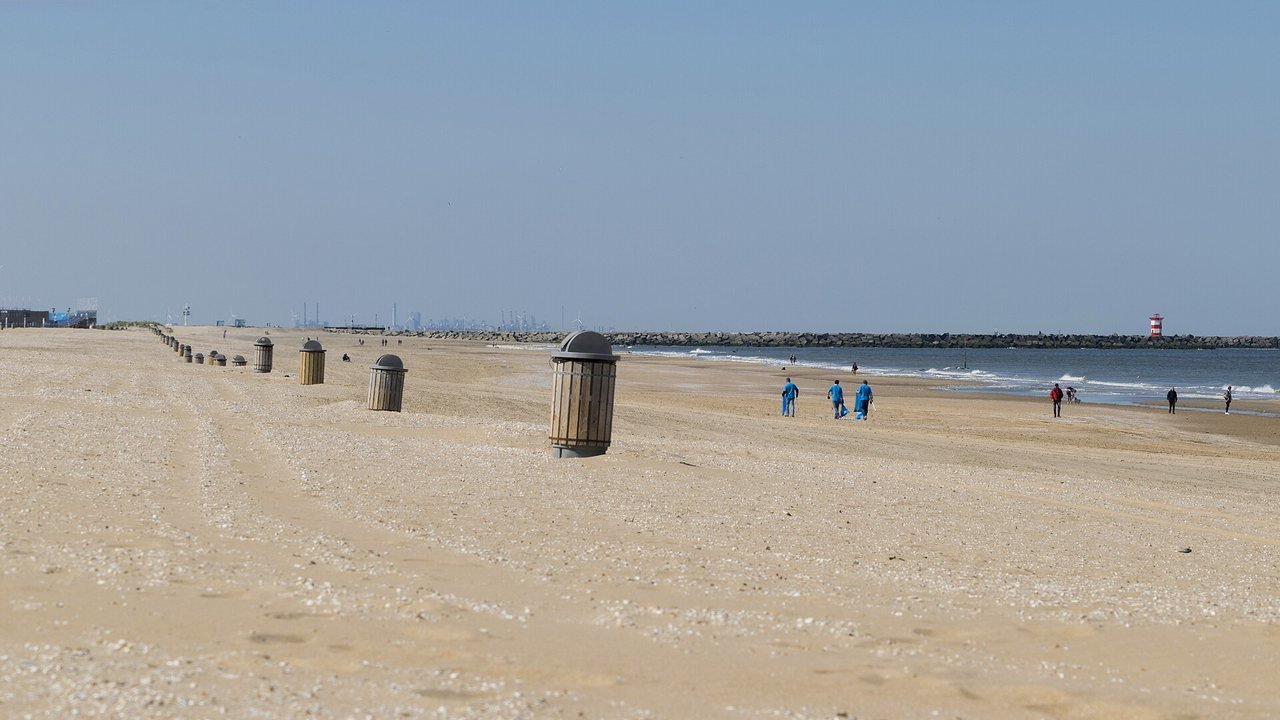
Photo: The beach at Scheveningen on a sunny, hazy morning in May 2019, with the harbour piers and the red-and-white harbour light on the right. A few walkers stroll along the waterline. Paul van de Velde from Netherlands / Wikimedia Commons (CC BY 2.0)