The rut has begun: why red deer roar and fight on the Veluwe
From September onwards, stags on the Veluwe battle noisily for the hinds. Natuurmonumenten calls the second half of September the high point of the rut.
Hollandmagazine editorial team ·
Walk across the Veluwe early in the morning in the second half of September and you will hear it from far away: a deep, hoarse call that rolls between the pines. It is the rutting season of the red deer, the moment when this imposing animal shows its loudest side. From September onwards, the males compete for the favour of the hinds, and the second half of September counts as the high point of the spectacle.
Natuurmonumenten calls this period the peak rut. Ranger Han ten Seldam of Planken Wambuis describes the roaring as a mighty sound that carries over great distances in the increasingly cold autumn nights. “Sometimes I hear it as early as August, but the second half of September is the peak,” he says on the Natuurmonumenten website. According to Natuurmonumenten, the stags are then almost constantly busy fighting one another and trying to win dominance over the hinds. Staatsbosbeheer also points to the wooded Veluwe and the Oostvaardersplassen as the places where the rut can be experienced this autumn.
Stinking, steaming and spoiling for a fight
The contest for the hinds follows a fixed ritual. Before the males go for each other, they roll in a muddy wallow and spray themselves with their own urine, Natuurmonumenten reports. With that body odour and their relentless roaring, they mark out their territory. If a rival comes too close, an attack follows, and according to Natuurmonumenten it can take hours before there is a winner. The victor gets a harem of hinds, which he then goes on to mate with.
Not every fight goes as expected: sometimes a hefty stag with impressive antlers still lets himself be intimidated by a smaller rival. According to Han ten Seldam, that is a matter of character, because even such a seemingly weaker stag then still manages to mate with hinds. Young males usually turn up first on the battlefield, according to Natuurmonumenten; the heaviest animals often only show themselves once the peak rut is well under way.
Ten kilos of antler
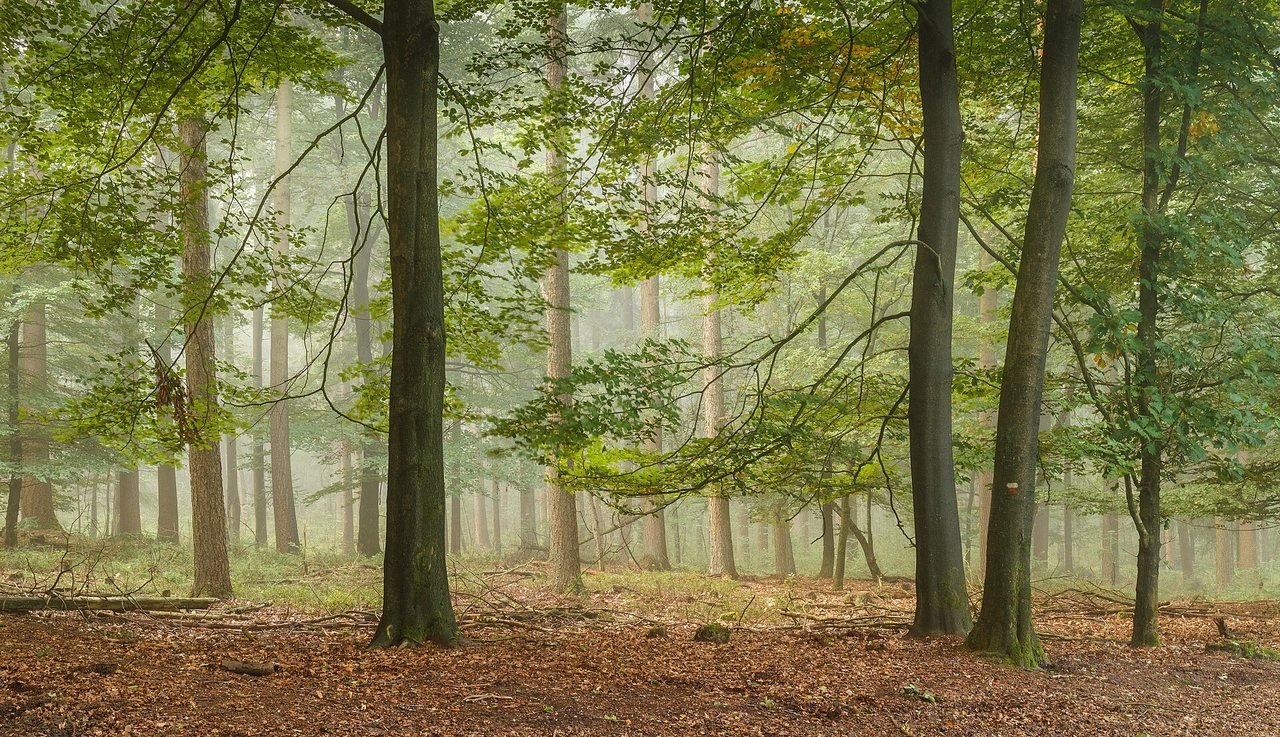
Natuurmonumenten reports that the antlers the stags fight with are the result of an annual cycle. At the end of winter or the beginning of spring, the males cast their old antlers; almost immediately afterwards, knobs appear on the pedicles, surrounded by a velvety skin full of building blocks. Over the summer, these antlers in velvet keep growing until they are fully developed towards the end of summer. The velvet then dies off, and the stags rub it loose against young trees, which gives the antlers their characteristic brown colour. A fully grown set of antlers can weigh up to around ten kilos.
The red deer still has its core range on the Veluwe, Natuurmonumenten reports, although animals can also be found in the Oostvaardersplassen, North Brabant and Limburg. Outside the rutting season, adult males often roam alone or together with a younger animal, according to the conservation organisation, while the hinds live in a herd led by a lead hind. In the summer of 2020, according to Natuurmonumenten, a group of seven red deer even swam from the Veluwe to Flevoland, presumably young animals in search of new territory.
Hoping to go and look? You’re too late
Anyone hoping to experience the rut on an organised outing this year will find the calendar already closed. Staatsbosbeheer reports that the rut excursions for the 2026 season, both on the Veluwe and from the eco-wagon in the Oostvaardersplassen, are fully booked. Anyone who wants to be the first to know in 2027 when new excursions open can, according to the organisation, sign up for the Bericht van de boswachter (“Word from the ranger”).
That does not mean walking without a guide is impossible. Natuurmonumenten points to wildlife observation posts in places including Planken Wambuis, Veluwezoom National Park, the Deelerwoud and the Leuvenum woods, and to a special rut route in Veluwezoom. The organisation does ask for silence and respect for the quiet zones, because this is an exhausting period for the deer.
The red deer has hardly any natural enemies, apart from the wolf. Without intervention, according to Natuurmonumenten, the annual increase in calves would soon lead to more traffic accidents and damage to farmland. That is why, according to the conservation organisation, wildlife management units keep the population more or less stable, while otherwise leaving the animals alone as much as possible.
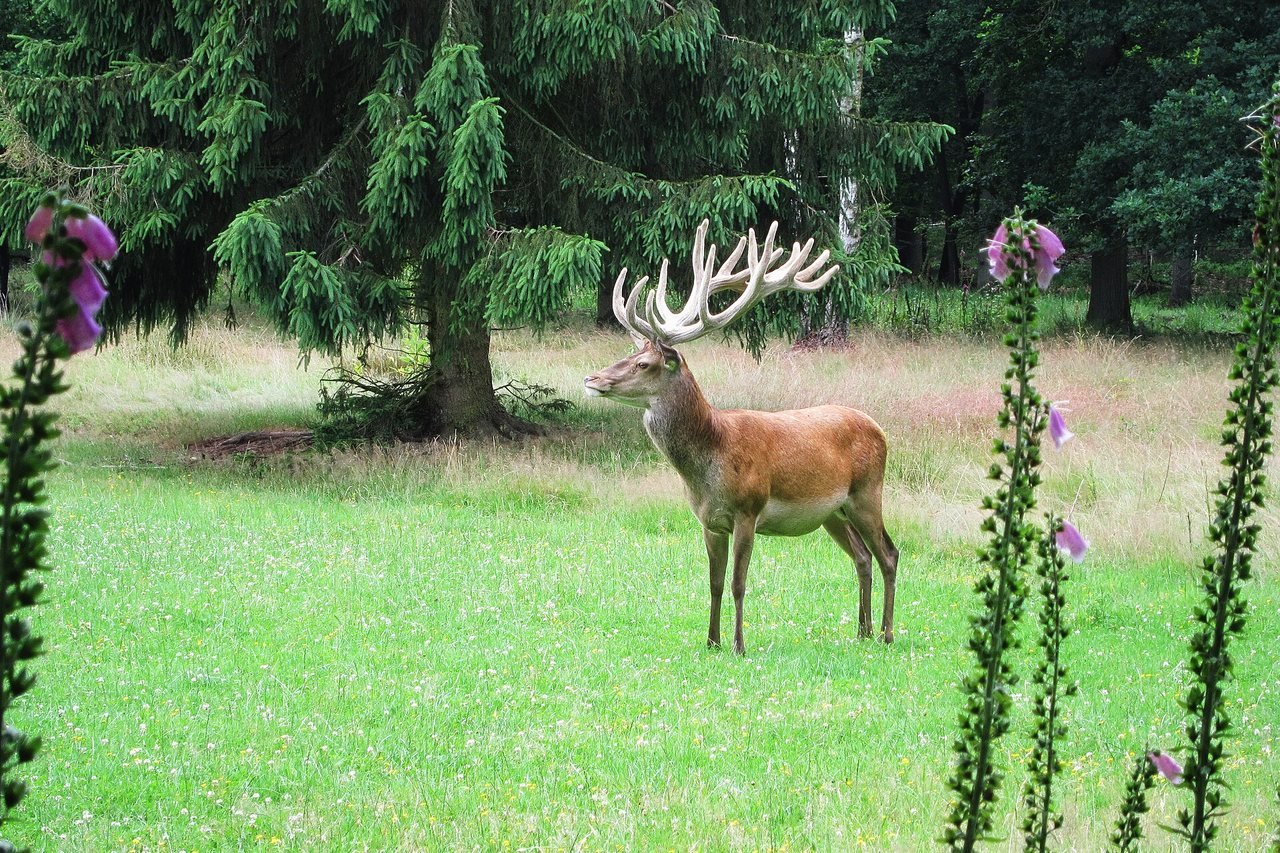
Photo: A red deer with fully grown antlers in De Hoge Veluwe National Park. The photo was taken on 14 July 2015, outside the rutting season, when the antlers have not yet been rubbed clean. Henk Monster / Wikimedia Commons (CC BY 3.0)