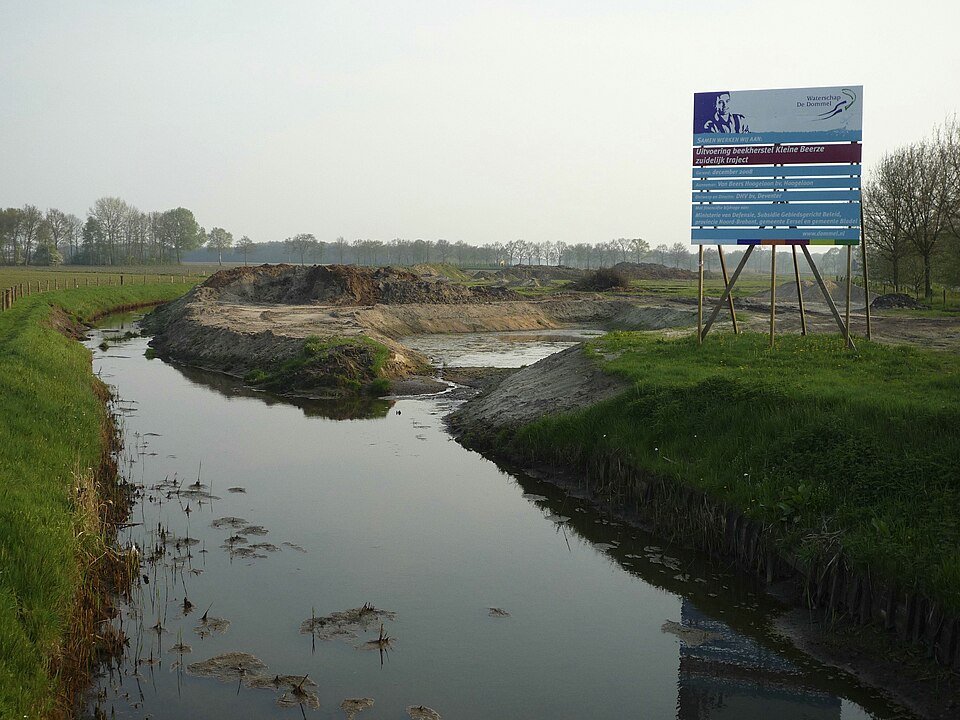
Stream restoration: the straight channel is allowed to meander again
Many Dutch streams were straightened to drain water quickly. Stream restoration gives some of those bends back.
A channelised stream is efficient for farmers after rain: the water disappears quickly. Fish, riverbanks and high-water storage pay the price. Straight and deep means fast and low. Restoration projects by water authorities re-excavate old meanders, make the channel shallower, place wood in the current and allow the stream to spill onto the surrounding land during peak flows. This is called remeandering or stream restoration, not wilderness without a plan.
The aim is to give water more room: lower peaks downstream, more life within the stream. A meandering stream is longer, slower and wetter along its margins. You can see this in marshy ground, in willows and in steep outer bends. Not every stream is allowed to overflow its banks everywhere; beside homes, an embankment remains. Restoration takes place along the kilometres where space is available.
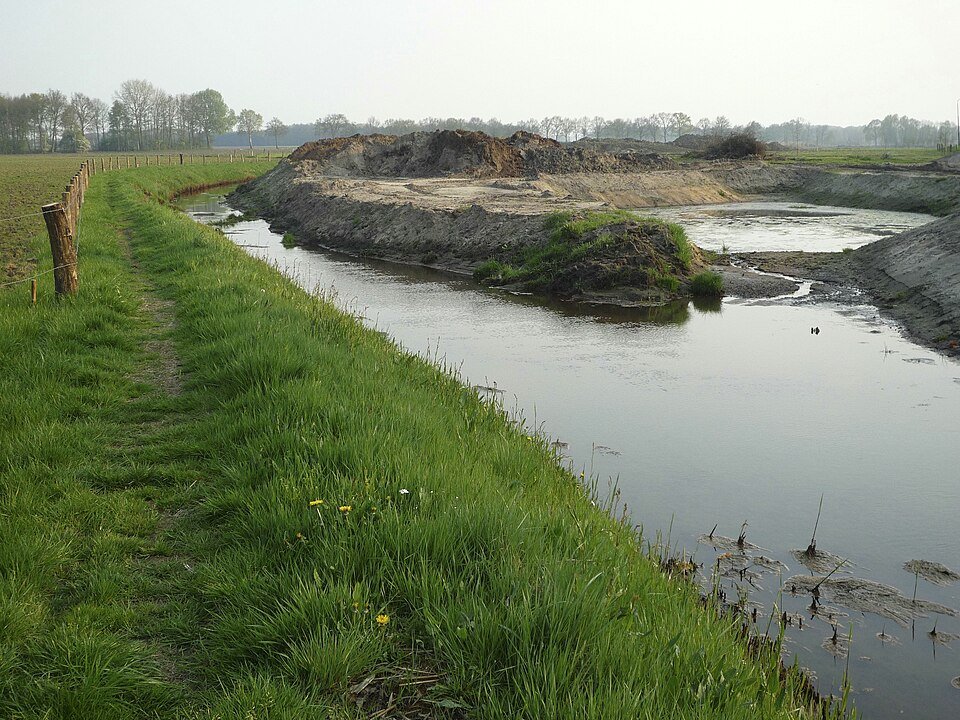
For you, it is a path beside water that suddenly no longer runs ruler-straight. Look for gravel, dead wood and shallow sections. This is engineered physics in nature, not chance.
Here, the Netherlands is learning that draining and retaining water must fit within the same stream. The meander is the instrument.
A fresh perspective
A longer, meandering stream stores more water than a short, straight channel of the same width.
Look for an outer bend with a steep bank opposite an inner bend with deposited silt.