Hedges as heritage: a living fence
A hedge is more than a property boundary. In the Maasheggen, the woven structure itself is the monument.
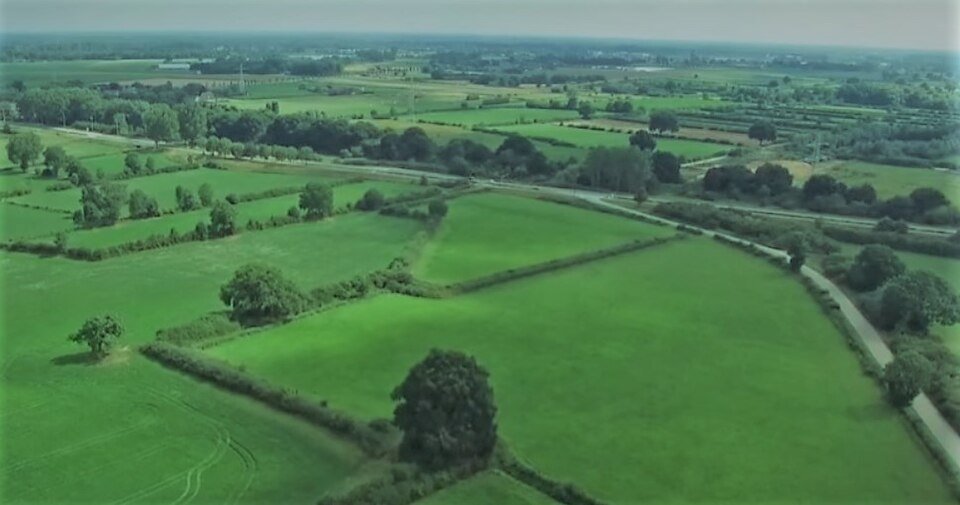
Hedges kept livestock in and neighbours out before barbed wire existed. Hawthorn and blackthorn were planted and periodically ‘laid’: stems were partially cut and bent sideways, then woven into a dense, living wall. In the Maasheggen area along the Brabant bank of the Meuse, between Cuijk and Vierlingsbeek, this system survived on a large scale, and in 2018 UNESCO designated the area as a biosphere reserve. Elsewhere in the Netherlands, kilometres of hedges disappeared during land consolidation.
A laid hedge is lower and denser than an overgrown tree belt. Birds nest in it. Bats follow its line. For the farmer, it requires maintenance: wait too long and the hedge becomes a row of trees. Trim it too often like a neat fence and the woven structure disappears. The craft lies in the cut, not in the sign beside the road.
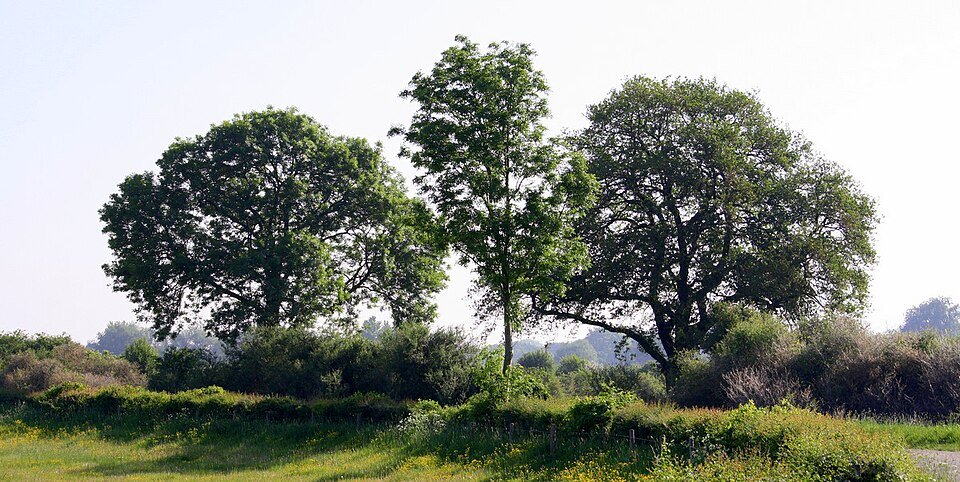
Cycle along a narrow road between two hedges. The view stops. That is the old scale of the plots. The open land beside it is the new.
Hedge heritage is not a museum hedge behind glass. It is a working method that can still be read in the wood.
A fresh perspective
‘Laying’ a hedge turns upright shrubs into a woven barrier that keeps livestock in.
Look for slanting, partially cut stems that are growing again: that is a laid hedge, not merely a trimmed one.