Brabant drifting sands: heathland that starts moving again
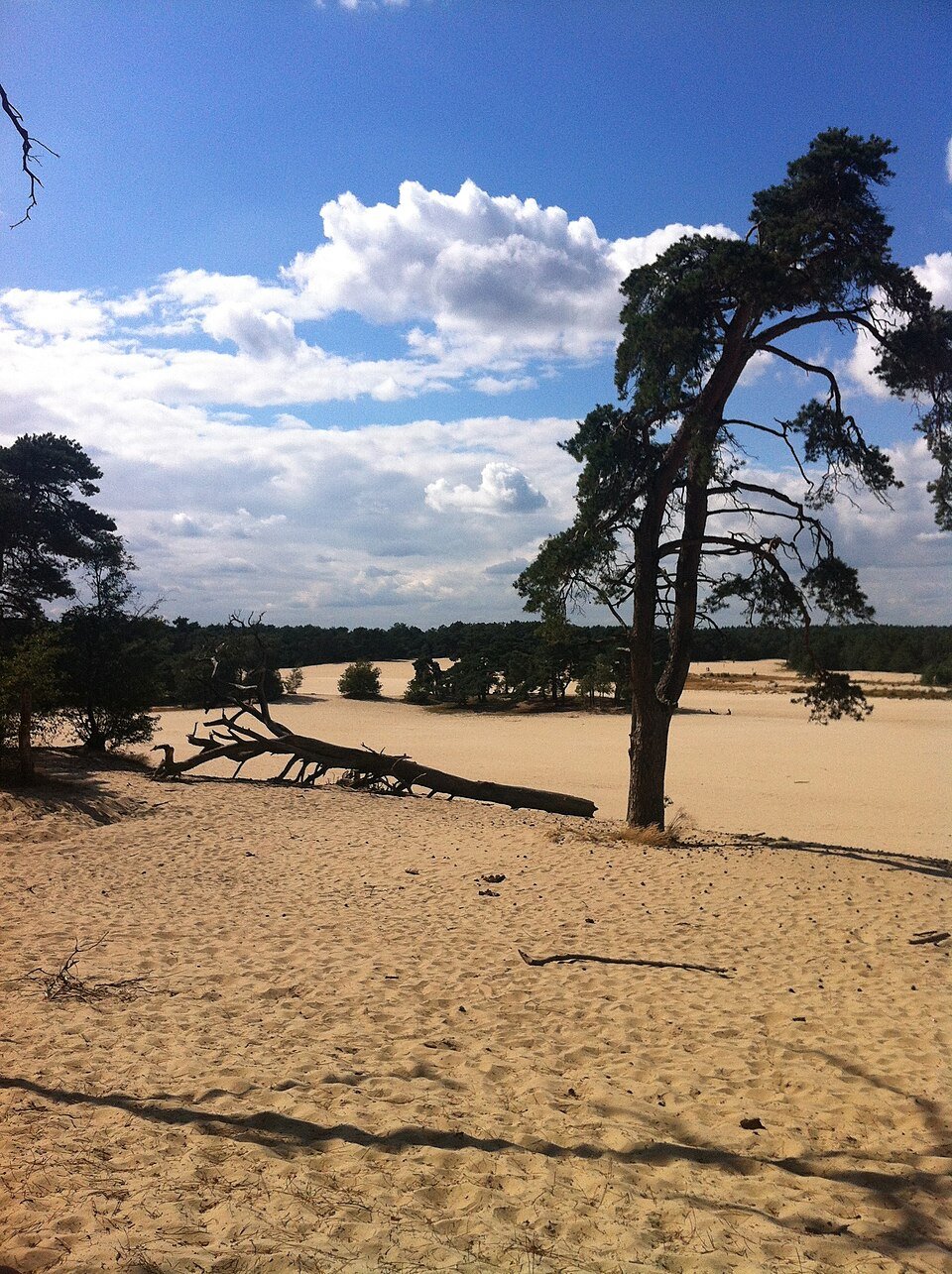
On the Loonse en Drunense Duinen, sand blows across the cycle path. This is not a beach. It is inland drifting sand created by the landscape itself.
Brabant lies on coversand. Centuries of cutting turf, grazing and felling removed the vegetation. Bare, dry sandy soil began to move. Parabolic dunes and expanses of sand formed that came to be called a ‘desert’. The Loonse en Drunense Duinen are the best-known remnant; the Strabrechtse Heide and other areas in the Kempen also contain open sand. Without management, pine trees and grasses take over. Intensive trampling can damage the vulnerable vegetation. Land managers seek a balance: enough bare sand for specialist species, enough vegetation to prevent sand from drifting onto neighbouring land.
Drifting sand is younger and looser than a Saalian push moraine. It is the work of wind on land altered by human use. Footsteps sound different here. The sand is cold in the shade, hot in the sun. Pioneer plants such as grey hair-grass trap the first grains. Then comes heath, followed by woodland. The cycle is the story, not a single photograph of bare yellow sand.
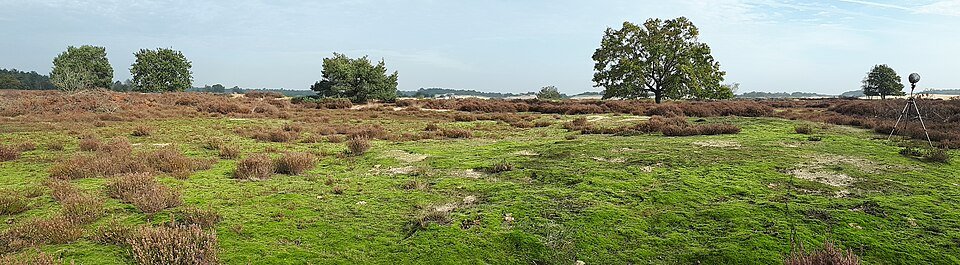
For you, it is a walking area. For the soil, it is a workshop. Stay on paths where requested: too many shortcuts create new channels.
Here, Brabant preserves a landscape that arose when people demanded too much from the sand — and which is now deliberately allowed to remain a little wild.
A fresh perspective
Inland drifting sand develops when the vegetation disappears; the wind does the rest.
Compare a bare dune hollow with its vegetated edge: that is where the sand stops or starts.