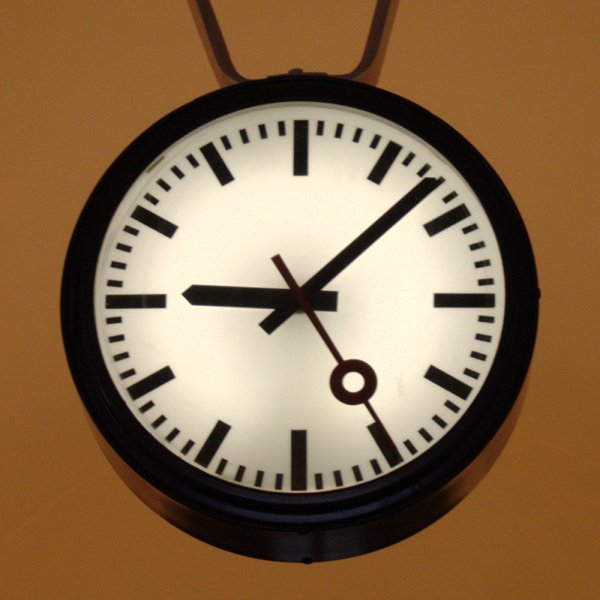
Station clocks: how the railway gave the Netherlands the same time
When cities still used their own local time, arranging to meet somewhere farther away was less straightforward than it is today. The railway made a common clock urgently necessary.
Solar time runs ahead in the east compared with the west. That was harmless until timetables began spanning many kilometres. The General Regulations for Railway Services required every station to have a clock. In 1866, all stations and timetables had to follow Amsterdam mean time. Internationally, Greenwich gained ground. In 1892, Dutch railways and the telegraph legally switched to that Western European time. The rest of the country often continued to use Amsterdam time or local time. Travellers knew the difference as railway time. A traveller near Venlo described three clocks on a single afternoon: German time, railway time and church-tower time.
On 1 May 1909, the Time Unification Act made Amsterdam time the national standard. Stations were given master clocks and telegraph pulses, so the stationmaster no longer had to set every clock hand himself. In May 1940, the occupying forces introduced Central European Time. The shared time remained; only the meridian shifted.
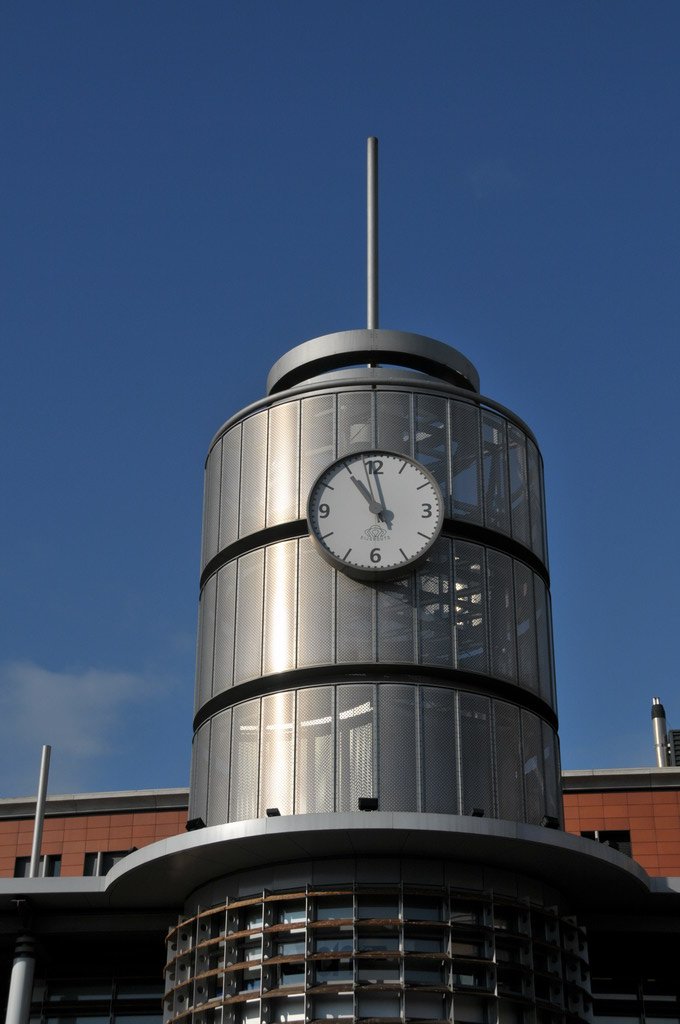
The platform clock made agreements about arrivals and departures possible. Anyone looking at its hands today sees an everyday tool taken for granted. Behind it lies the transition from local time to a time that an entire network could share.
At a historic station, look for the location of the master clock or for visible platform clocks aligned along the platform.