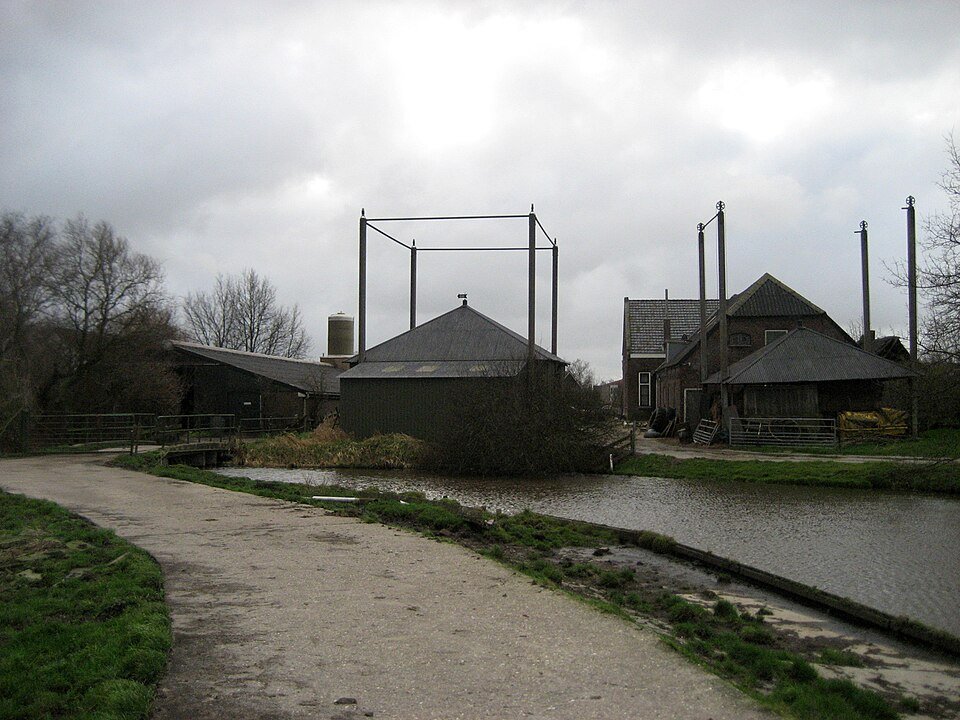
South Holland peat meadows: grass on a sinking floor
Between Gouda, Woerden and the Nieuwkoopse Plassen lies land that feels soft and is slowly sinking. This is peat meadow: grass growing on an ancient marsh.
Peat is partially decomposed plant matter. As long as it stays wet, it remains in place. Lower the ditch level for cattle and machinery, and air reaches it. The peat oxidises, disappears as carbon and the ground surface subsides. The ditches have to follow. Falling groundwater levels can also cause problems for wooden foundations if piles become exposed to air. This is not a sudden disaster; it is a long-term consequence of keeping pasture dry.
South Holland has a classic patchwork of this landscape: long, narrow plots, many parallel ditches, villages on creek ridges or dykes. Dairy cattle are part of the picture, as are reed margins and meadow birds that need wet fields. A higher water level helps the peat; a lower water level helps farmers using heavy machinery. Water authorities look for a middle level. You see the result as two different waterlines beside a single road.
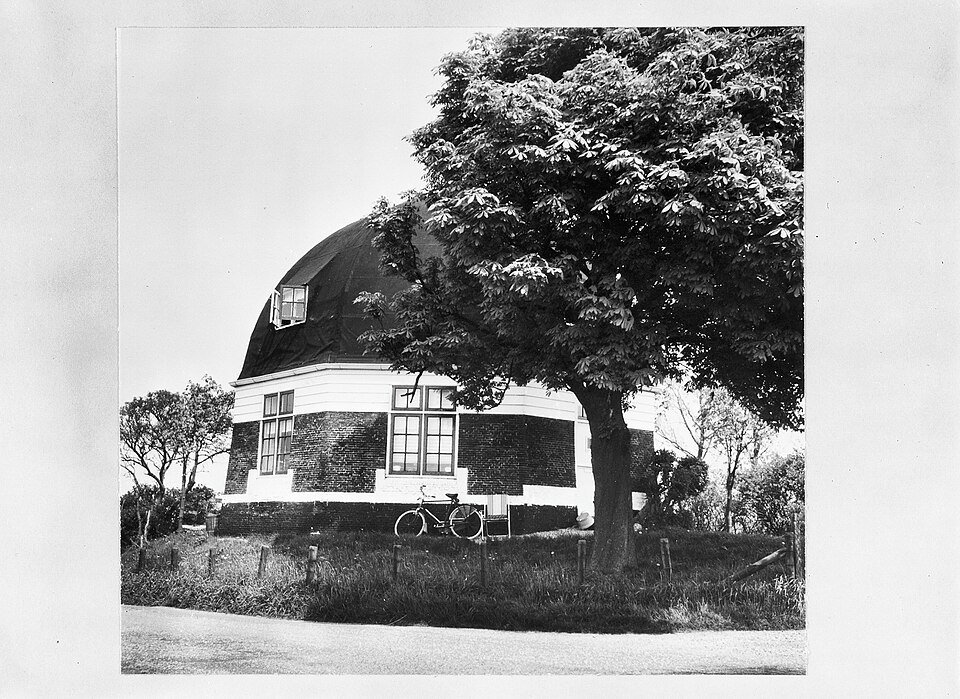
The polder here is not a former seabed like Flevoland. It is a sponge that we drained until it could bear weight — and that, through further drying, actually loses soil. Cycle across a narrow bridge and notice how the land beside the embankment lies lower than the road.
Peat meadow is Holland at its softest and most vulnerable. The grass is the roof. The peat is the floor that is shrinking.
A fresh perspective
Peat that dries out does not merely lose volume; it disappears chemically when it comes into contact with air.
Compare the level of the road with the meadow beside it: the difference often reflects the subsidence.