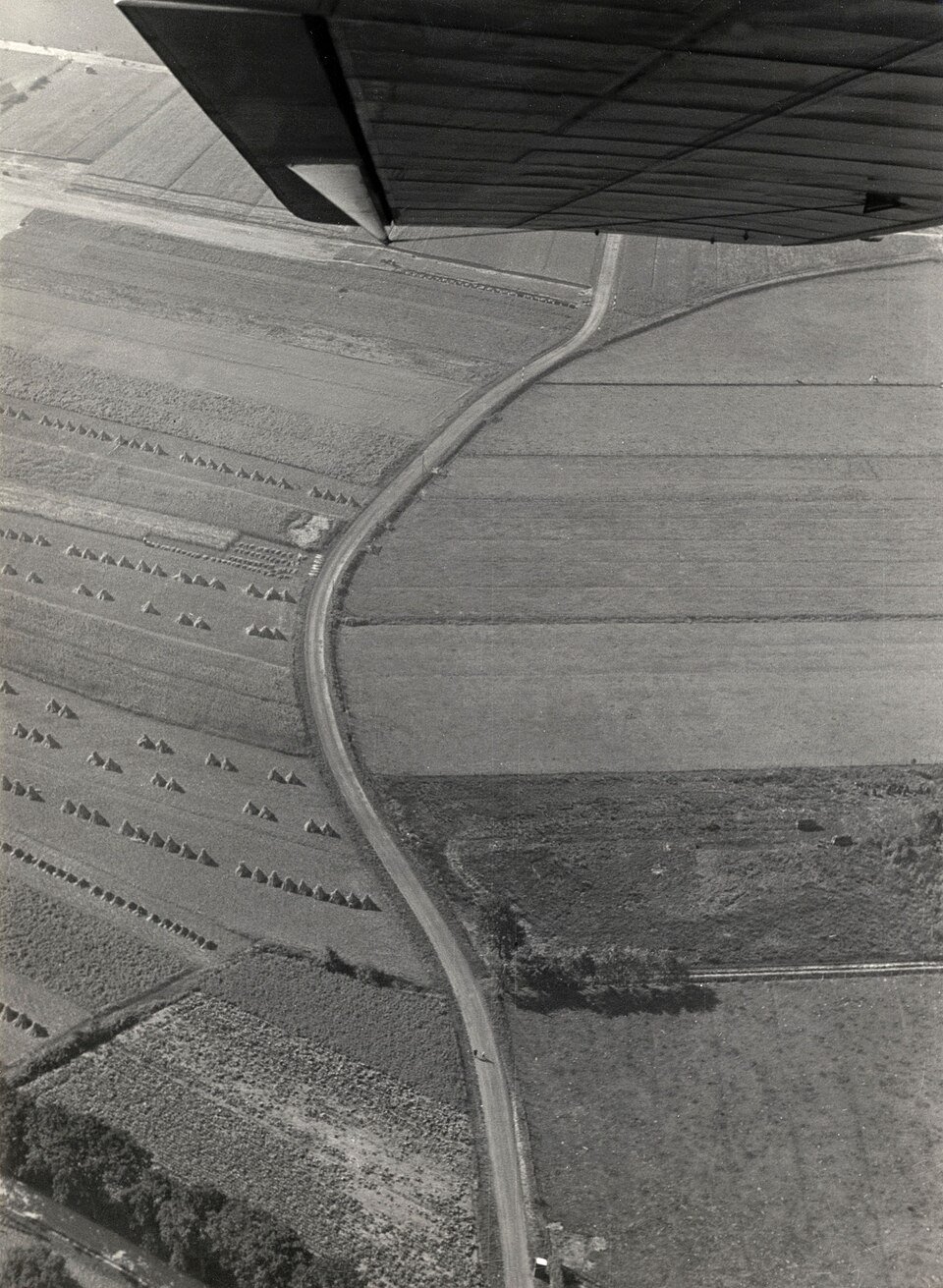
Overijssel's coulisse landscape: the countryside as stage scenery
In Twente, wooded banks, hedges and tree belts repeatedly interrupt the view. Beyond one green boundary, another meadow appears. That is how the landscape gets its name: coulisses, like the wings of a theatre stage.
The coulisse landscape is not a park design. It is a by-product of small plots, livestock that had to be kept out of neighbouring pasture, and timber that farmers needed. A bank planted with oak or alder separated meadows, provided shelter and supplied useful timber. Beyond every bank, a new ‘stage’ opens up: a meadow, an arable field, a farmyard. Hence the theatre metaphor.
On the sandy soils of eastern Overijssel, this fine-grained network survived longer than in large-scale polders. Land consolidation cut holes through it; precisely because of that, what remains is easy to read. The curves of roads and field boundaries show how the land was divided. Birds and bats use these lines as routes. For you as a cyclist, the main thing is this: you never know exactly what lies beyond the next wooded bank.
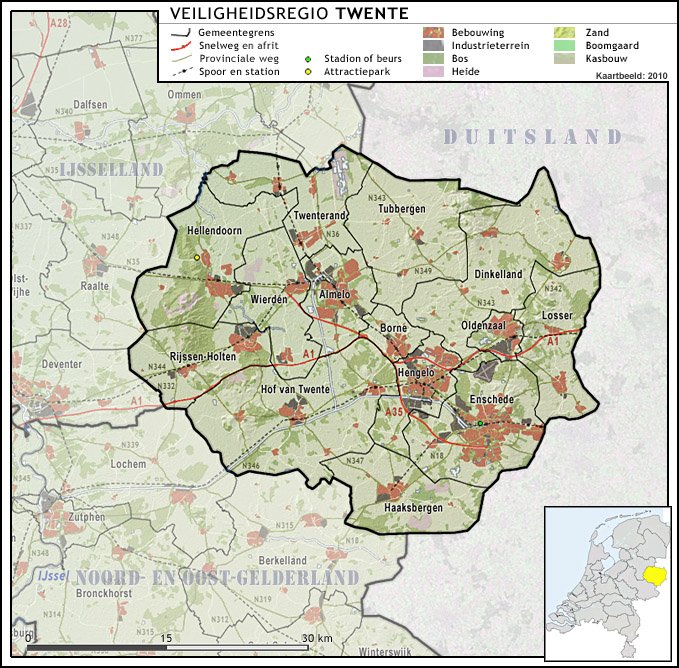
The contrast with the open IJssel meadows is the point. There, the horizon tells the story. Here, the interruptions tell the story. The coulisses do not turn a province into scenery, but reveal a working landscape that combined privacy and shelter in the same bank.
Stop where two wooded banks cross. Four rooms of grass. That is Overijssel in miniature.
A fresh perspective
The bank served as a fence, timber reserve and windbreak all at once.
Choose a side road that curves with the vegetation rather than the ruler-straight provincial road.