Einstein Telescope: why South Limburg is a candidate and how the choice will be made in 2027
The Dutch cabinet is exploring cooperation with Italy on the underground telescope. What is the Einstein Telescope, what makes the ground in the border region suitable, and who decides?
Hollandmagazine editorial team ·
For a long time they were seen as rivals, the South Limburg border region and Sardinia. Now the question is whether they can move forward together. On Tuesday 22 September 2026, Rianne Letschert, Minister of Education, Culture and Science, sent a letter about the Einstein Telescope to the House of Representatives. In it, she announces a study into an L-shaped detector in the Euregio, to be combined with a second one on Sardinia, and into cooperation with Italy. On Wednesday 23 September 2026, the NOS reported it as a new scenario: a telescope in two parts, spread across the Netherlands and Italy.
What kind of instrument is this, and why should it be built beneath the hills of South Limburg of all places? An overview.
The Einstein Telescope measures gravitational waves: minuscule ripples in space that arise when, for example, black holes or stars collide. The measurements are made with lasers in tunnels, the Dutch government (Rijksoverheid) explains.
The design the Euregio Meuse-Rhine has backed so far is a triangle with arms of 10 kilometres, at a depth of 250 to 300 metres. According to the Einstein Telescope EMR project office, the telescope will be ten times more precise than its predecessors, allowing it to capture a thousand times more gravitational waves.
Since the first measurement in 2015, some 400 gravitational waves have been detected, astronomer Gijs Nelemans of Radboud University told the NOS. “We are only now seeing the tip of the iceberg.”
Since 2021, the Einstein Telescope has been on the European roadmap for large research infrastructures, the ESFRI Roadmap. Construction is budgeted at €2.3 billion, the Dutch government reports. Count on at least that amount: the estimate is several years old, and inflation and rising prices could push it even higher, the project office warns.
Why the ground in the border region matters
The search area lies in the border region of the Netherlands, Belgium and Germany; according to the European Einstein Telescope organisation, between Maastricht, Liège and Aachen. An instrument like this can barely tolerate vibrations from its surroundings. The project office names heavy industry, railways and mining as sources of such noise.
The structure of the subsoil helps here: at the top lies a relatively soft layer that absorbs vibrations; beneath it is hard rock into which a tunnel can be bored. That is how Stan Bentvelsen, scientific director of the project office, explained it to the NOS back in 2023.
Whether that holds true has been investigated since 2023 with test drillings, supplemented by seismic measurements. According to the project office’s website, there were eleven of them in 2024; the boreholes go on average 250 to 400 metres deep. The first drilling took place in Aubel, in Wallonia. According to the project office, all drilling sites lie in the countryside.
The Dutch government sees the project as a boost for South Limburg, where the population is shrinking and ageing.
Three candidates, and perhaps two at once
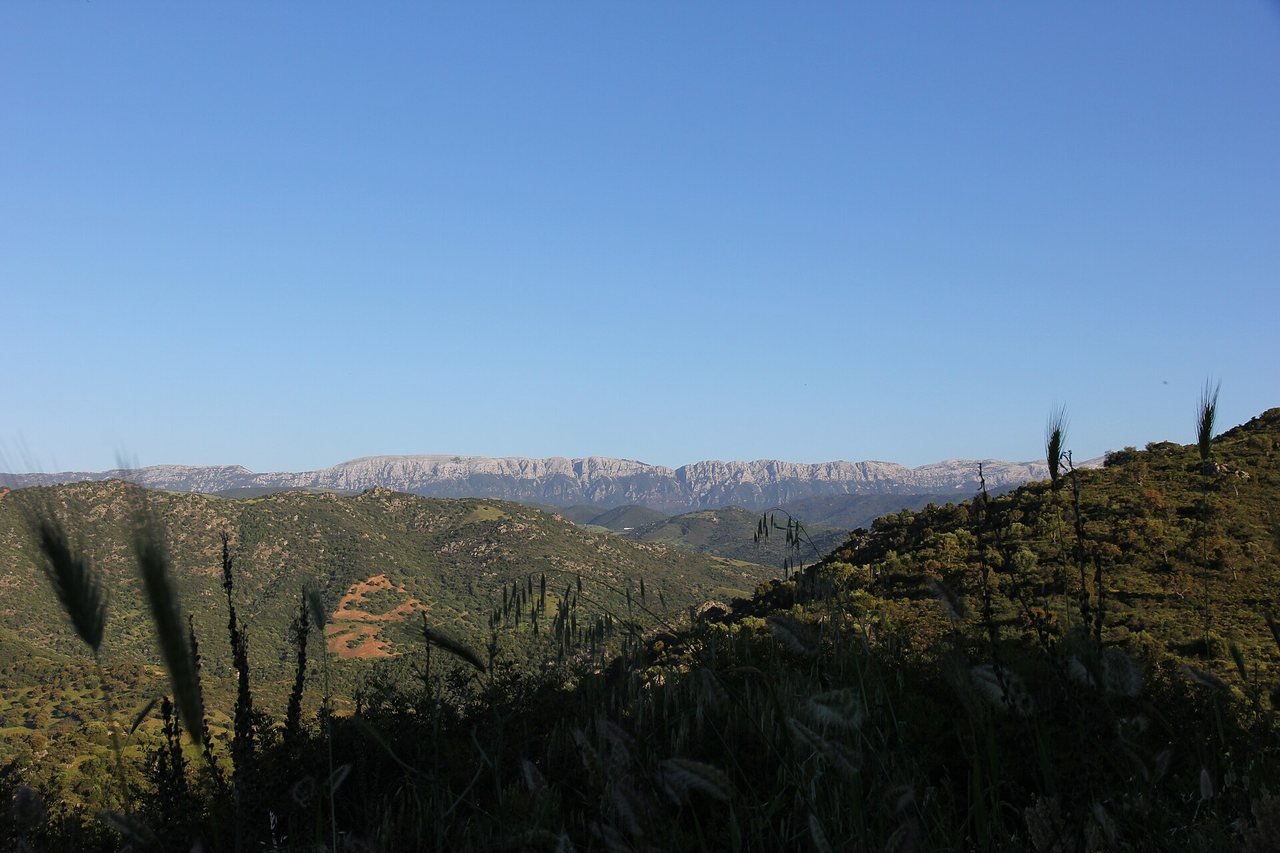
According to the European organisation, there are three official candidates: the Euregio Meuse-Rhine, Lusatia in the German state of Saxony, and the area around Sos Enattos on Sardinia. That Sardinian site lies inland, between the municipalities of Lula, Bitti and Onanì, among others. Lusatia is the newest candidate and only became official in 2025.
The Italian nuclear physics institute INFN promotes Sardinia as an island on its own microplate, separate from the areas with frequent earthquakes and volcanic activity. The Saxon bid points to the stable granite massif beneath Lusatia.
The big question now is the shape. Besides the triangle, a variant with two L-shaped detectors at two different locations is being studied. In July 2025, the Einstein Telescope organisation asked all parties to study both shapes, L1 reports. On 17 July 2026, Italian and German research institutions signed an agreement in Nuoro to work out that double L jointly for Sardinia and Saxony, the INFN reports.
The Euregio is now also studying a double L, together with Italy. According to the minister, this requires additional drilling. Two detectors far apart help to determine the direction from which a gravitational wave is coming.
Who decides, and when
It is not the European Union that chooses, but the countries supporting the project. There are ten of them: the Netherlands, Belgium, Italy, Spain, the United Kingdom, Poland, Greece, Croatia, Germany and France. Together they form the Board of Governmental Representatives, which, according to the project office, will choose the location in the second half of 2027.
Until then, the Euregio is working on a bid book, the dossier with which the three countries officially submit their candidacy. According to the project office, it will be ready at the end of 2026. North Rhine-Westphalia wants to contribute to the construction costs, the project office says, provided the federal government in Berlin also backs the Euregio. Which bid Berlin supports is not yet clear, according to L1.
The sources differ on the timeline. According to the Dutch government, if the Euregio is chosen, construction will begin in 2028 and the telescope will be finished in 2035. The project office is more generous: preparations will begin in 2028 at the earliest and will take three years, including the permit procedures. It then allows seven years for construction itself. The European organisation is aiming for the first observations in the early 2040s.
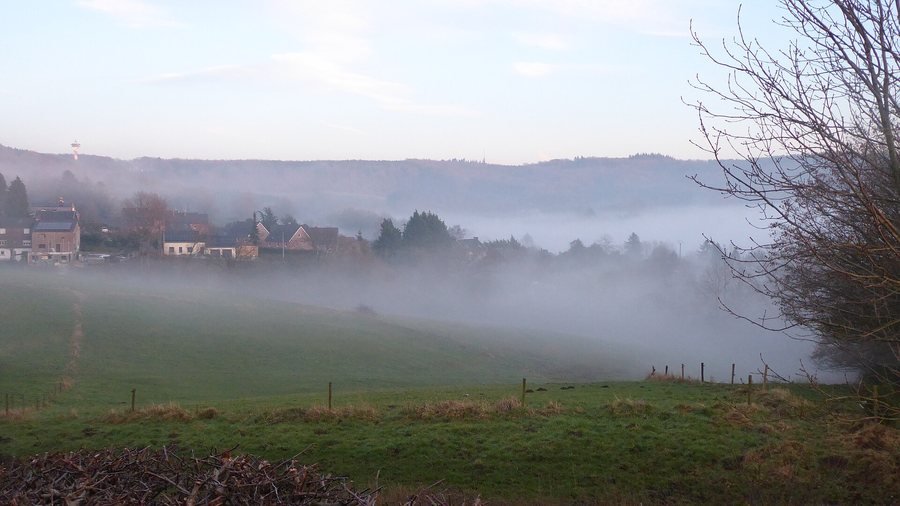
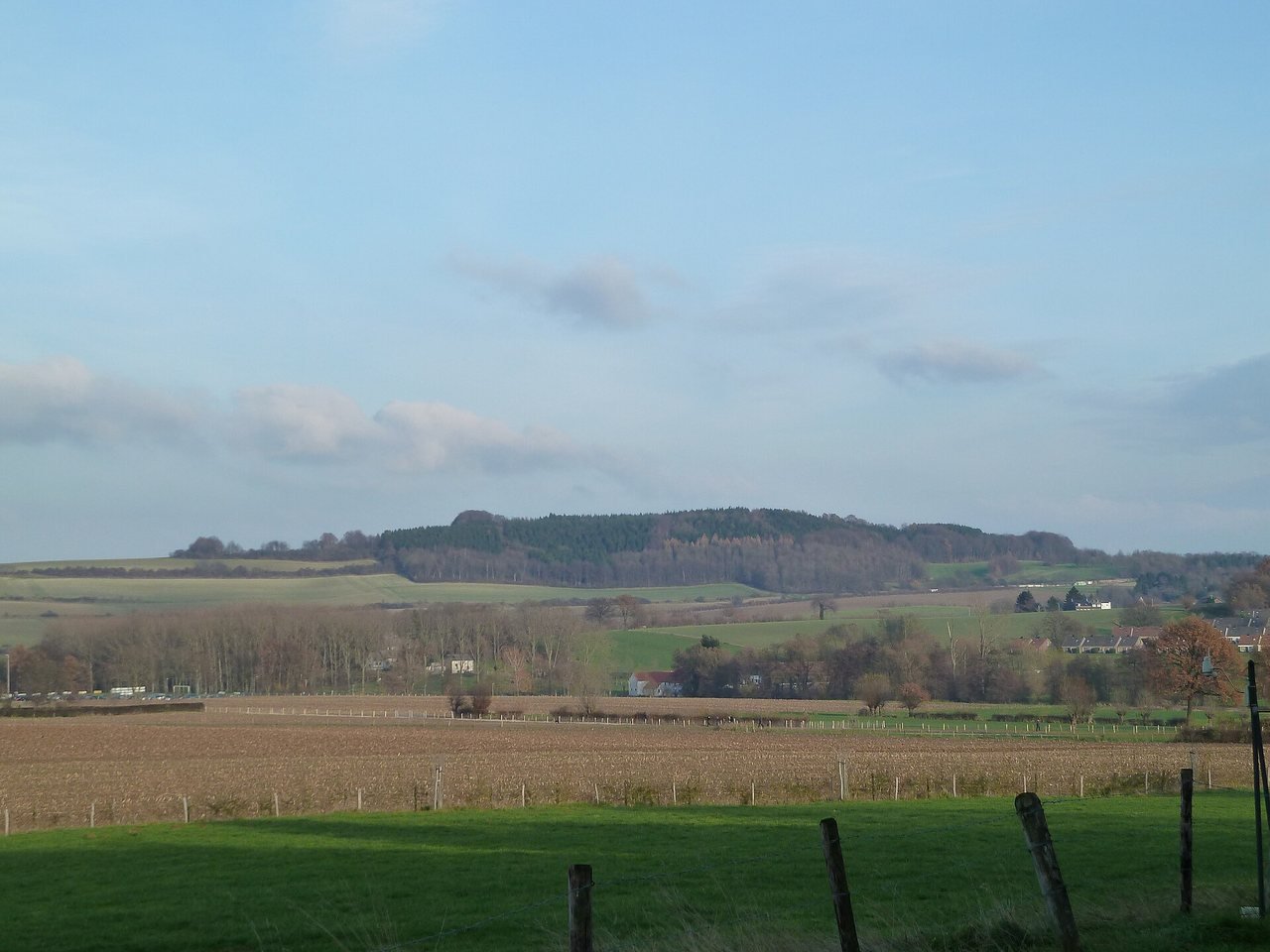
Photo: View from Holset in the municipality of Vaals towards the wooded Schneeberg, with fields and meadows in the border region near the Three-Country Point. Photo from November 2010. Romaine / Wikimedia Commons (CC0)