Callantsoog in autumn: a coastal village beside the closed Zwanenwater reserve
The beach and village square remain Callantsoog’s landmarks; Uitlandse Polder offers an alternative nature walk for now.
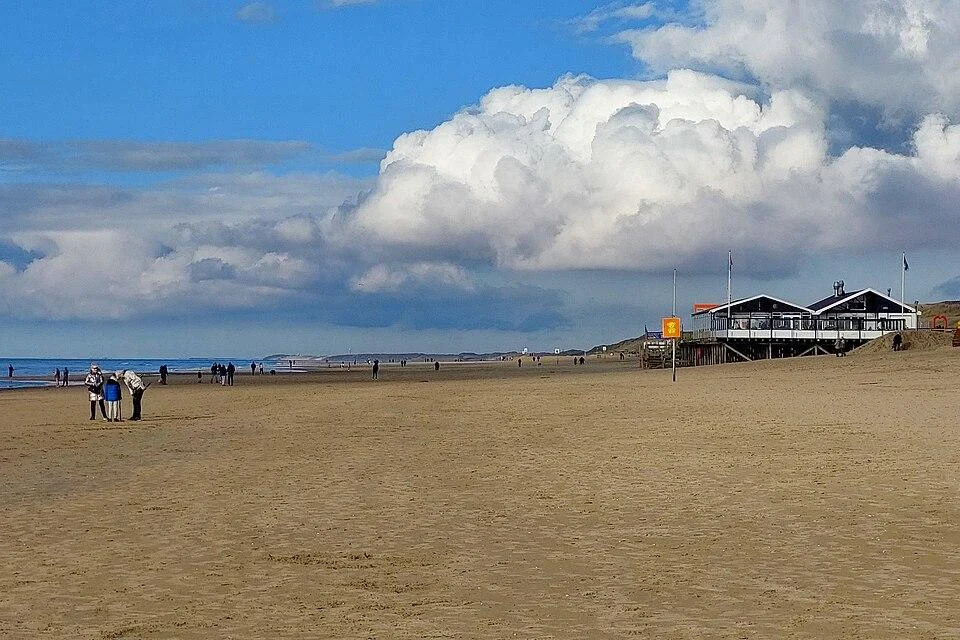
Callantsoog lies on the North Sea coast within Schagen municipality. Its square, church, dunes and beach sit close together, but the best-known nearby nature reserve is inaccessible this autumn. Natuurmonumenten closed Zwanenwater for restoration work on 1 October 2026 and expects the closure to last until spring 2027. A beach walk and a circuit of the village are still worthwhile in their own right; a walk beside the dune lakes must wait. On the opposite side of Zuidschinkeldijk, Uitlandse Polder provides an open alternative.
Callantsoog has had to begin again more than once. The municipality’s village plan says the present settlement is the third Callantsoog: two predecessors disappeared in the All Saints’ floods. Dykes and dunes then shaped the shoreline. South of the village, a valley with a large dune lake developed between the dykes, later becoming Zwanenwater. Paved roads brought the first beach tourists late in the nineteenth century. The present square and coastal buildings are therefore not an unbroken old village, but a place repeatedly adapted to water, sand and visitors.
The centre still has tangible links to this history. Schagen’s heritage list names the church and tower at Kerkplein 1 as national monuments and also lists a traditional stolp farmhouse at Dorpsplein 33. These buildings can be seen from public space. Beach access routes lead from the village towards the sea. According to the municipality, they are for pedestrians, cyclists and permit holders; ordinary cars cannot use them. Beyond the compact centre, the beach opens into a broad stretch of coast behind the dunes.
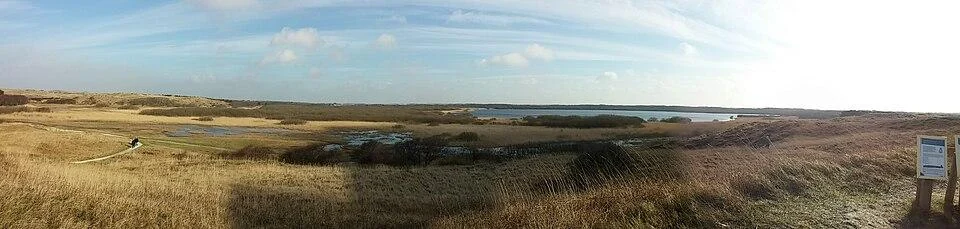
Zwanenwater shows why the dunes are more than scenery. Manager Natuurmonumenten describes dune valleys, grassland, heath, pools and two dune lakes, Eerste Water and Tweede Water. The lakes formed in the eighteenth century when groundwater rose and rainwater collected behind the seaward dune ridge. The varied habitats matter for birds and plants. The closure has a practical reason: walking paths are being used by work vehicles and to move materials. Visitors cannot currently reach the bird hides or the usual walking routes within Zwanenwater.
Restoration aims to keep the dune landscape open. Natuurmonumenten is widening existing wind channels and creating bare sand hollows so lime-rich sand can blow farther inland. Young trees and shrubs are being removed elsewhere to give dune heath and reed marsh room. The manager cites nitrogen deposition and reduced sand movement as reasons for overgrowth. The car park on Zuidschinkeldijk remains reachable during the works. Opposite lies Uitlandse Polder, with open grassland, low dunes, ditches and reed beds. This autumn, the contrast between a closed dune lake and an accessible polder is part of the area’s story.
In Uitlandse Polder, Natuurmonumenten describes a 3.3-kilometre unpaved loop marked by blue arrows, starting at the Zuidschinkeldijk–Uitlandseweg junction. Dogs are allowed on leads. Stiles over fences make the path unsuitable for wheelchairs and pushchairs, and the ground can be wet. An autumn visit can therefore combine village and beach for the coast with a polder walk farther inland. Zwanenwater remains closed for now; the manager publishes updates and any later reopening on its project page.