Hellevoetsluis in autumn: naval harbour and dry dock
Jan Blanken’s dry dock brings together shipbuilding, fortifications and naval history.
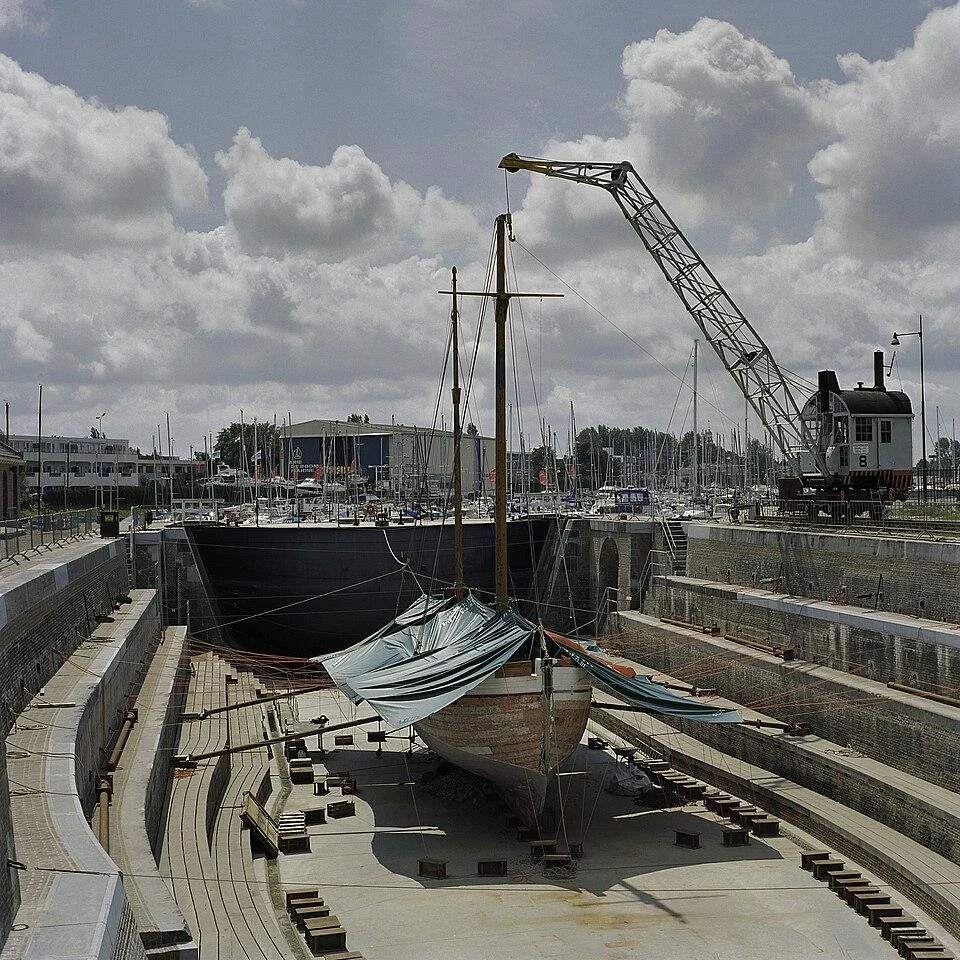
Hellevoetsluis displays its maritime past beyond museum cases. Around the fortified harbour stand the Jan Blanken Dry Dock, quays with historic vessels and paths beside former defences. An autumn visit can combine the outdoors and indoors: first see the shape of the harbour, then examine the engineering behind ship maintenance. A naval port for centuries, the town now belongs to Voorne aan Zee municipality, where that history remains visible in buildings and waterways. Fortresse Holland calls itself Hellevoetsluis’s open-air museum and connects stories of the navy and coastal defence.
The dry dock is the technical centrepiece. Fortresse Holland dates its construction under Jan Blanken to the years 1798–1822. Ships could be taken out of the water for work on their hulls; a steam engine from James Watt’s firm pumped the dock dry. A naval base needed more than ships and guns: a fleet could not operate without repairs, pumps and a functioning yard. The dock remains recognisable as a deep space between stone walls, where the form of a ship and the engineering that serviced it can be seen together.
Beside the dock is Fortresse Holland’s Museumloods. According to the operator, exhibits cover Jan Blanken and the site’s history; guided tours also enter passages beneath the dock. The visitor centre and grounds are freely accessible, according to the local tourism organisation, while the museum and tours require their own tickets. The public area offers a view of the exterior, whereas a tour opens another part of the monument. The operator also notes that the passages are difficult for visitors with limited mobility; an interactive table in the museum offers an alternative account.
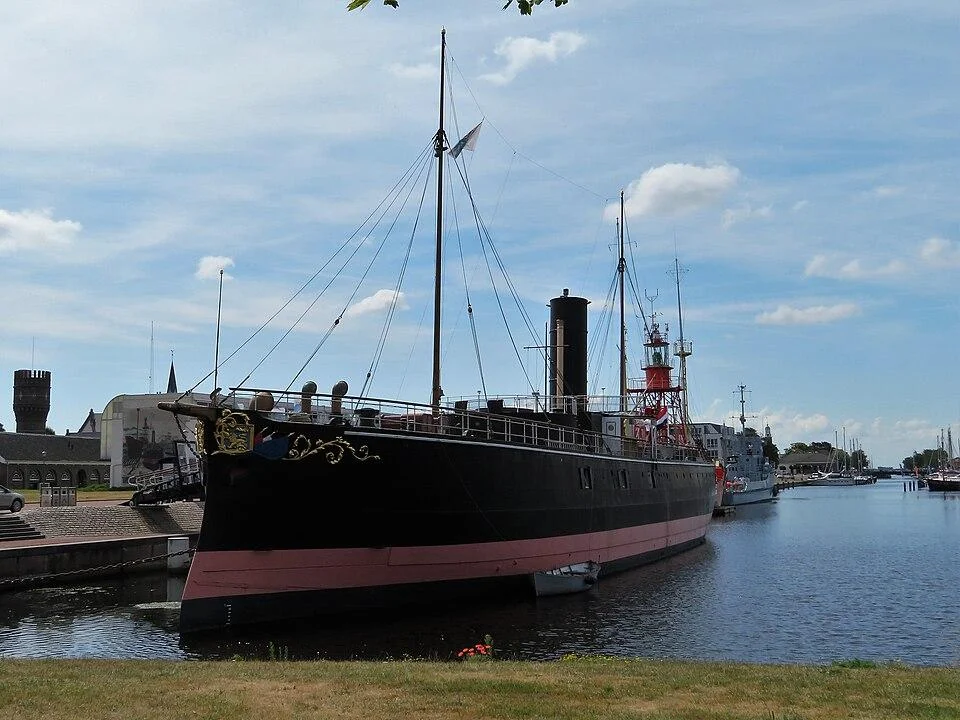
The harbour tells the story of vessels too. At Koningskade lies museum ship De Buffel, an armoured turret ram from 1868 featured in Fortresse Holland’s collection. Its dark hull and high superstructure make the shift from sailing ships to the industrial nineteenth-century navy visible. Hellevoetsluis was an important naval and military harbour then. Ship and dry dock complement each other: one shows the vessel, the other the maintenance that made fleet operations possible. Access to the ship depends on the operator’s current information.
For a wider view of the fortifications, OP Voorne-Putten offers a 4.4-kilometre audio walk starting at Dokweg. Listening points around the old defences explain the nineteenth-century naval harbour. The outdoor route passes places once used for defence, port management and shipbuilding, making the Museumloods part of a wider area rather than an isolated museum stop. The walk can be taken at a personal pace; indoor stops still depend on their opening hours. In autumn, that allows an alternation between open quays and sheltered exhibitions.
Fortresse Holland lists the Museumloods as open Wednesday to Sunday, 11:00–17:00, and publishes set dry-dock tour times. The day’s actual programme and availability govern a visit. One name can cause confusion: the national Marinemuseum is in Den Helder, not Hellevoetsluis. Here the relevant sites are Fortresse Holland, the Jan Blanken Dry Dock and the local maritime collection. A short visit to the harbour and dock already makes the town’s story legible; adding the museum or audio walk reveals more about engineering, defence and the people who kept the naval port working.