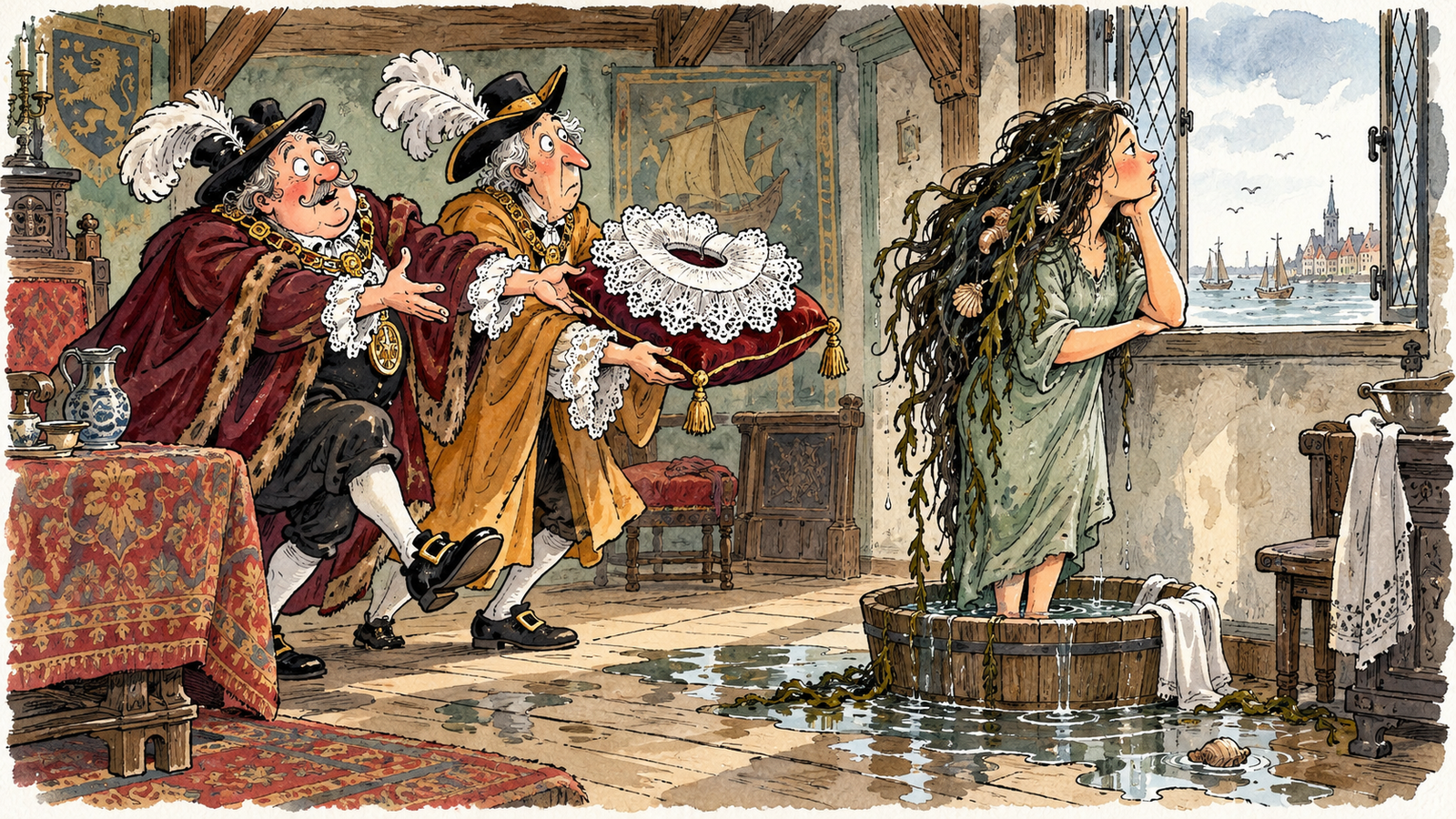
The first thing the gentlemen of Edam improved about the mermaid was her hair.
There was seaweed in it. That would not do. She had been rescued, after all.
That she constantly wanted to go to the water, they regarded as a consequence of the shock.
The women who had pulled her out of the Purmermeer had had to row hard. She had strayed there after a storm. The sea had swept her inland, and the repaired dyke had shut her out. Or shut her in. That depended on which side you were happy on.
She spoke a language nobody understood. When she stretched her arms towards the lake, the gentlemen nodded knowingly.
“She’s thanking us.”
When she walked towards the door, they held her back.
“She doesn’t yet know what’s good for her.”
A man with a particularly neat collar noted down that the creature was making progress.
He had taught her to sit that morning.
Visitors came. A woman wanted to know whether she slept upright at night. A boy asked whether she ate fish. A merchant asked what she cost.
The man with the neat collar said she was not for sale.
Then he asked why the merchant wanted to know.
They gave her clothes, a bed and a plate of food. The mermaid looked at the turnips as if she had been served rounded stones. She learned to eat what she was given. She learned to stand up when the gentlemen came in. She learned that a smile sometimes meant someone was about to make another decision about her.
But she did not learn to stay.
As soon as the door stood open, she walked outside. Her feet knew where the water was. In the old tale this mermaid had legs; the lack of a tail did not make her homesickness any smaller.
One morning she reached the quay. She smelled the water before she saw it. She knelt down and put her hands in it.
A woman from the street stopped beside her.
This time nobody said anything.
Then the gentlemen came.
“There you are.”
They took her back.
The man with the neat collar wrote down that she was not yet suited to walks on her own.
Haarlem heard of the wonder.
The people of Haarlem came to look. They walked around the mermaid the way people walk around a cupboard they think would look better in their own house.
“Remarkable,” said the first.
“Most remarkable,” said the second.
The third had already made the decision.
An important city, they felt, ought to have important things. Edam was smaller. That made the matter straightforward.
There were talks, visits and polite requests. The mermaid was talked about for longer than anyone had ever talked with her.
In the end she left for Haarlem.
The man with the neat collar sent the report along. It contained everything he knew about her.
It was a thick report.
In Haarlem she learned to spin. Her fingers were quick. The wheel hummed, the thread ran, and the women who taught her were pleased.
“She’s happy here,” they said.
They could hear it in the wheel.
Nobody considered that a wheel makes the same sound when someone is sad.
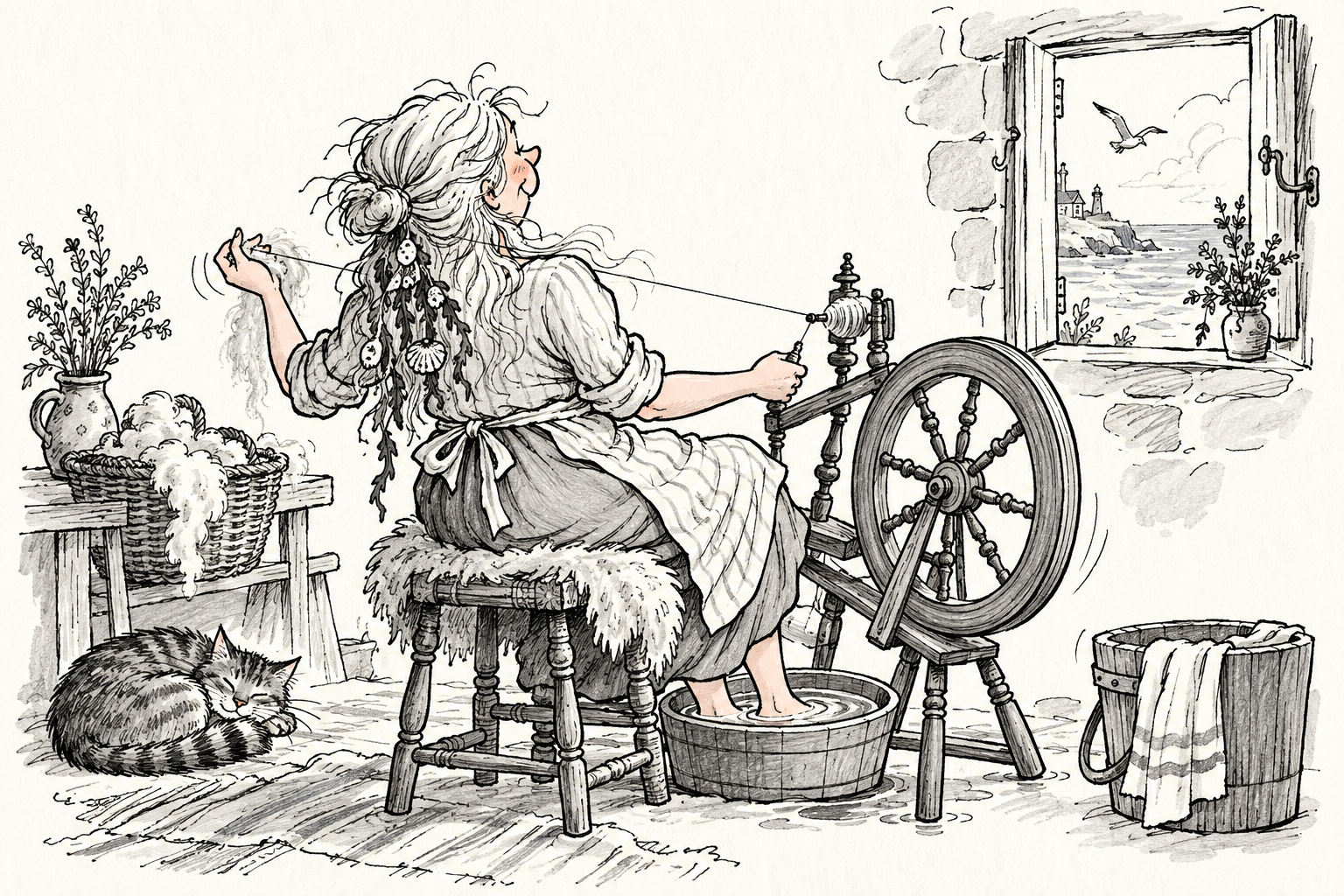
She put a tub of water by her feet. Anyone who came in thought she wanted to wash them. But she left them standing in it while she spun. Now and then she moved her toes, and the little waves tapped against the wood.
One afternoon a new visitor came in. He had learned to speak about distant lands without ever leaving his own, and he very much wanted to ask the remarkable woman a question.
“Are you happy here?”
She looked at him.
He repeated it, louder. As if a foreign language were a matter of volume.
Then she took his hand. He smiled, because he suspected something touching was about to happen.
She put his hand in the tub.
She held it under.
Not for long. Only until he pulled it back.
Then she pointed at the door.
The visitor left with a wet sleeve and the conviction that she still had a lot to learn.
She watched him go.
For the first time that afternoon, she had said something he understood.
Provenance · Freely retold
Based on De Zeemeermin van Edam (The Mermaid of Edam) in Josef Cohen’s Nederlandsche sagen en legenden. This variant describes a woman with legs who is brought to Haarlem and learns to spin. The town officials, the tub and the last visitor are newly worked out.
The dialogue and comic scenes are newly written. AI illustrations depict the tale.