South Holland · Towns & regions
The water that freed Leiden stayed behind on the land
On 3 October, Leiden celebrates its liberation in 1574. Outside the city walls, the same event tells a different story: that of farmers who watched their land disappear under water.
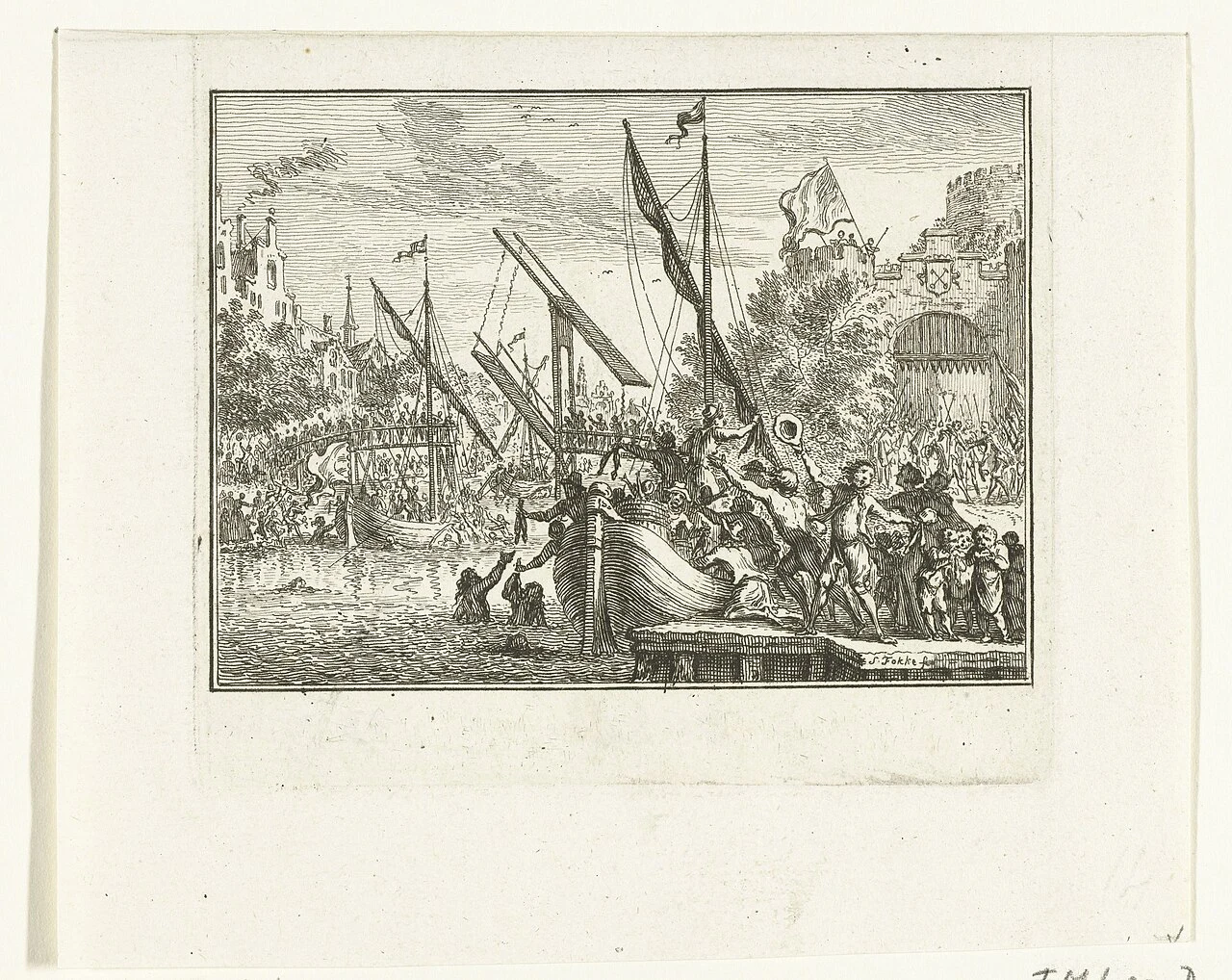
Water usually kept an enemy out. At the Relief of Leiden, it had to come in instead: over dykes, through polders and right up to the besieged city. The Spanish troops were trying to starve Leiden out. In the summer of 1574, William of Orange opted for a risky countermove. Flooded land could hamper the besiegers and bring ships carrying aid closer to the city.
It was not a matter of opening a dyke and waiting. The polders near Leiden lay higher than areas further south. The water spread with difficulty; the system of dykes meant to contain floods was doing its job now too. Moreover, breached dykes were sometimes closed up again. The liberation therefore depended in part on a landscape that was hard to steer.
Two sides of the same liberation
On 3 October 1574, the Sea Beggars’ fleet reached Leiden. For the city, the siege was over. For the Rijnland countryside, the recovery began. Salt water had damaged the fields, while dykes, mills and roads had to be repaired. The regional Canon of Alphen aan den Rijn describes that damage as the flip side of the well-known liberation story.
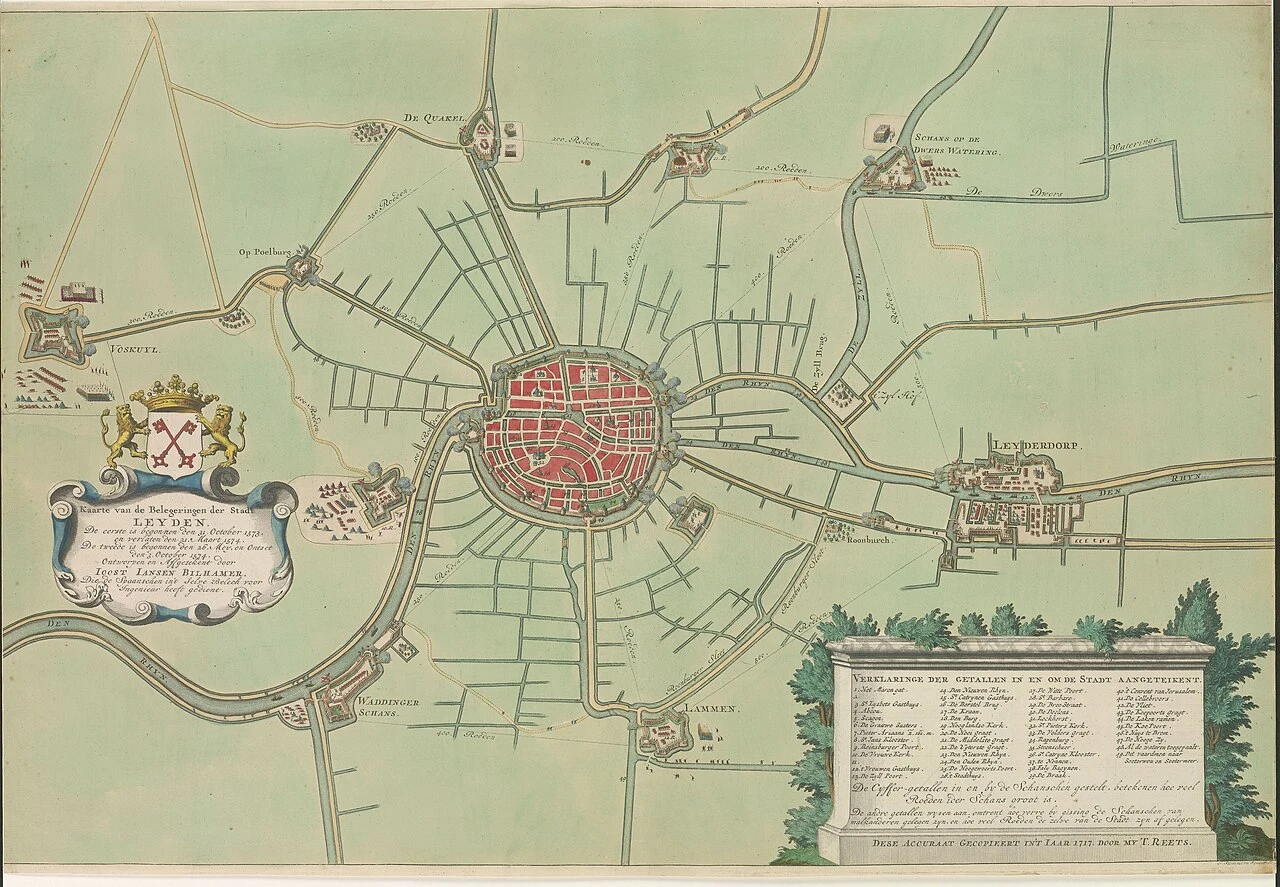
The difference lies in where you stand. From the city, the water was the route by which help arrived. From a farm, the same water could mean the end of a usable piece of land. Both experiences are part of the Relief of Leiden.
Why the city keeps celebrating
The annual celebration commemorates the end of the hunger and the freedom regained. Herring and white bread, remembrance and celebrating together link the historical story to the life of today’s city. The 3 October Vereeniging has organised the celebration since its founding in 1886. The Relief of Leiden is also listed in the Dutch Inventory of Intangible Heritage (Inventaris Immaterieel Erfgoed Nederland).
That makes 3 October more than a date in a history book. A city gives its past a place at the table and in the street, again and again. Anyone who also looks at the surrounding land sees why a victory rarely means the same thing to everyone.