The Sister Who Kept Waiting
In Deventer, on the IJssel in Overijssel in the east of the Netherlands, the Bergkerk has two towers. According to an old story, they are linked to two sisters: Martha and Beatrix. Martha was a little taller, and so, people said, were the towers: side by side, one just a little higher than the other.
As children, they did everything together. They picked daisies and buttercups beside the river. On Palm Sunday they carried a bird made of bread on a stick, as children did for the feast. At Easter they stood by the fires, and at Pentecost they danced hand in hand beneath the festive crown.
They had the same amount of money, the same memories, and barely needed words to understand one another.
Then a knight came to Deventer.
His laugh entered a room before he himself crossed the threshold. He sang. He made jokes. He had known many loves and carried that history with the ease of someone who always let another person carry his luggage.
The sisters sought his company. In the evenings they discussed what he had said, how he had looked, and whether he would stay much longer.
Until Martha stopped talking about him.
Beatrix kept talking.
“Do you think he’ll leave? There’s no one like him here. Sometimes I wish he’d never come.”
One night, Beatrix heard Martha crying. She asked what was wrong. Martha gave no answer. The next morning she smiled.
“Crying? I just slept.”
Beatrix believed her. But months later she heard it again. Once more, Martha said nothing was wrong. She had only been awake for a while.
Then the knight told Beatrix he was leaving Deventer.
Now Beatrix was the one who cried at night.
Martha took her hand. She must not follow him, she said. She had to stay with her sister, who loved her and kept her safe.
Beatrix promised.
The next day, she did not see him. A day later, she went looking for him anyway, by Koerhuisbeek, where the stream flowed into the IJssel.
“Go away,” she said. “Please, go soon.”
He smiled and asked if she was afraid of him.
“I don’t know. Go away. Stay. No, go.”
He looked at her and took her hands.
“I love you. I cannot leave without you. Wherever I am, I’ll think of you. If I’m wounded, I’ll long for your hands.”
“Love Martha,” Beatrix said.
The knight shook his head. He could not think of Martha without seeing Beatrix.
Then they would have to say goodbye, he said. Then she would have to forget him.
She ran home and told her sister everything. She also told her she had asked him to love Martha.
Martha did not ask what he had said. She put her arms around Beatrix.
“Forget him.”
Beatrix promised that too.
When he rode past the house singing, she stayed inside. He sang of two lovers who could not reach one another because there was too much water between them.
The nights grew long. As soon as Beatrix closed her eyes, she saw him. She heard again what he had said. If he was wounded. If he needed her. She turned over and thought of Martha, lying in the same room.
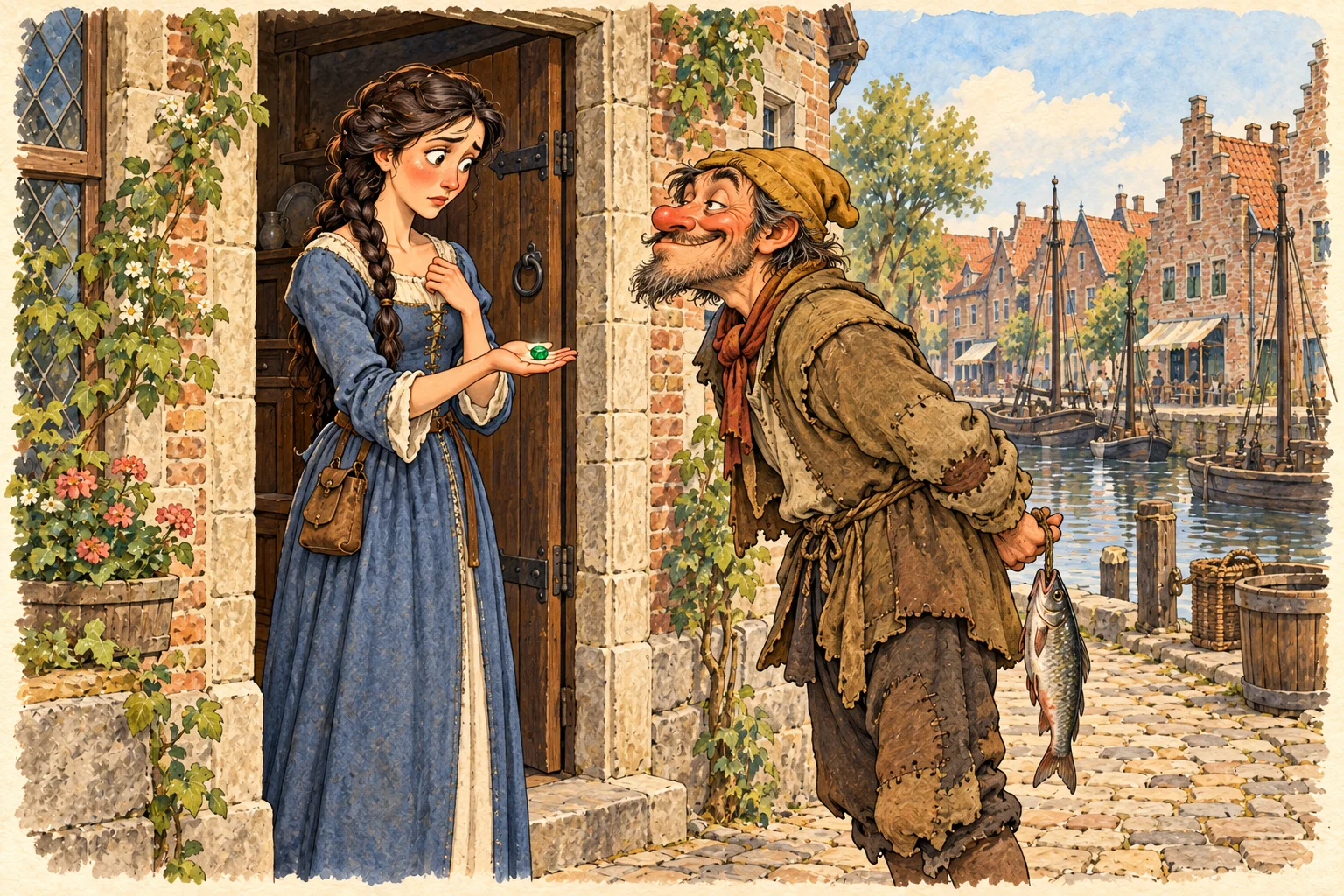
One day, a fisherman knocked.
He held up a fish and asked whether she would buy it for supper. Beatrix asked the price.
Beatrix asked again: “What does it cost?”
The man laughed.
Again, that laugh. She had begun to close the door when he told her he served a wealthy lord. The knight would wait for her by the stream the next day before evening.
“Tell him I’m not coming.”
The fisherman shook his head. His lord was sure she would come. He was leaving Deventer, after all. And she was not to discuss it with her sister.
“Then he’ll go alone.”
The man placed an emerald in her hand, a precious green stone. She could keep it even if she did not come. But his lord would take the gift as a promise: she would not leave him waiting.
Beatrix looked at the green in her hand. She wanted to give the stone back.
“Take it with you. Then he’ll know I’m staying away.”
The fisherman held his hands behind his back. He had not been told to do that. The stone was hers. His lord expected her.
Then he left. He did take the fish with him.
Beatrix could find no rest. By day she stayed close to Martha, but even beside her sister she kept thinking about the meeting. At night she lay awake. She had promised Martha to forget him. Now he really was going to leave, and she knew where he would be waiting.
She took the emerald and left the house without saying goodbye.
The knight was waiting by Koerhuisbeek. The emerald was still between her fingers. He lifted her onto his horse, and together they rode away.
No one in Deventer ever saw them again.
Martha kept waiting. First as a young woman, then as an older one. Perhaps Beatrix would return to rest. Perhaps one day she would sit beside her again, and few words would be needed.
No message came.
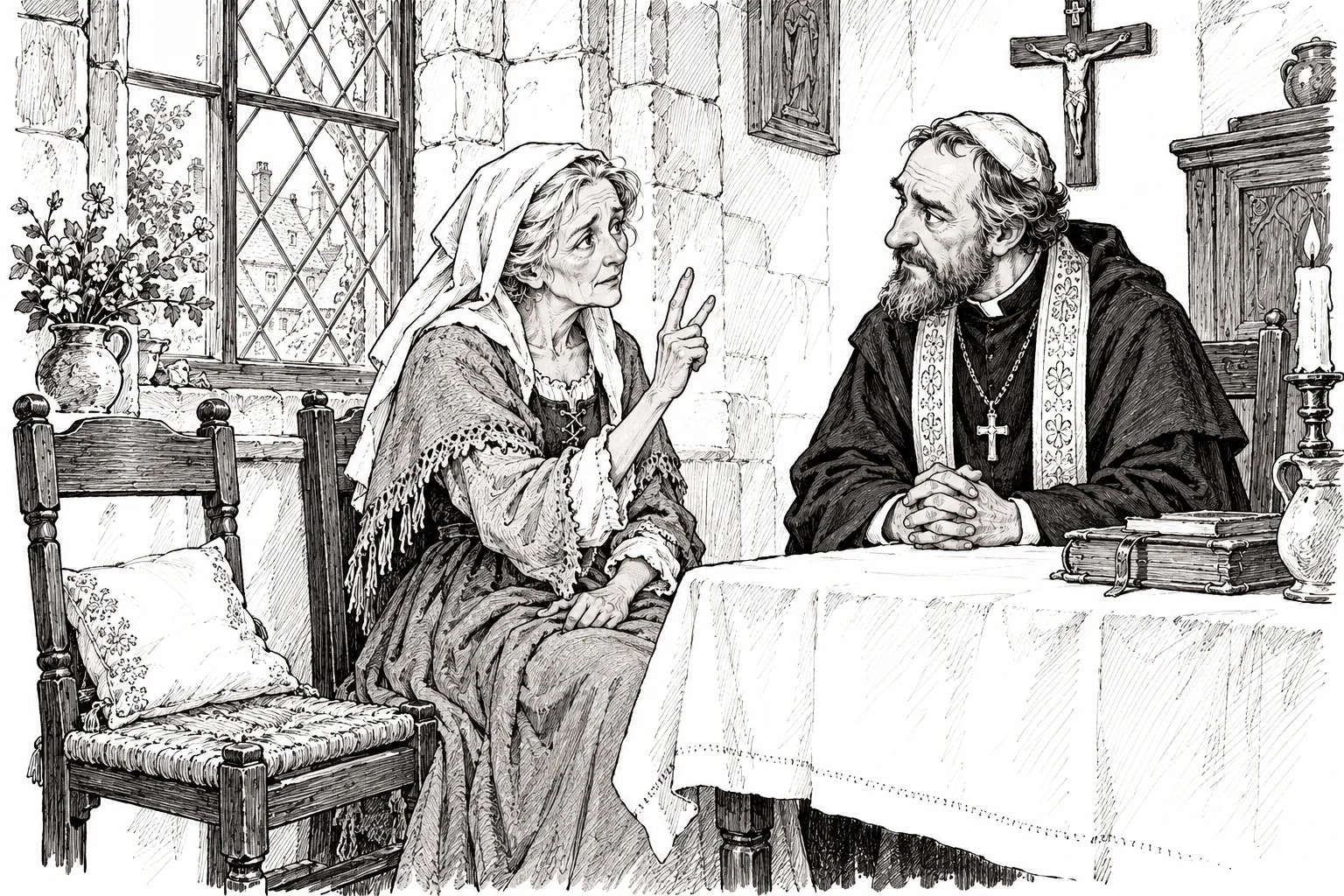
When Martha felt the end approaching, she sent for the priest. A church was to be built on the hill with her money. She wanted two towers. One a little higher than the other.
“Like us,” she said. “But those will not leave one another.”