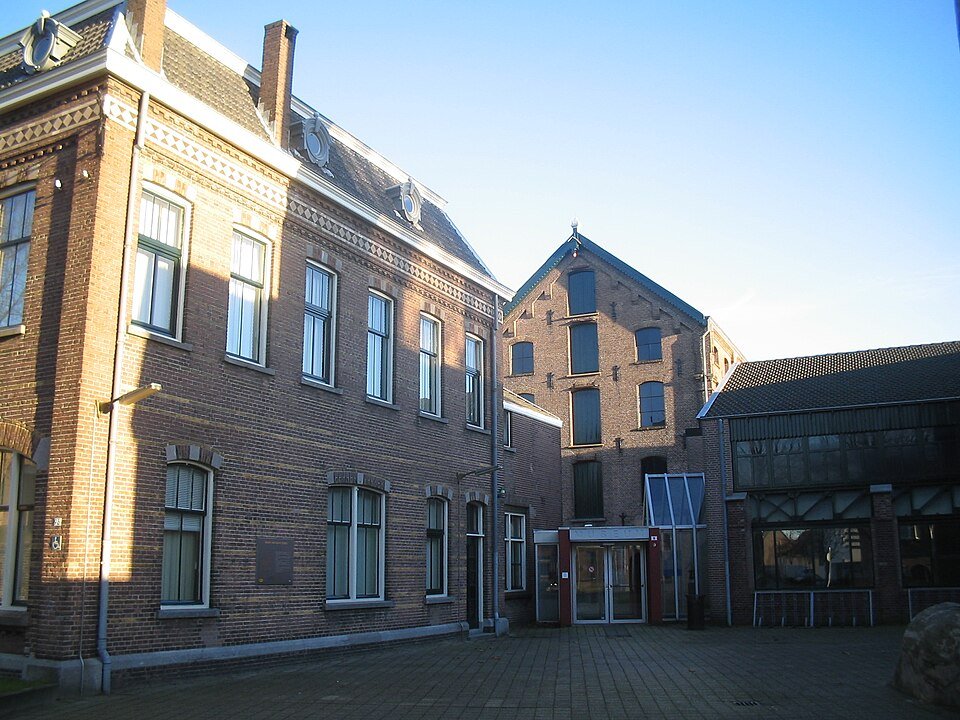
TextielMuseum Tilburg: seeing how fabric is made
Tilburg was a wool city. The TextielMuseum does not merely preserve samples. It shows the machines that turn thread into cloth.
North Brabant had a dense textile production chain: wool, cotton, bleaching, weaving and garment making. Tilburg specialised in wool. Factories determined the rhythm of the city. When the industry moved away, knowledge remained in buildings and in people. The museum occupies a former factory and keeps part of that chain in operation: spinning, weaving, knitting and screen printing. The TextielLab connects those old machines with designers who have fabrics made today. That makes it more than a display case. It is a workshop that explains why a jumper has two sides.
A loom is an argument in wood and iron. Warp threads are held taut; the weft passes across them. Jacquard cards or computers lift threads to create a pattern. Without that mechanism, ‘textile’ remains an abstract word. With it, you see labour, noise and repetition. Brabant's textile industry depended on precisely that rhythm, hour after hour.
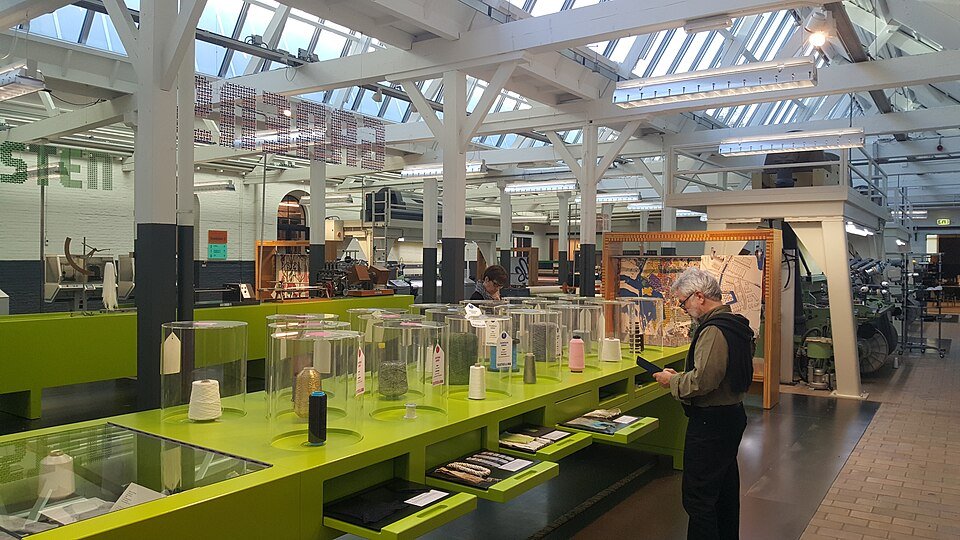
Collection pieces — from locally produced woollen fabrics to international designs — make sense beside the machines. You understand why a twill drapes differently from a plain weave, and why Tilburg chose wool. The city had water, labour and a network of suppliers. The museum keeps that choice visible.
Here, fabric is not the backdrop to fashion. It is the product of a chain you can still follow from bobbin to cloth.
A fresh perspective
The museum houses a working lab: designers have fabrics made on industrial machines.
Stand beside a loom until you can distinguish warp from weft; only then does weaving stop looking like a magic trick.