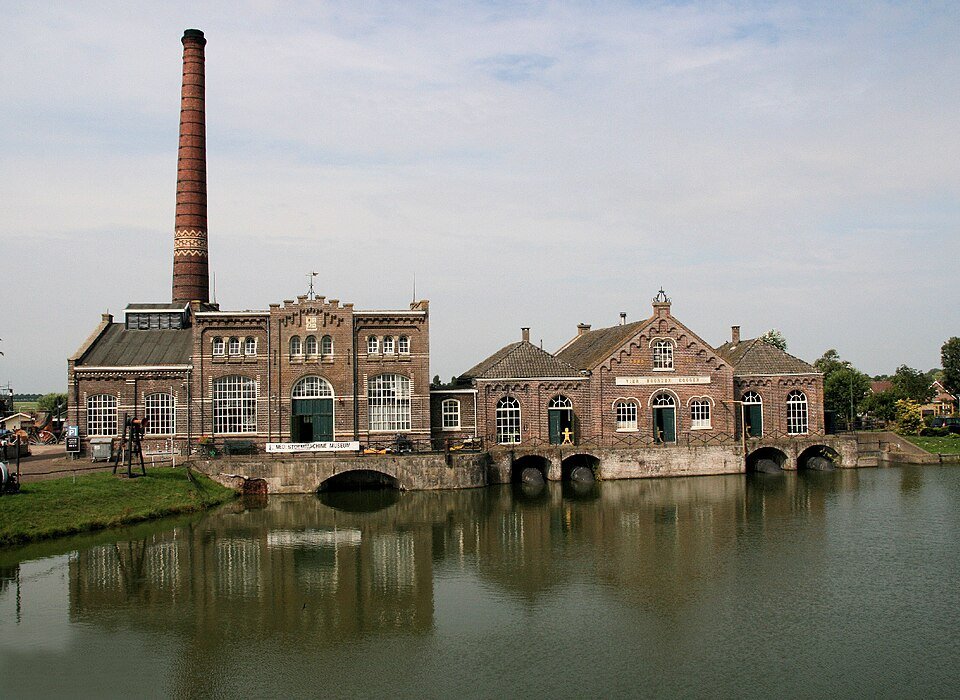
Medemblik Steam Engine Museum: power for water and industry
On the IJsselmeer stands a museum in a former steam pumping station. Its machines tell the story of why steam once made the difference between a wet polder and dry farmland.
The Dutch Steam Engine Museum is housed in the Medemblik steam pumping station, built to pump water out of the polder when windmills were no longer sufficient. Steam provided power independently of the wind. Boiler, cylinder, flywheel, scoop wheel or Archimedean screw: that chain lifted the water. Diesel and electricity later took over. The building remained a lesson in that transition. Inside are machines from pumping stations as well as factories. The same principle — boiling water, moving a piston, turning a shaft — powered pumps, weaving mills and ships.
Medemblik lies beside water that had to be controlled. North Holland is a system of lakes that became land and land that threatened to become lake again. A steam pumping station marks the moment when the polder acquired an engine. Without that engine, keeping reclaimed land dry remained a gamble on the wind. With it, water-level management became something that could be planned.
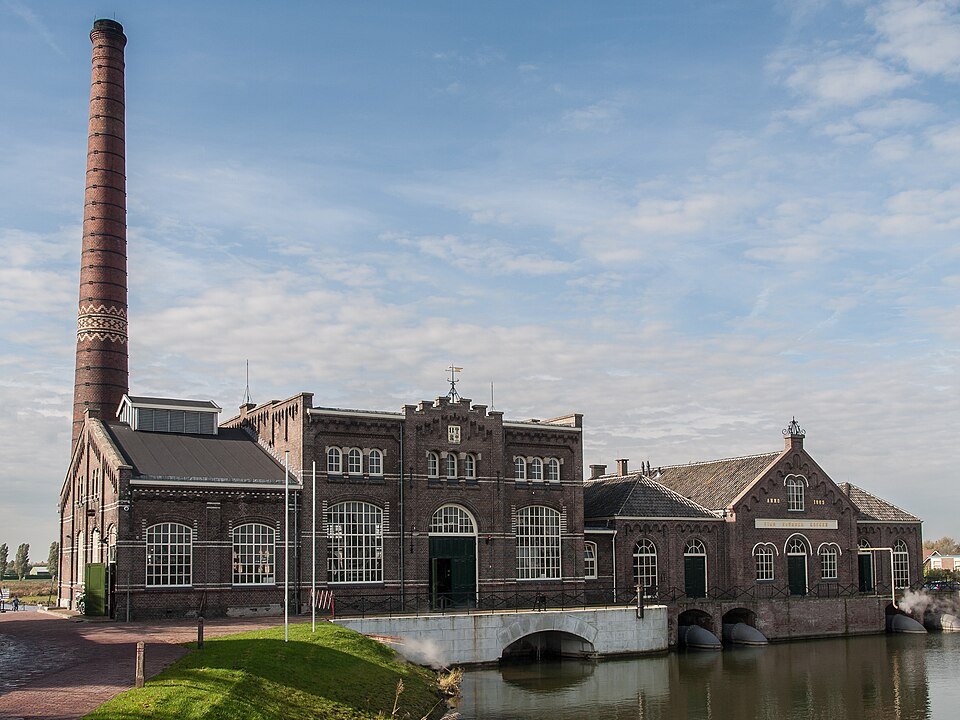
What you discover when the machinery moves is its scale. A flywheel several metres across, a boiler house that demanded heat, coal that had to be supplied. Steam was not a silent switch. It meant labour, supplies and risk. The museum keeps that physics visible in the space for which it was intended: a pumping station beside the water.
Dutch land drainage is often explained through windmills. Here you see the next step: the same struggle, a different fuel.
A fresh perspective
The museum building itself was once a working steam pumping station for the polder.
Follow the line from the boiler to the flywheel to the water: that is the entire purpose of the building.