Nature
Low water on the Rhine and IJssel: why the river has not recovered by early October
Rijkswaterstaat reports that the Rhine and the IJssel are lower than normal for the time of year. How a dry summer half-year works its way into the river, what you can see from the bank, and why winter water is not simply stored.
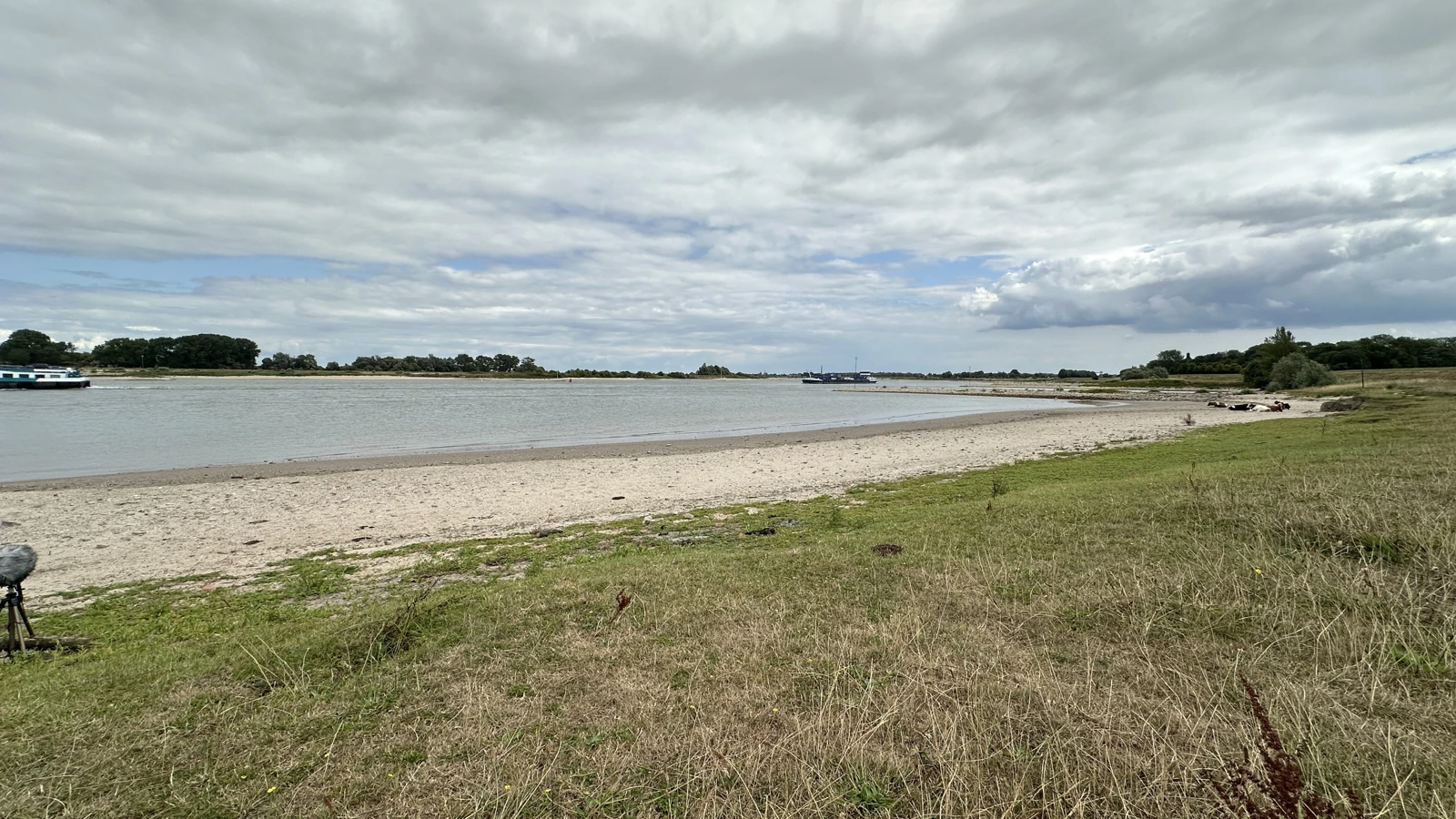
On Sunday 4 October, the Waterbericht, the water bulletin of the Dutch public works agency Rijkswaterstaat, reported "low water levels" for the Rhine and the IJssel, also for the next 48 hours; the Meuse was normal, but is expected to be lower than normal in 48 hours.
That sounds odd after a September in which an average of 61 millimetres of rain still fell. To understand it, you have to look at where river water comes from.
A dry half-year
The Dutch weather service KNMI describes the summer half-year of 2026, from April to September, as dry. Spring was very sunny with very little rain, and summer was also very sunny with little rain. The national average precipitation deficit, the difference between evaporation and rainfall since 1 April, reached 306 millimetres in mid-August: two and a half times the median value. Between the measuring stations it ranged from 205 millimetres in Groningen to 416 millimetres in Kerkwerve on Schouwen-Duiveland.
September changed little. At an average of 16.7 degrees against a normal 14.7, it was a very warm month according to the KNMI, and with 61 millimetres of rain against a normal 73, a fairly dry one. The precipitation deficit fell slightly but ended at around 262 millimetres, still among the driest 5 per cent of years.
Why rain here does not fill the Rhine
The Rhine rises in Switzerland. Along the way, the Aare, Neckar, Main and Moselle add water, and in spring meltwater from glaciers helps too, Rijkswaterstaat explains. At Lobith all that water enters the Netherlands. The Rhine's catchment covers about 185,000 square kilometres, that of the Meuse about 33,000.
A shower over Gelderland makes little difference. A local shower only helps the top layer of the soil and is not enough to replenish the groundwater structurally or to make up for the low inflow from the Rhine and the Meuse, writes Rijkswaterstaat. How much water arrives at Lobith depends on the weather across the whole catchment, not just on the Dutch rain gauge.
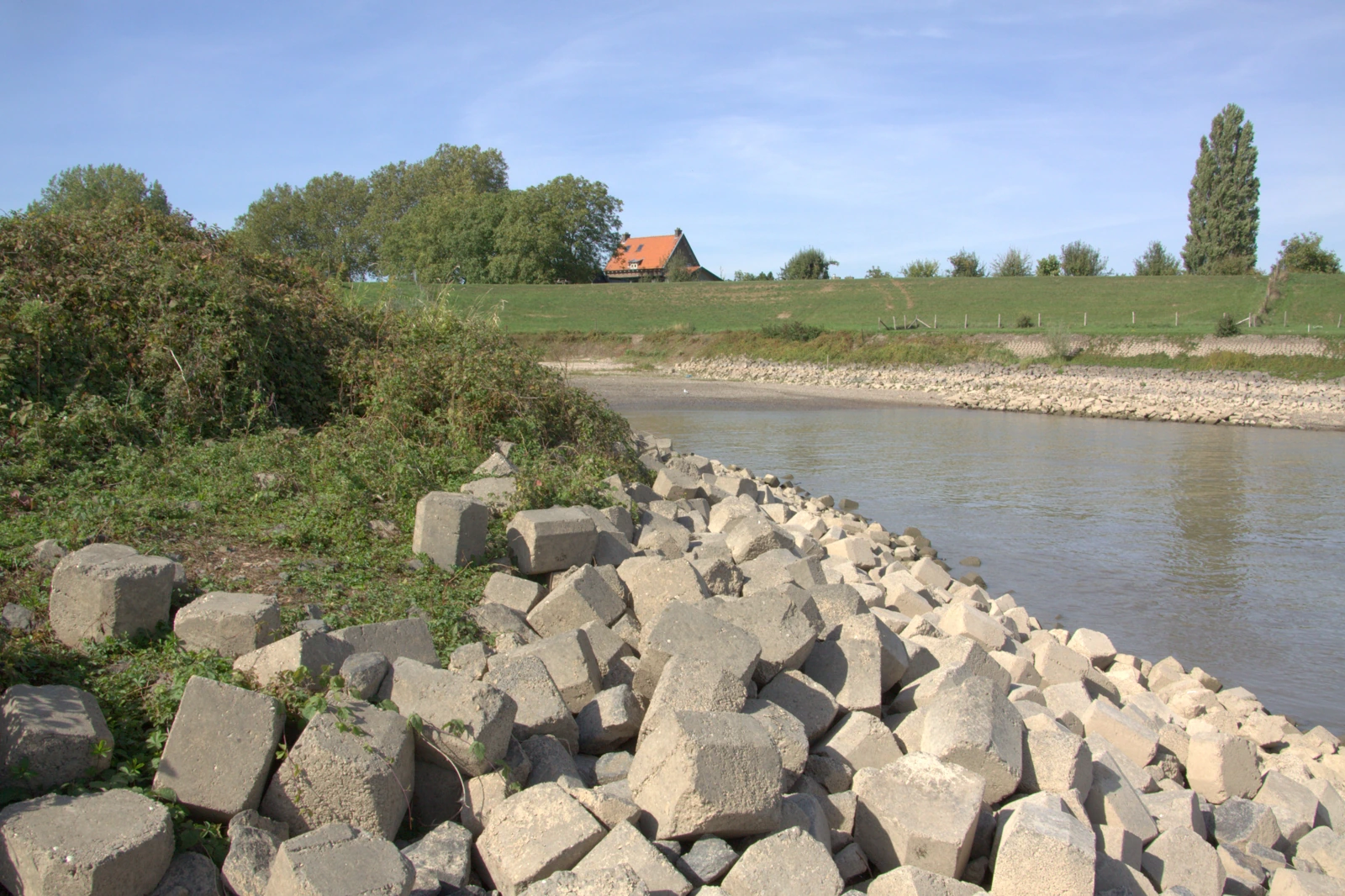
What is more, Rijkswaterstaat cannot influence the level of the Rhine and the Waal: they flow freely. The weir-controlled stretches of the Meuse and the Nederrijn can be regulated, with weirs, locks and pumping stations. The water level in the IJssel is partly determined by the weir at Driel. Without that weir, the IJssel would be unnavigable when little water comes in from Germany, according to Rijkswaterstaat.
What you see from the bank
When the water in the Waal is low, the groynes appear. These dams steer the current and keep the river safe and navigable. Photos Rijkswaterstaat took during drought show how the riverbed has cracked open in places. On a bridge pier, the difference in colour on the stones shows how high the water stood before.
Less cargo, more ships
For inland shipping, less depth means less freight. When the river is shallower, a ship can carry less cargo and the navigation channel narrows. The cargo then has to be spread over more ships, and the waterway gets busier. Rijkswaterstaat can then ban overtaking and passing, and waiting times at locks can increase. Ferries can also have problems with shallow water. Every day Rijkswaterstaat measures the least sounded depth at a number of places, so that skippers can decide how much they can load.
Why winter water is not stored
A question Rijkswaterstaat often gets: why not keep the plentiful water of autumn and winter for the summer? The answer is space. Autumn and winter are also the storm and high-water season, when lakes and floodplains need room to absorb extra water. Storing more would take roughly another IJsselmeer, and that space does not exist.
What does happen: from mid-March, the level of the IJsselmeer and the Markermeer is raised. Rijkswaterstaat therefore calls the two lakes the largest rain barrel in the Netherlands.