He Was Going to Learn Self-Control at Once
In Groningen, in the north of the Netherlands, people told of the knight of Stenhuisheerd. He had many enemies. Most of them he had made himself.
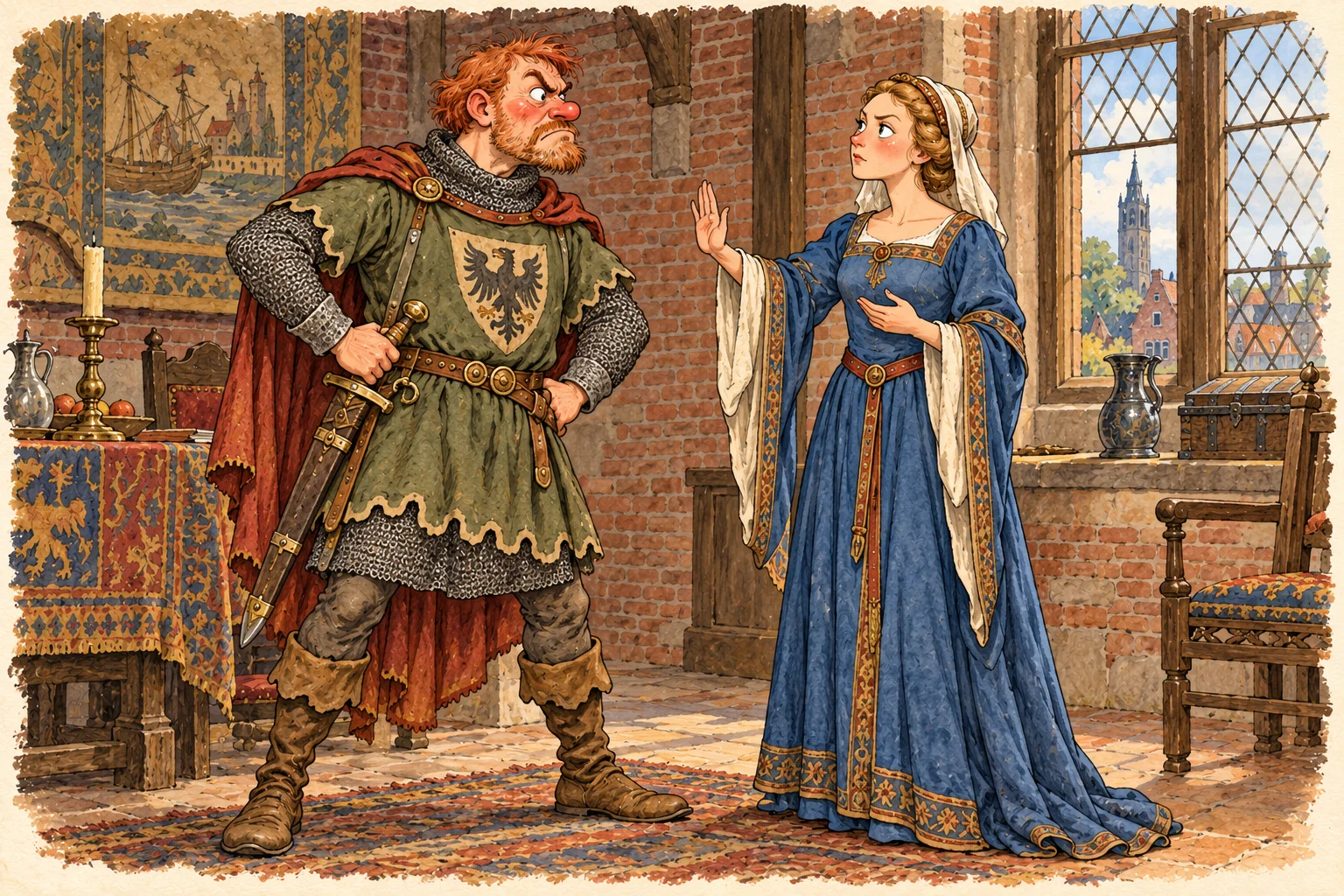
He wanted to marry a young noblewoman.
“If you defeat your greatest enemy,” she said.
That sounded reasonable. He had a sword for that.
“Would you like to know who I mean?”
“I’ll find him.”
“His name—”
He was already on his horse.
He had enemies enough. He only needed to pick the greatest. Perhaps the knight whose brother he had killed. Everyone knew that man wanted revenge.
He turned his horse, then pulled up again. If he killed this man too, someone else would probably be angry. A cousin. A brother-in-law. Those families never ran out of members.
He returned to his castle.
For ten days and nights he paced with the same question. Who was his greatest enemy? He could hardly ask her. He had said he knew. Better to walk through his hall for another night than return with a question.
On the eleventh day he went anyway.
“Who?” he shouted before he had even greeted her. “Who must I defeat?”
“Your temper.”
He looked at her. A sword was no use against that.
She told him to go to church, sit patiently through Mass, and pray. An entire service without forcing his own will on anyone.
He promised solemnly.
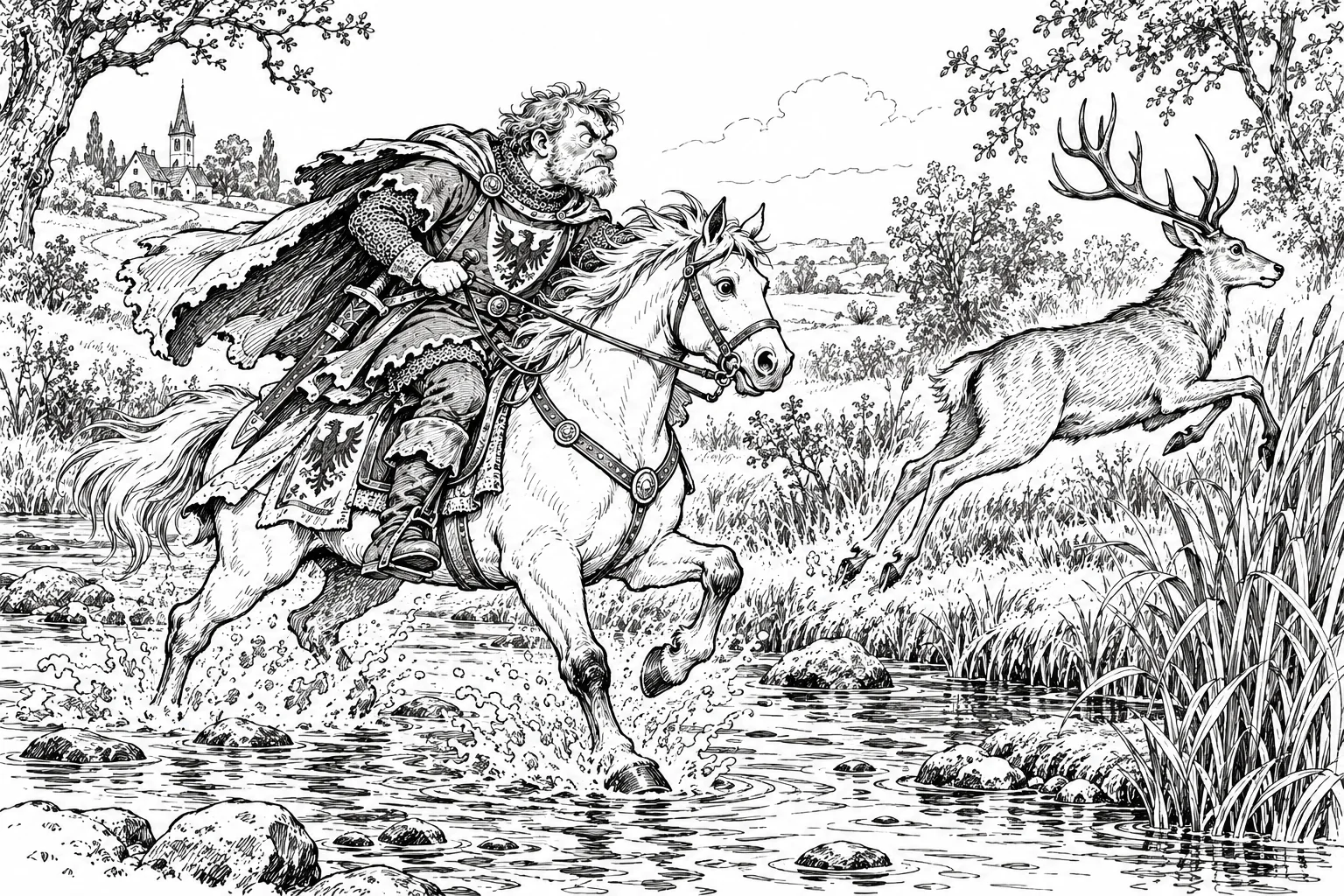
The next morning he rode out early. The shortest path through the woods would get him there with time to spare. Then a deer appeared in front of him.
It glanced back and ran.
The knight gave chase.
The church, his promise, and the woman for whom he had made it vanished behind the antlers. In clearings he nearly caught the animal. In the brush he lost it again. Farther on, it swam across a stream and disappeared into marshy reeds.
His horse made it across the stream, then sank into the soft ground. The knight jumped down, swearing, and led his horse back to firm earth. The deer was gone.
Then he remembered Mass.
He rode back, striking his exhausted horse whenever it slowed. He cursed the deer for doing this to him.
People were already leaving the church.
He rode through them, tossed the reins to someone, and ran inside. The priest was just about to leave.
“Again,” said the knight. “You will say the Mass again.”
The priest calmly refused.
The knight drew his sword.
“Then I’ll kill you.”
“You can take my life. You cannot take my will.”
A moment later the priest lay on the floor. The knight stood among the people who had come inside, his sword bloody.
Did anyone else object?
They made way for him. He rode to the woman’s castle.
“Did you hear Mass?” she asked.
“I was late.”
She saw the blood.
“Who did you kill?”
“The priest.”
“Why?”
“He wouldn’t start again.”
She sent him away. She wanted nothing more to do with him.
Now he begged. He loved her more than anyone. If she asked, he would kill that priest again.
“Go,” she said.
On the way back he did not urge his horse on. He was alone. The priest had refused him, the woman had sent him away, and everywhere people stood in his path. He felt no remorse.
Near Stenhuisheerd, a rider appeared before him.
He was sitting on a billy goat.
Backwards.
That way the devil could look him in the face as he led him onward. He grinned and beckoned. At a walking pace they crossed the bridge, the goat in front and the horse behind.
“What do you want from me?” the knight asked.
The devil laughed.
The castle sank. The stones, the bridge, and the lord on his horse disappeared deep beneath the ground. Then the land lay flat and bare again.
Only the smell of sulphur remained.