Egmond aan Zee in autumn: lighthouse, beach and dunes
The white lighthouse marks an old coastal village; the nearby dune reserve has its own access rules.
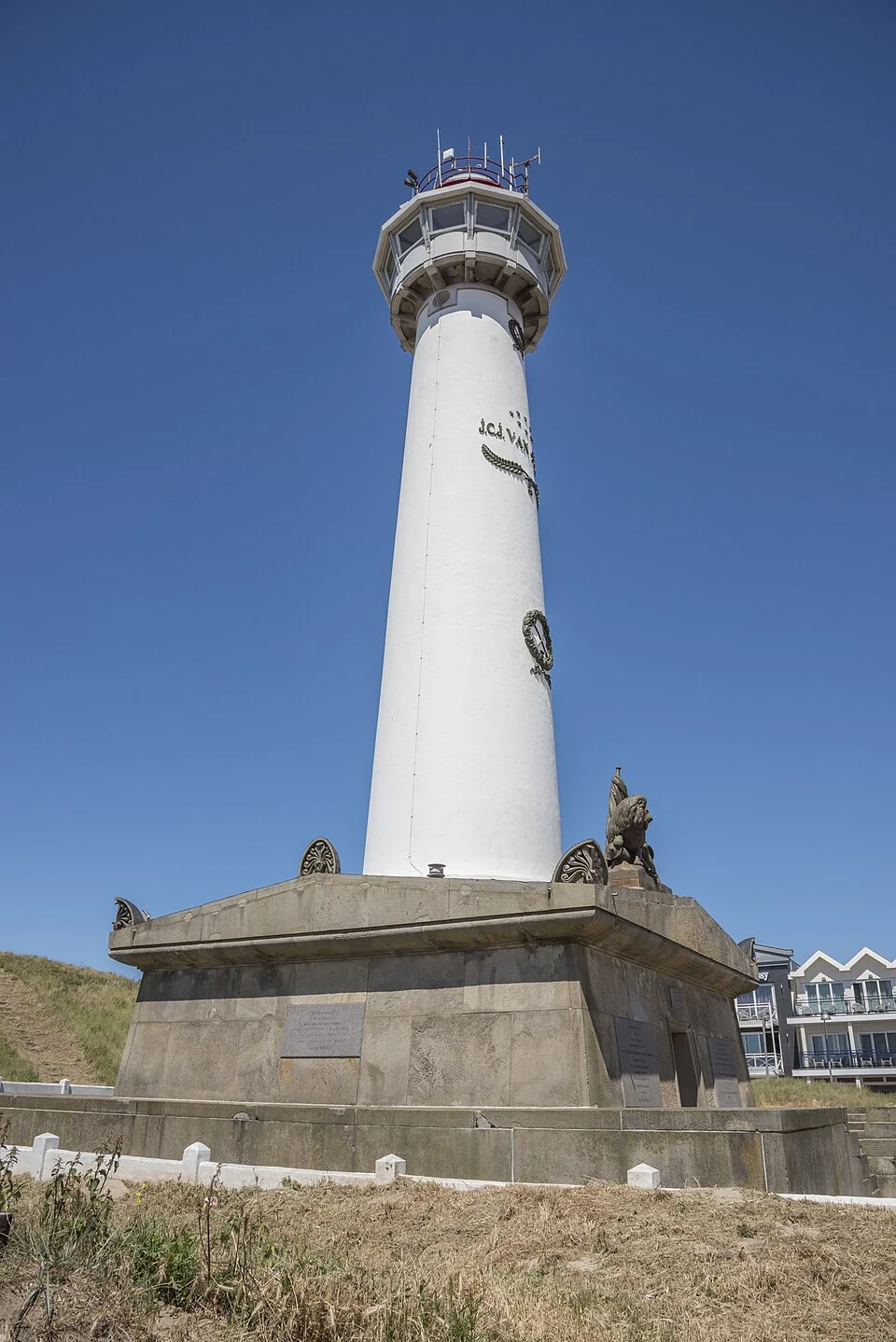
Of the three villages named Egmond, Egmond aan Zee is the one directly on the North Sea. Its seafront, beach and white J.C.J. van Speijk lighthouse define the view, with dunes beginning behind the houses. Beyond the swimming season, it becomes clear that the town is more than a line of beach cafés. The lighthouse recalls shipping along a sandy coast; the dunes are both a nature reserve and an area used for water supply. An autumn visit therefore crosses three distinct public spaces: the open beach, village streets and the regulated Noordhollands Duinreservaat.
The lighthouse is named after the nineteenth-century naval officer J.C.J. van Speijk. According to the local tourist organisation, two new towers were built in 1833. The one on Torensduin has disappeared; the surviving coastal tower also acquired a memorial. Rijkswaterstaat lists it as a national monument dating from 1833. It was restored in 2018 and 2019. The tower can be seen from the village and shore even when closed. The regular visitor hours listed by Egmond are for July and August, and do not imply that it opens in October.
The beach is the most immediate part of Egmond aan Zee. The local visitor site describes rules for different beach zones and distinguishes a summer period from May to October and a winter period from October to May. This matters particularly for activities and dogs. Rules are also displayed at beach entrances. A walk along the waterline needs no ticket or museum opening, though the sea is always changing. The beach thus differs from the lighthouse: entering the open space is simple, but using it is subject to local rules.
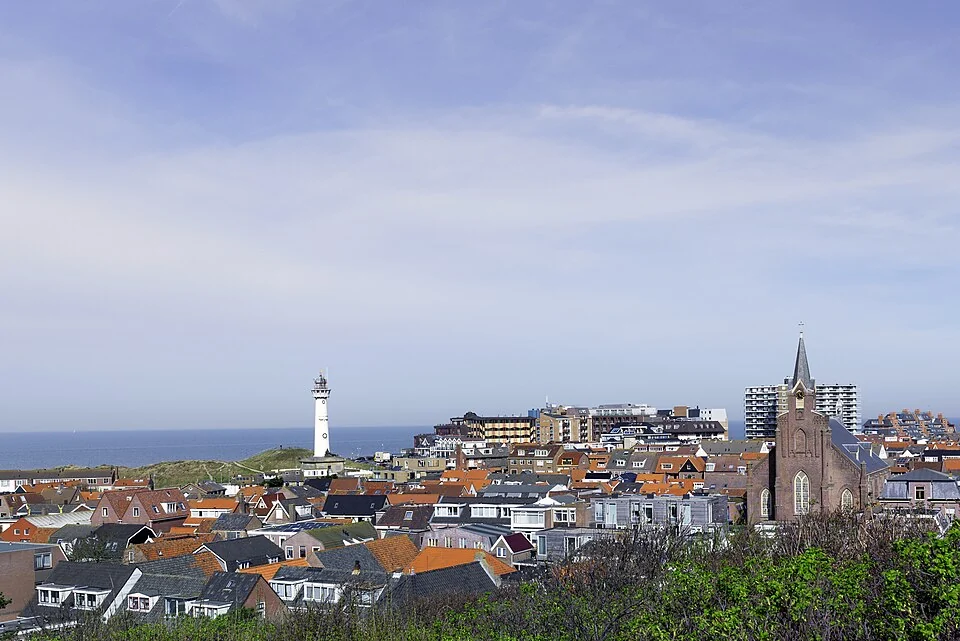
From the village, the landscape becomes the Noordhollands Duinreservaat. Manager PWN describes dunes, beach and inland dune woods extending between Wijk aan Zee and the Schoorl dunes. Its proximity to Egmond does not mean it is freely accessible everywhere. According to PWN, visitors aged 18 and over need a dune permit unless local signs say otherwise. Permitted routes are generally open from sunrise to sunset, while some paths may close temporarily. Local rules also apply to dogs. Distinguishing beach from reserve helps visitors stay out of closed areas.
PWN offers marked walks and information about accessible entrances. Routes may pass through open sand and sheltered woodland, but current maps and signs determine which paths can be used. Shorter autumn days and uneven dune trails make that particularly relevant. Egmond aan Zee also provides a starting point for the other Egmond villages: Egmond-Binnen is associated with its abbey and Egmond aan den Hoef with the remains of a former castle. They are outside a short village circuit, but add different historical layers to the name Egmond.
Within the village, the lighthouse is the clearest visible reminder of maritime history. A local heritage page also mentions the Prins Hendrik-Stichting, a former home for retired sailors, and other coastal traces. For an autumn day, the practical distinction is clear: the lighthouse exterior and village can be seen without booking; the beach has seasonal rules; the reserve requires a dune permit and attention to permitted routes. Indoor sites and tower visits have their own hours. Egmond thus remains a seaside town whose landscape also tells a story of shipping and dune management.