Archeon: what a reconstruction is — and what it is not
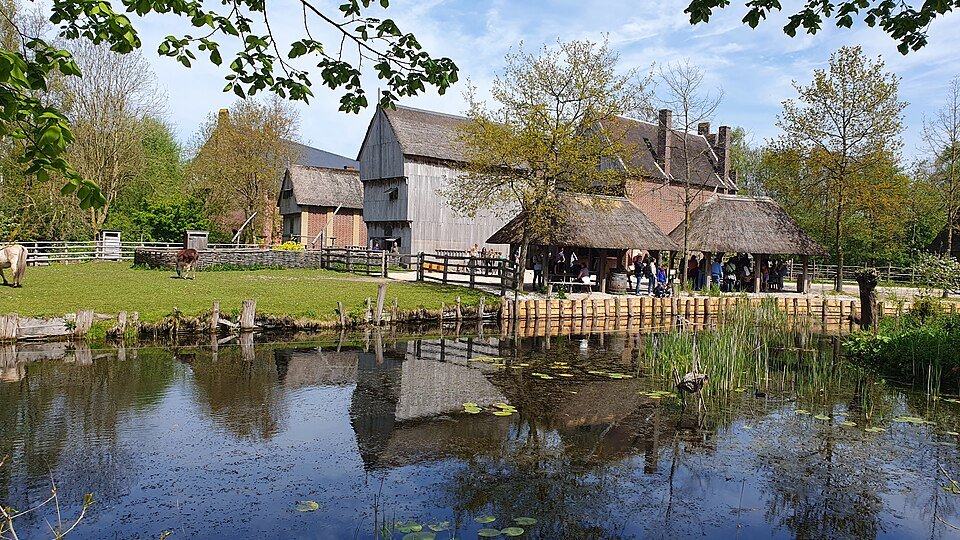
In Alphen aan den Rijn, a Roman inn, a terp farmhouse and a medieval house stand side by side. Almost none of them is the original structure uncovered by archaeologists.
Museum Park Archeon opened in 1994 as an archaeological theme park: prehistory, the Roman period and the Middle Ages. Full-scale buildings, staff working as archaeological interpreters, and finds displayed in a separate building. The early ambition of financing excavations through admission fees proved unsustainable; the park reopened on a smaller scale. What remains is reconstruction: interpretation in wood, clay and stone. That is not deception if it is labelled correctly. The master plan describes reconstructions as models of lost structures, based on research and furnished to make their use visible.
A reconstruction brings dimensions to life. You can see how much space a house offers, where the light enters and how people moved between working and living areas. In the Archeology House, genuine finds have their place alongside that larger story. Keep those two ways of looking separate: an ancient object has survived, while a reconstructed house presents an evidence-based interpretation of the past.
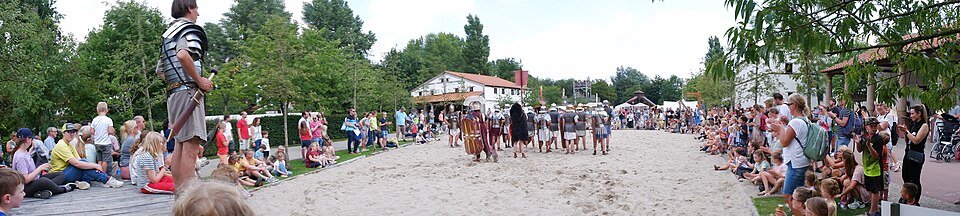
Archeon is therefore also a lesson in archaeology as a present-day practice. A wall is a reasoned hypothesis. The better the source, the stronger the wall — and the clearer the sign needs to be.
Read each house as a proposal. Its value lies in the evidence behind it, not in suggesting that you are stepping into the ‘real past’.
A fresh perspective
Alphen has two Roman military forts within the municipality; the park wall draws on data from Albaniana.
Look for signs naming the archaeological site: Cuijk, Heerlen, Ezinge, Zwammerdam.