Noordwijk in autumn: coast, dunes and space research
The seaside town links its beach and lighthouse with Hollands Duin and ESA’s ESTEC space research centre.
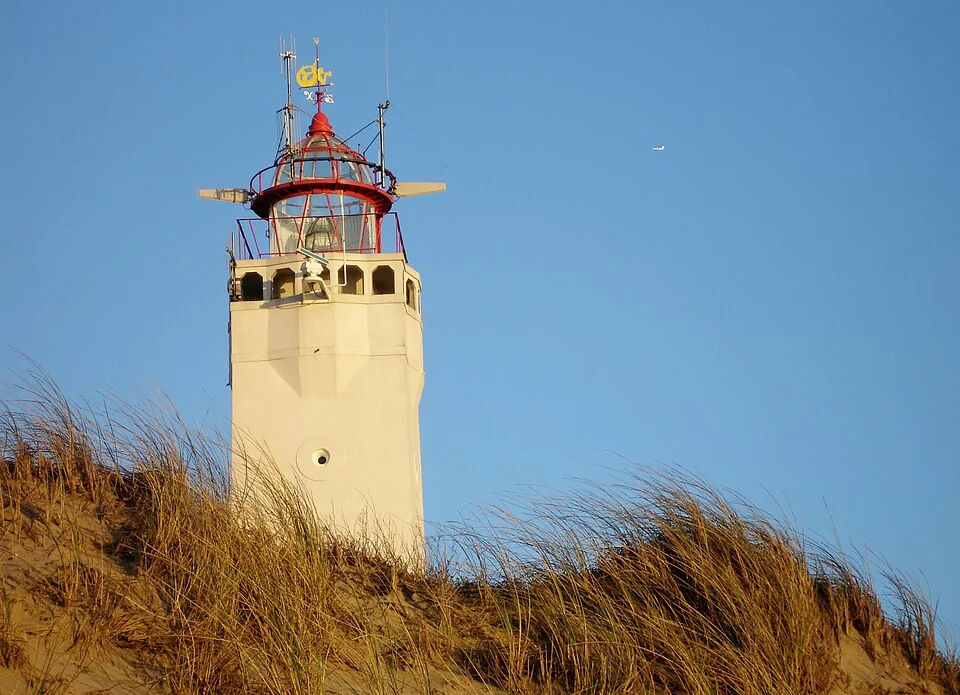
In autumn, Noordwijk reveals different sides of the same coastal town. There are the beach, seafront and white lighthouse; farther inland, dune woodland and walking paths begin. To the south stands a European space technology centre. A day here can begin at the surf and end beside a satellite model. The coast remains accessible outside the summer season, although weather and shorter daylight hours change how visitors experience it.
The lighthouse on Koningin Wilhelmina Boulevard is a landmark. According to the local tourism organisation, the present tower dates from 1923, while the earliest recorded light on Noordwijk beach goes back to 1444. The white tower has six floors and 108 steps. Together with the boulevard it forms a visible link between town and sea. A calm autumn walk feels very different from a visit on a windy day. Walking on the beach does not require a visit inside the lighthouse.
Another landmark lies near Keplerlaan: ESTEC, the European Space Research and Technology Centre of the European Space Agency (ESA). ESA describes it as its largest establishment and technical heart, where projects are developed and tested. It is a working site, not a freely accessible museum. The neighbouring Space Expo is designed for visitors, with space objects, mission information and exhibits about astronauts. Space research in Noordwijk is therefore both working science and a story open to the public.
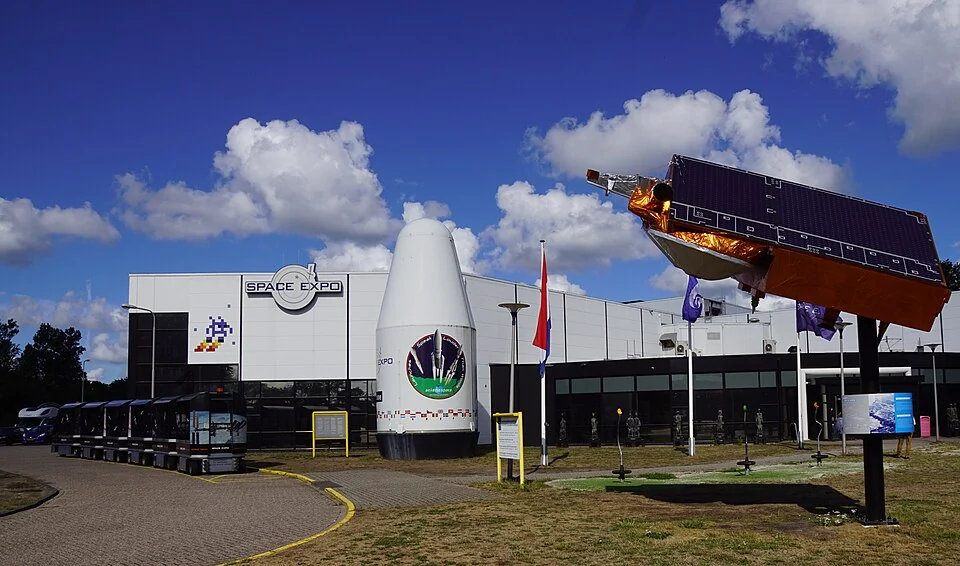
Space Expo is at Keplerlaan 3. Its visitor information describes public transport connections via Leiden Centraal and a museum space that is largely accessible. The separate Space Train programme to ESTEC is not wheelchair accessible, according to the museum. Access to ESA’s site is part of that separate programme and is not included in an ordinary museum visit. Programmes and hours can vary by day. The museum can provide an indoor option when it rains, but its current visitor information determines what is open or bookable on a particular date.
North of the built-up area is Boswachterij Noordwijk, part of Hollands Duin. Land manager Staatsbosbeheer describes woodland, dunes and open sand. Its Kachelduin en Malote ranger trail is 7.6 kilometres long, following green and blue waymarks. From Kachelduin, views extend across sea, dunes, woods and bulb fields. Sections of loose sand can make the walk feel longer than a paved urban route. The bulb fields are characteristic of the area, but they flower in spring; autumn draws attention to the shape of the dunes and woodland.
The three settings have different practical conditions. Beach and boulevard are open public spaces. Signs at the dune entrances state the access rules, while Space Expo has opening hours and sometimes timed admission. Staatsbosbeheer says Hollands Duin can be visited year-round on paths and roads, subject to local rules for dogs and sensitive areas. Space Expo recommends reserving a time slot if admission is important. A route can therefore combine sea, lighthouse, dunes and space exploration without depending on a temporary event or assuming an unverified opening.