Kröller-Müller Museum shows all 88 of its Van Gogh paintings at once this autumn
This autumn, Otterlo is showing all 88 Van Gogh paintings from its own collection at the same time, where normally some thirty to forty are on display. The exhibition is arranged around the themes of faith, hope and love.
Hollandmagazine editorial team ·
This autumn, an entire family hangs together in Otterlo. From 15 September 2026 to 3 January 2027 inclusive, the Kröller-Müller Museum is showing all 88 paintings by Vincent van Gogh from its own collection at the same time. Normally some thirty to forty hang in the permanent Van Gogh gallery, Minister Rianne Letschert (Education, Culture and Science) said at the opening on Saturday 19 September 2026, but for this exhibition the rest are returning to Otterlo from storage, from restoration and from loans.
With these paintings, museum founder Helene Kröller-Müller built up what was in her day the largest private Van Gogh collection in the world, the museum reports; today the collection is the second largest in the world, after that of the Van Gogh Museum in Amsterdam. At the time, Minister Letschert called bringing all the works together “a unique achievement. Here in Otterlo, in the Netherlands and in the world.”
Faith, hope and love as a guiding thread
The museum chose not to hang the paintings in the order in which they were made, but around three themes: faith, hope and love. Van Gogh himself named these three virtues in a sermon that, according to the museum, he gave on Sunday 29 October 1876 in the Wesleyan Methodist Church in Richmond, England. Later, on the advice of his brother Theo, he chose to become an artist. He never let go of the values from that sermon, but from then on he expressed them through his painting.
By showing the works thematically rather than chronologically, unexpected connections become visible, as the minister put it at the opening: an early canvas from Nuenen that suddenly shows a kinship with a late work from Saint-Rémy.
From threatened auction to national museum
That the collection now hangs in Otterlo was anything but a given. According to Minister Letschert’s speech, the Kröller-Müllers’ family business was on the brink of ruin in the early 1930s, which meant that Helene’s collection was at risk of being auctioned off. Speculators already saw a future for the estate as a racing circuit, with the St. Hubertus hunting lodge as a luxury hotel.
According to that same speech by Minister Letschert, Minister Henri Marchant visited the estate in 1935 at the request of Helene Kröller-Müller. She may then have proposed to him that the State buy the estate and the hunting lodge, in exchange for her art collection and the building plans for the museum she had in mind. Marchant then arranged a mortgage loan through the cabinet, despite resistance from opponents who considered the expense irresponsible at a time of unemployment. In 1938, Helene Kröller-Müller just lived to see the opening of the first, temporary museum building.
Feeling and listening
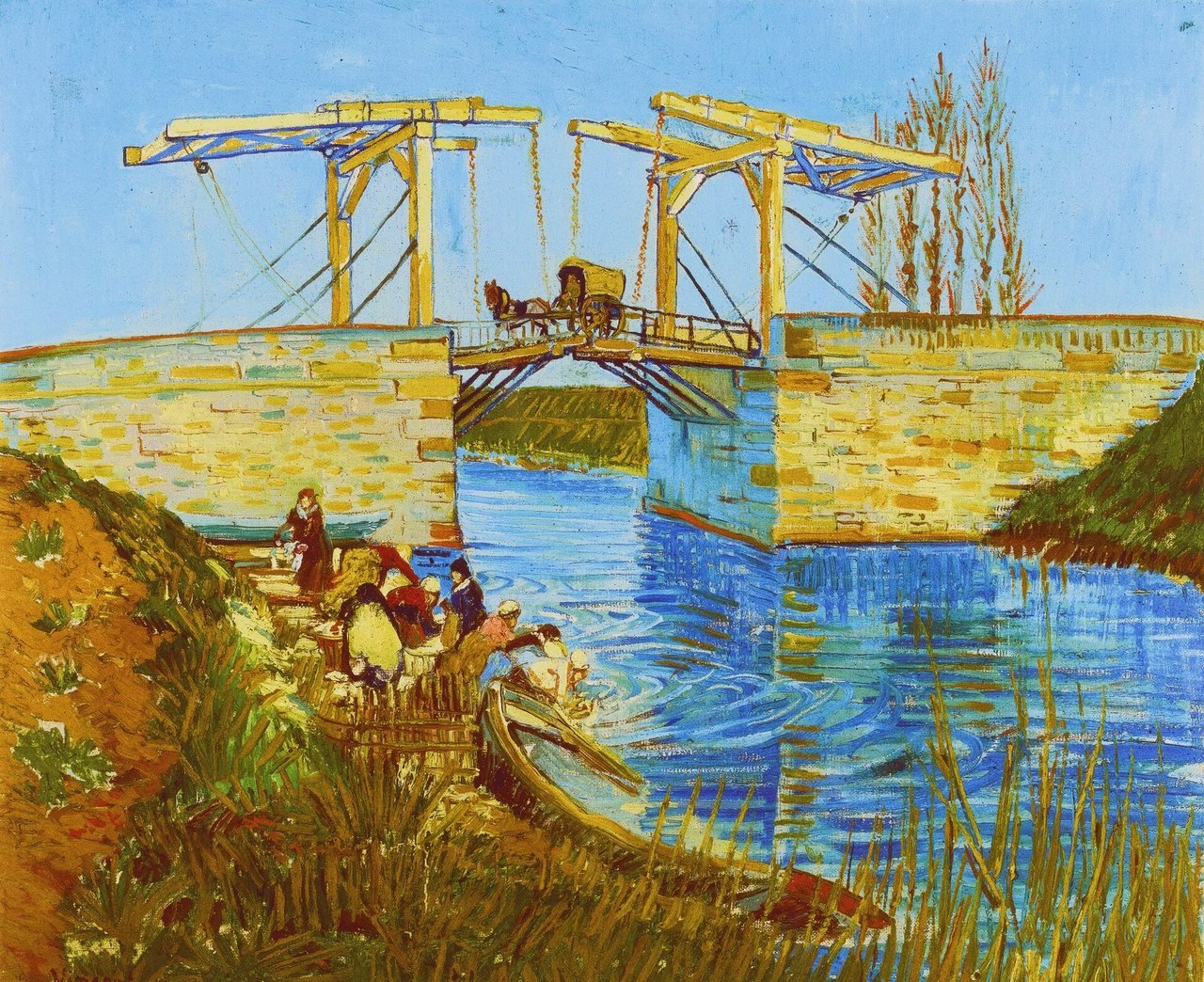
The exhibition has also been made accessible to visitors who cannot see. Next to the painting “Bridge at Arles (Pont de Langlois)”, the museum reports, there is a special tactile piece of furniture that tells the story of the canvas in a different way, so that visitors with a visual impairment can feel the bridge with their hands. With headphones, visitors can also listen to a spoken description of the painting.
For children, the museum is publishing, together with the publisher Leopold, the picture book “Leven om te schilderen” (‘Living to Paint’), written by Janneke Ipenburg. In the book, the young Vincent teaches himself to paint, with the support of his brother Theo. Thanks to the letters the brothers wrote to each other throughout their lives, it is still possible to reconstruct how Vincent developed and how he felt, the museum reports.
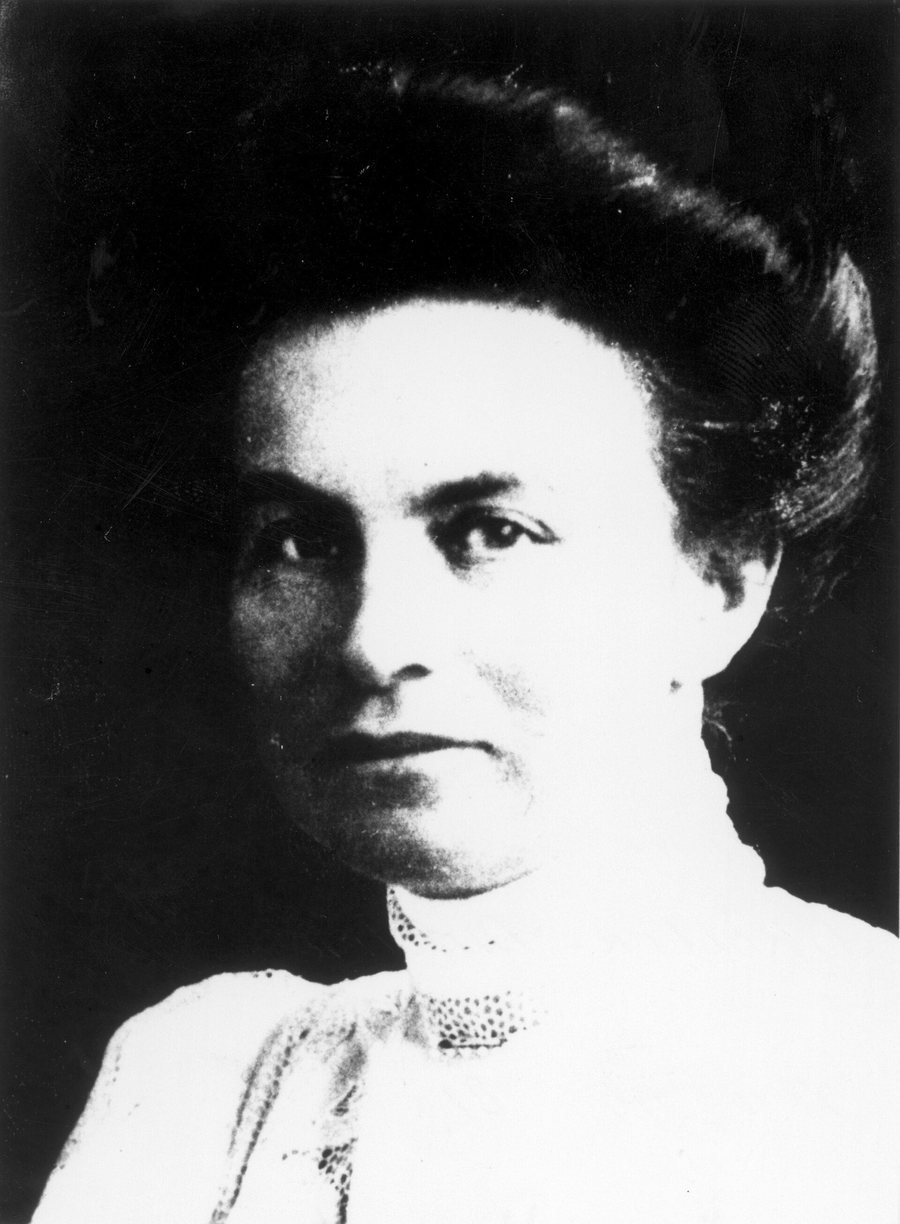
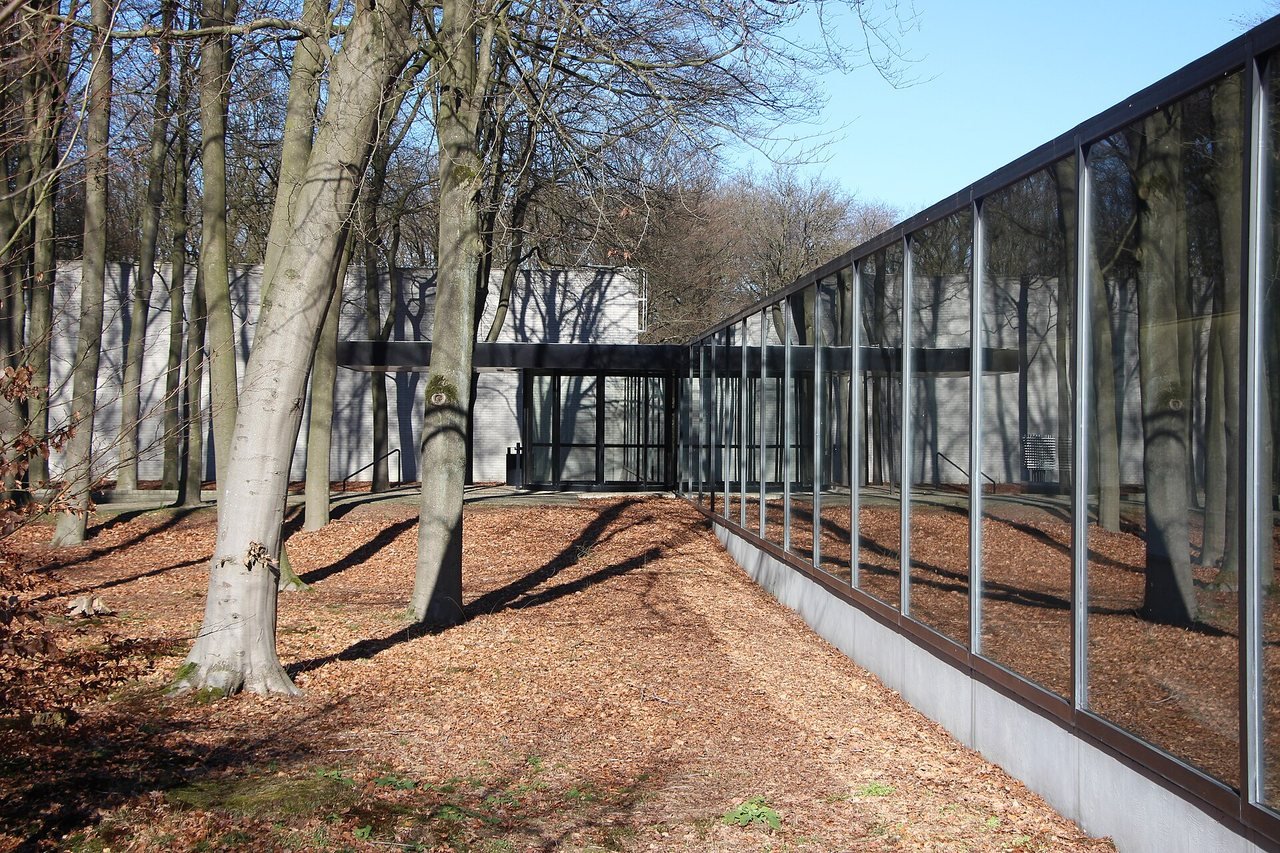
Photo: The glass wing of the Kröller-Müller Museum in Otterlo, among the beech trees of De Hoge Veluwe National Park. Photo from February 2019. Ziko van Dijk / Wikimedia Commons (CC BY-SA 4.0)