Read Hattem from the Markt to the Dijkpoort
The compact fortified town on the IJssel shows its trading past in streets, facades, wall remnants and its last city gate.
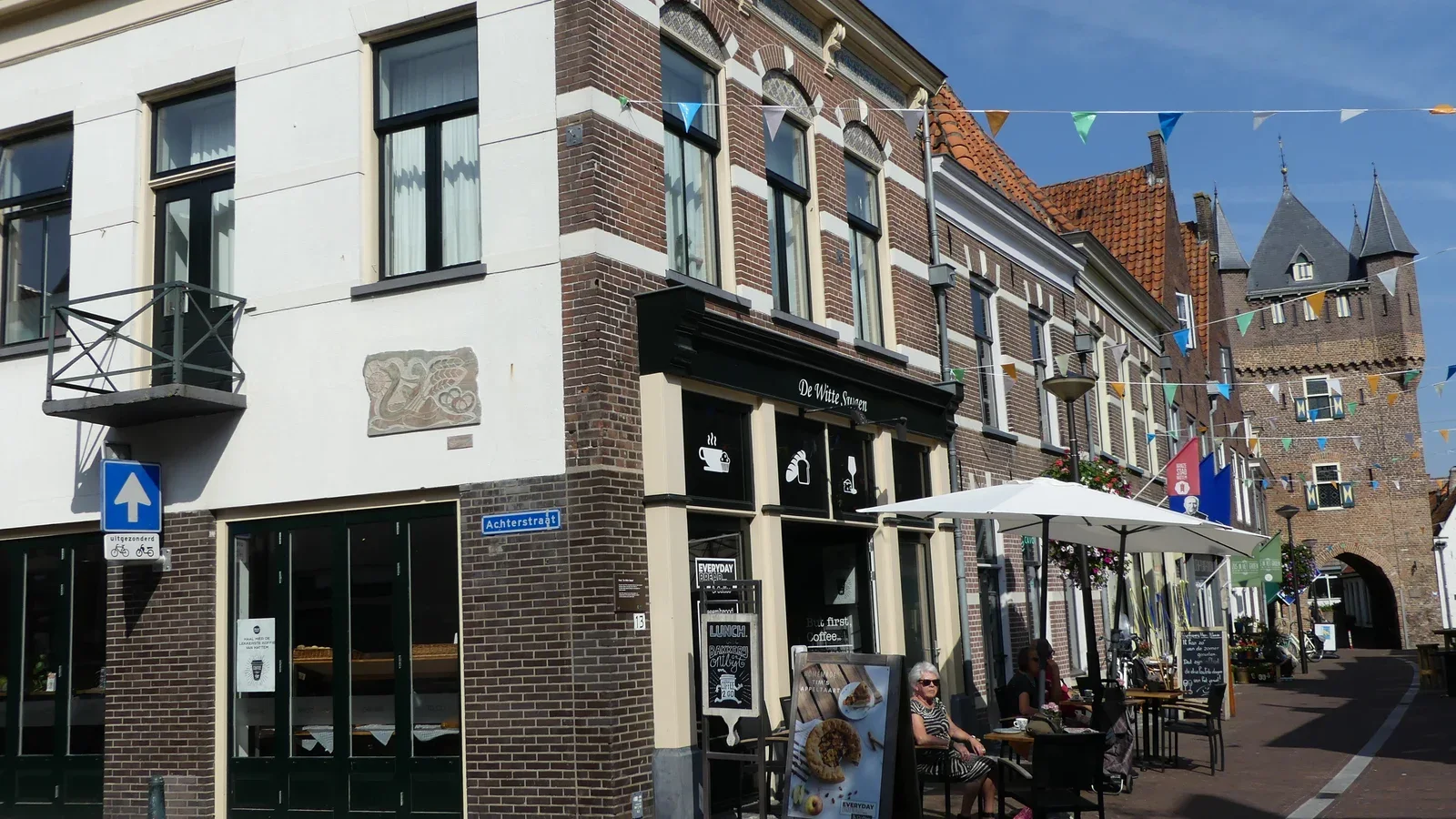
From the Kruisstraat the Dijkpoort appears between the facades. On one side lies Hattem’s compact city centre; on the other the IJssel landscape begins. That short transition makes the little town suited to a walk in which you not only look at monuments but also understand why walls and gates were once needed here. The gate is the last surviving city gate of Hattem. It is a clear landmark for anyone who wants to follow the story of this former fortified town on foot.
Hattem lies on the northern edge of the Veluwe, by the floodplains of the IJssel. According to a municipal green-structure vision, the core moved closer to the river around 1200. The municipality names the wish to trade on the IJssel as a presumed explanation; that remains a hypothesis, not an established motive. Hattem received city rights in 1299. Visit Hattem describes how the town flourished as a Hanseatic city in the Middle Ages. The old street pattern still shows the compact scale of that trading place.
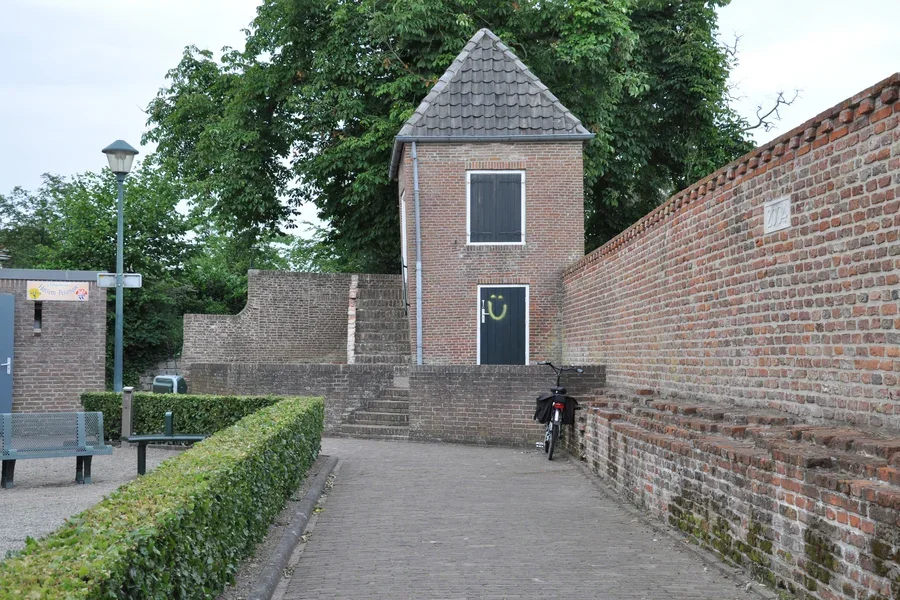
Trade called for protection. According to Visit Hattem, high walls, a moat and guarded gates stood around the town. Parts of the city wall and the fourteenth-century Dijkpoort survive from those defences. It is tempting to treat such a gate as a stand-alone photo spot, but in the street its function comes across better: here you could enter or leave the walled town. A walk from the Kruisstraat to the gate thus links daily life in the city centre with the old boundary of the fortress.
On De Markt, more landmarks lie together. The municipal description of the historic city centre names the Grote or Andreaskerk and the town hall on this central square. The Kerkstraat and the Kruisstraat together form the historic main axes to the Markt. Anyone following these streets gets the layout of Hattem almost automatically. Visit Hattem also points to merchants’ houses and former town farms. Those are other traces of the place than the defences: buildings of living, working and governing behind the gate.
The river also played a part in what made Hattem. Visit Hattem writes that in the Hanseatic period the town was known for bricks made of IJssel clay. The tourist office also mentions the remains of the castle Dikke Tinne as part of a city walk. The combination of clay, bricks, walls and buildings offers a tangible theme for a visit: look not only at the shape of a facade, but also at the material. That way the IJssel finds a place in the town itself, even when you do not see the river during the first part of the walk.
For those who want more explanation than a round of their own, the Tourist Information Point offers, according to Visit Hattem, walking maps and a guided city walk. The stated duration is about an hour and a half; availability and price must be checked again before departure. A visit to a museum is possible alongside, but is not needed to see the structure of the town. The Nederlands Bakkerijmuseum, the Voerman Stadsmuseum and the Anton Pieck Museum are, according to the tourist office, in Hattem.
Hattem can be viewed in a leisurely order: begin at De Markt, follow the Kruisstraat to the Dijkpoort and then seek out the edge of the town. The old axis, the gate and the view towards the floodplains each explain a different part of the story. The same walk also shows that a fortified town did not consist of walls alone. Within that boundary, trade, government and daily work were interwoven. In Hattem the clues for this lie close enough together to be discovered without haste.