Harderwijk walks from the Vischpoort to the Wolderwijd
The old city gate, the harbours and the new waterfront show how Harderwijk kept its gaze on the water.
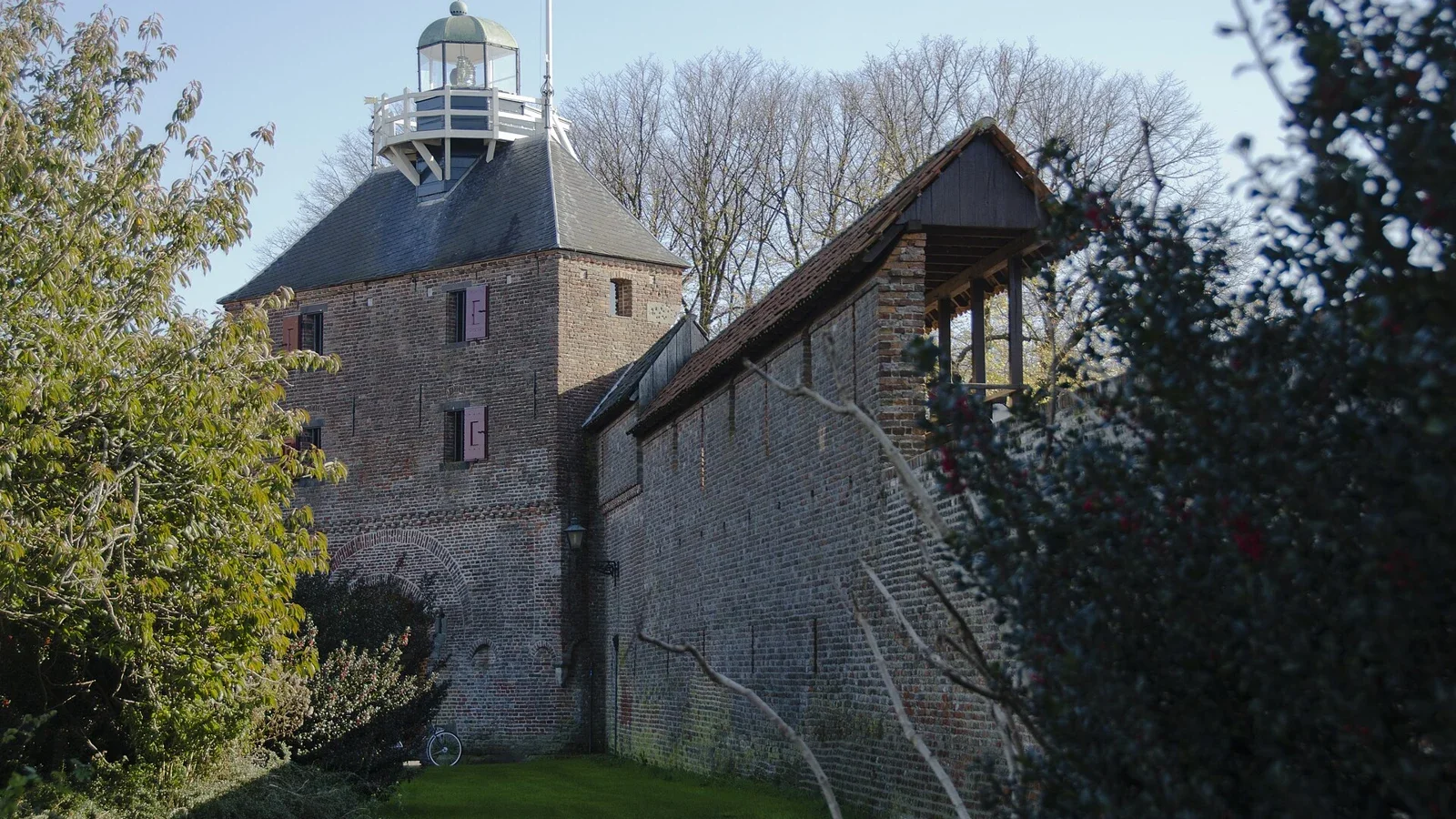
At the Vischpoort you can see how close the old town and Harderwijk’s former waterfront lie. The brick gate with a coastal light above it once marked the entrance from the Zuiderzee. A walk can begin here and continue past the harbour and the Vischmarkt to the boulevard. What lies there now is the Wolderwijd, not the Veluwemeer that is easily associated with Harderwijk in descriptions of the region. Rijkswaterstaat distinguishes the two as separate border lakes. That small geographical precision makes the town’s story all the more interesting: its relationship with the water has remained, but the water itself changed.
The municipality describes Harderwijk as a Hanseatic city since 1252. It names the Vischpoort and the Smeepoort as recognisable historic buildings in the city centre. The Vischpoort deserves a longer stop. According to Heerlijk Harderwijk, the town once had five gates, two of them on the sea side. Only the Vischpoort has been preserved. Fishermen, traders and travellers entered and left the town here. The monument is therefore more than a photogenic entrance: it marks where the walled town opened onto the sea of that time.
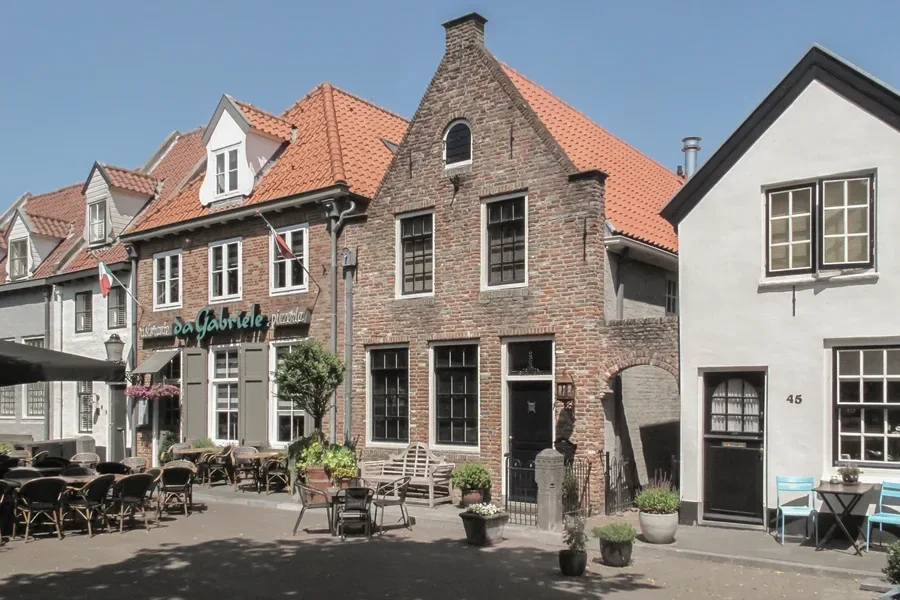
In 1851 a coastal light was placed above the gate to help shipping on the Zuiderzee. The building then also served as the home of the lighthouse keeper. Anyone walking under it now sees a medieval city gate with a nineteenth-century addition. Inside awaits the Vischmarkt, which the local visitor organisation names, together with the boulevard and the harbours, as the core of the town. A route from gate to square is thus not only a short walk but also a transition from water traffic to the street life of the old city centre.
The water at the present boulevard is called the Wolderwijd. Rijkswaterstaat explains that this border lake came into being in 1967 through the reclamation of Zuid-Flevoland. The Veluwemeer also belongs to the series of border lakes, but is a different body of water. For a visitor this needs no complicated map study: look out over the Wolderwijd from the boulevard and remember that ships at the Vischpoort once sailed on the Zuiderzee. The changed coastline is no abstract story in Harderwijk, because the old entrance gate and the new shore both fit into one city walk.
Around the city centre, according to Heerlijk Harderwijk, lie three harbours: the Vissershaven, the Stadshaven and the Strandhaven. The organisation names them within walking distance of the boulevard and the Vischmarkt. The municipality also describes the Waterfront as a new-build district adjoining the city centre, with among other things a marina, a visitors’ harbour and a city beach. It is the contemporary side of the same orientation towards water. Start at the old harbour, follow the quay and look at the new buildings too: the walk shows not one preserved townscape but a town that has reorganised itself towards the water.
The Dolfinarium also lies on the boulevard, within walking distance of the city centre, according to Heerlijk Harderwijk. The visitor organisation mentions dolphins, sea lions, seals and walruses, plus an underwater area. For families the park can be a separate part of a day in the town. Opening hours, however, vary by season.
Harderwijk can thus be read in two directions. Turn at the Vischpoort to the Vischmarkt and the historic city centre, or go along the harbours to the Wolderwijd and the Waterfront. The gate recalls the time of trade and shipping on the Zuiderzee, while the boulevard has the present border lake as its backdrop. That makes an autumn walk manageable: you do not have to complete a long route or a full programme to see how city gate, square and shore connect.