Three Veluwe walks between forest and heath
From 4.5 to 14 kilometres: Hoog Buurlo, the Deelerwoud and the Veluwezoom each show a different part of the landscape.
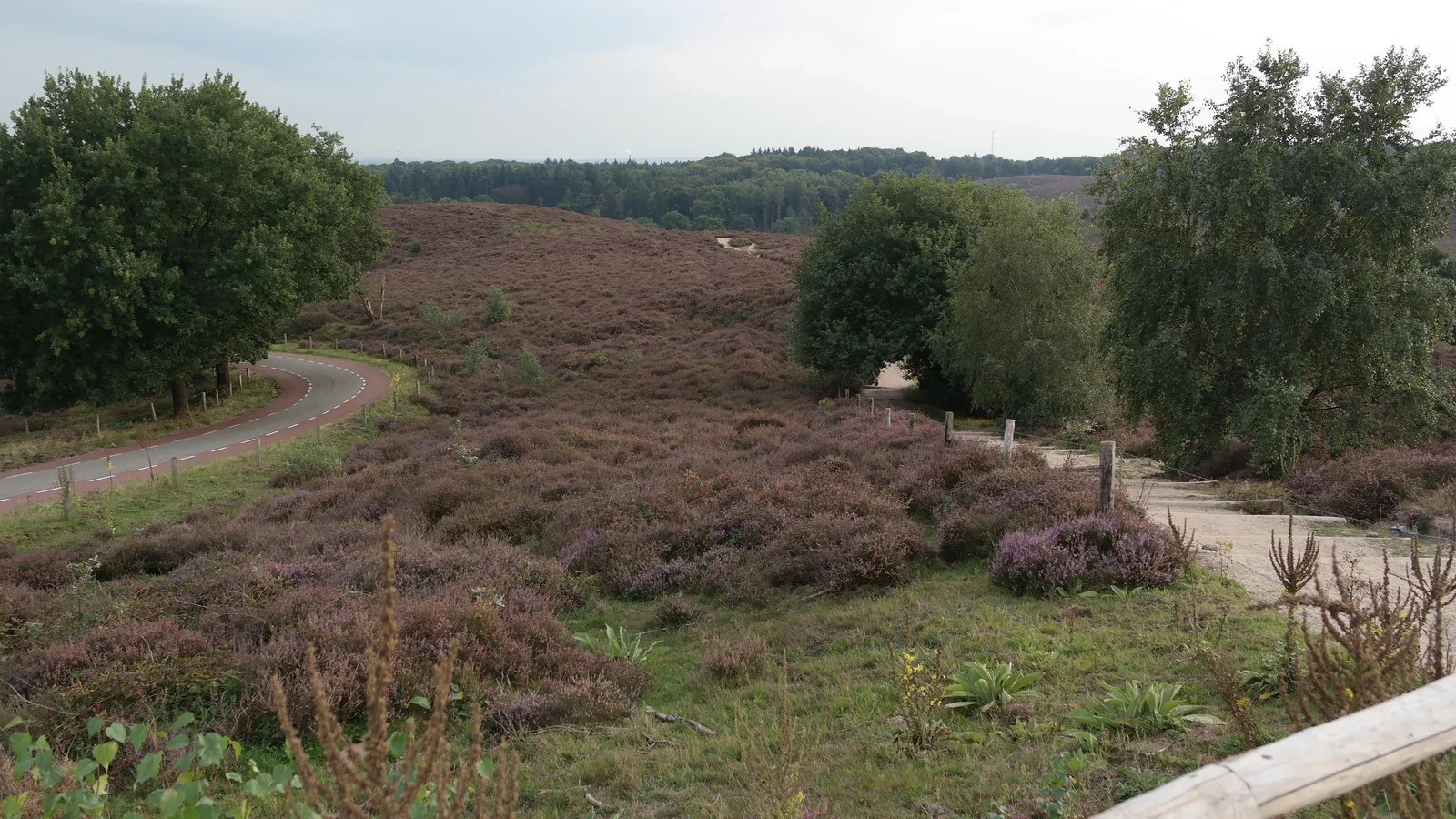
The Veluwe is not a single walking area with one entrance. A route at Hoog Buurlo leads past sheepfolds and beech avenues, a hike through the Veluwezoom links hilly forest with heath, and in the Deelerwoud forest and open terrain alternate. It is precisely those differences that make an autumn day attractive. You can choose the distance that suits you and still watch the landscape slowly change. Anyone setting out in autumn need not take an encounter with deer as the goal: the route itself offers enough to stop for.
For a short walk, Hoog Buurlo is a clear choice. Staatsbosbeheer describes a yellow-marked circuit of 4.5 kilometres there. The route runs through an old forest and settlement core, past the sheepfold among other things. Around the hamlet lie beech avenues, oak and beech woods, fields and the Hoog Buurlose heath. That gives plenty of variety between sheltered forest and open space in a limited distance. The sheepfold is the night shelter of the flock of Veluwe heath sheep; meeting the animals along the way is therefore not promised. The official route description and markings define the indicated circuit.
Anyone who wants to walk further can take Natuurmonumenten’s NS walk Veluwezoom. It begins at Dieren station and first goes through the hilly Onzalige Bosschen. There, according to the manager, you have to climb and descend a good deal. The route then follows the heath at the Posbank and the Zijpenberg. The hike ends, as you choose, after 11 kilometres at Rheden station or after 14 kilometres at Velp station. It is therefore not a flat stroll, but it is a walk for which you do not need to fetch a car at the end point. The route map helps distinguish the two end points when planning the walk.
A third possibility is the Deelerwoud. Natuurmonumenten has laid out a walk of 5.7 kilometres through forest and heath there; blue arrows mark the route. The route page lists red deer, fallow deer, wild boar and Highland cattle as possible encounters. The manager recommends binoculars, but here too wildlife remains unpredictable. The route was adjusted in 2023; Natuurmonumenten warns that paths on the underlying digital map do not always match the situation on site. The markings in the field are decisive, and paths that have been closed off or shut remain closed.
The chance of seeing wildlife changes nothing about the distance visitors must keep. On the Deelerwoud route Natuurmonumenten asks you to keep at least 25 metres away from Highland cattle, especially near calves. For deer the advice is: stay on the paths and do not make too much noise. On the Veluwezoom, dogs on leads are welcome on the paths, except in places where other rules are indicated. From mid-September to about mid-October the rut of the red deer takes place there; at the Elsberg the bellowing may be audible. That is a possibility, not an appointment with nature.
The journey to a starting point also deserves attention. Natuurmonumenten reports that some of the roads over the Posbank are closed to motorised traffic at weekends and on public holidays. For 5 October to 17 November 2026 the organisation also mentions works on the upper part of the Schietbergseweg. The visitor page refers to current information for parking and names Rheden station within walking distance of the visitor centre. For the NS walk, Dieren station is the starting point.
The available walking time determines which landscape fits the day: the short circuit at Hoog Buurlo, the longer hill route between railway stations or the blue route through the Deelerwoud. On the latter, the markings in the field are decisive. Anyone who wants to see wildlife on the Veluwezoom stays within the permitted hours: Natuurmonumenten asks visitors to enter the area only after sunrise and to leave before sunset. That way an autumn walk remains a visit to the landscape, with room for animals and for the walker who comes after you.