Weesp: porcelain and a town hall as the start of a town walk
Museum Weesp occupies the second floor of a town hall from 1776. It began as a single room of antiquities and now centres on the porcelain made in Weesp. From the museum you can walk to the church, the mill and the fort.
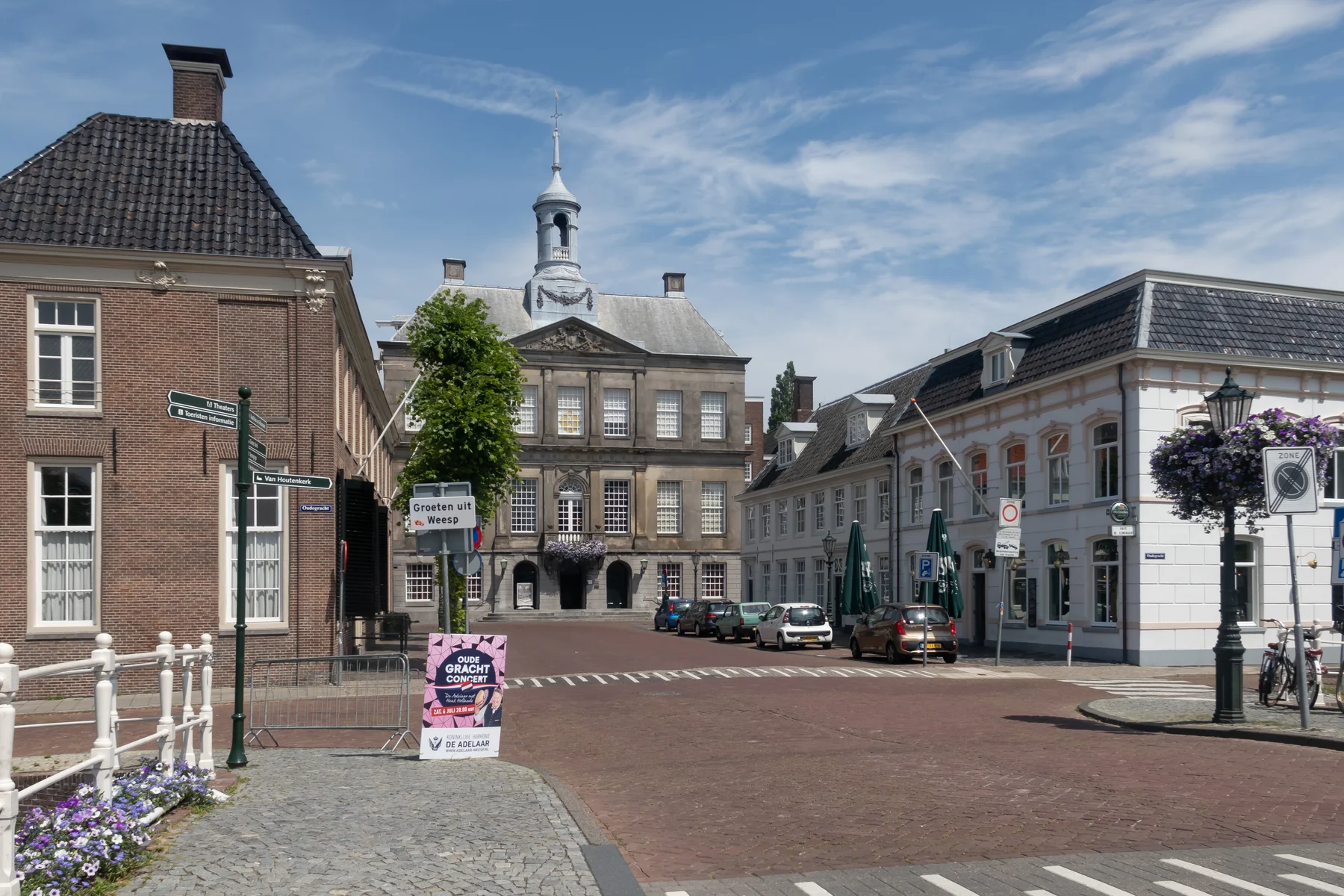
The town hall of Weesp stands on Nieuwstraat. It was built between 1772 and 1776 to a design by Jacob Otten Husly. Museum Weesp occupies the second floor. For centuries the building housed the town government and, until the nineteenth century, the court as well. The dungeons where prisoners awaited their fate can be visited.
The museum began in 1911 as an Oudheidskamer, a room of antiquities. On 28 December of that year J. Mooy, the town hall porter, received money for the upkeep of the room. At first visitors came by appointment only. The first purchase followed in 1928: a tureen with lemons on the lid.
The real beginning came in January 1974. The municipal council then set up a museum committee to manage the collection. The occasion was a large donation of Weesp porcelain from Baron F. van Heeckeren van Waliën, a descendant of the porcelain manufacturer Count Van Gronsveld. In 1999 it became a registered museum, affiliated with the Dutch Museum Association. Since Weesp merged with Amsterdam in 2022 it has been part of the Amsterdam City Archives.
That porcelain is still the core. The first porcelain ever made in the Netherlands came from Weesp, and the museum holds one of the largest collections of Weesp porcelain in the world, supplemented by later Dutch porcelain. There is also civic silver, paintings and engravings. One display is about Van Houten, the nineteenth-century inventor of soluble cocoa powder, who moved his factory to Weesp. Children use a special torch to search for clues in a secret time tunnel said to run beneath the town. An audio tour tells the history of the town hall and can be followed at your own pace. The town's history starts in the galleries with an Iron Age settlement, and one section shows how chocolate is made. The popularity of Weesp genever with the VOC is covered as well.
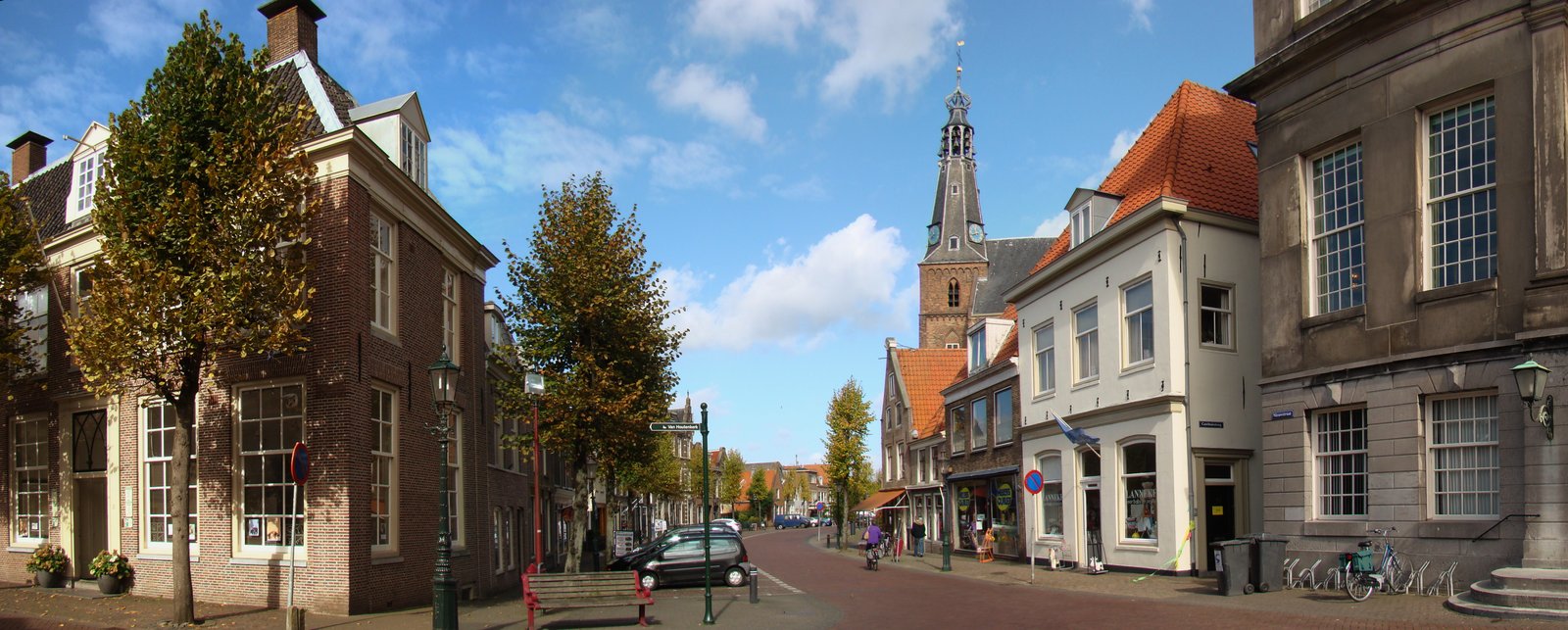
From Weesp railway station the museum is a ten-minute walk. Children under 13 enter free, as do holders of a Museumkaart. The museum is accessible to people with reduced mobility. On the same street, at Nieuwstraat 3, stands the former synagogue, which was used as a garage after the war and later restored. On Kerkstraat stands the Grote or Sint-Laurenskerk, built around 1450 and the oldest building in Weesp. Its carillon by the Hemony brothers still plays every quarter of an hour.
On the Vecht stands Molen de Vriendschap, a working grain mill at Utrechtseweg 11A. Further along the Ossenmarkt lies the tower fort from 1861, part of the ring of fortifications around Amsterdam. On the same street lies the Bakkersschans, one of the oldest earthworks in Weesp. Since 1986 it has been laid out as a flower garden with a tea garden.
The town hall of 1776, the church of around 1450 and the fort of 1861 lie on a single route. The museum is the start of that route.
Practical
Address: Museum Weesp, Nieuwstraat 41, 1381 BB Weesp
From Weesp railway station: 10 minutes on foot; parking within 5 minutes' walk
Admission: adults 10 euros, children under 13 free, free with a Museumkaart
Accessible to people with reduced mobility; assistance dogs are welcome