Kampen reads its Hanseatic past along river and gates
See-through panels link the IJssel to centuries-old city gates. A walk shows how trade and defence shaped the townscape.
Kampen has a way of making its Hanseatic history visible in the middle of the street. Across the city stand see-through panels with drawings of Kampen as it once was. The Bovenkerk, the vanished Hagenpoort, the IJsselkogge and the Stadsbrug are among the places that get a story in the Hanseschatten project. Hanse coins are set into the pavement of the city centre as pointers to the panels. It is an invitation to read the city on foot, with the IJssel as a constant line.
The river was more than scenery. According to Visit Kampen’s city history, a trading settlement arose on the southern river levee of the IJssel in the twelfth century. Buildings appeared along the Oudestraat, with the Bovenkerk at its end. As the city grew, moat and walls moved with it: the Burgel and the first city wall came as early as the end of the twelfth century. Anyone who looks at the row of facades from the water today is therefore looking at the side where the city first took shape.
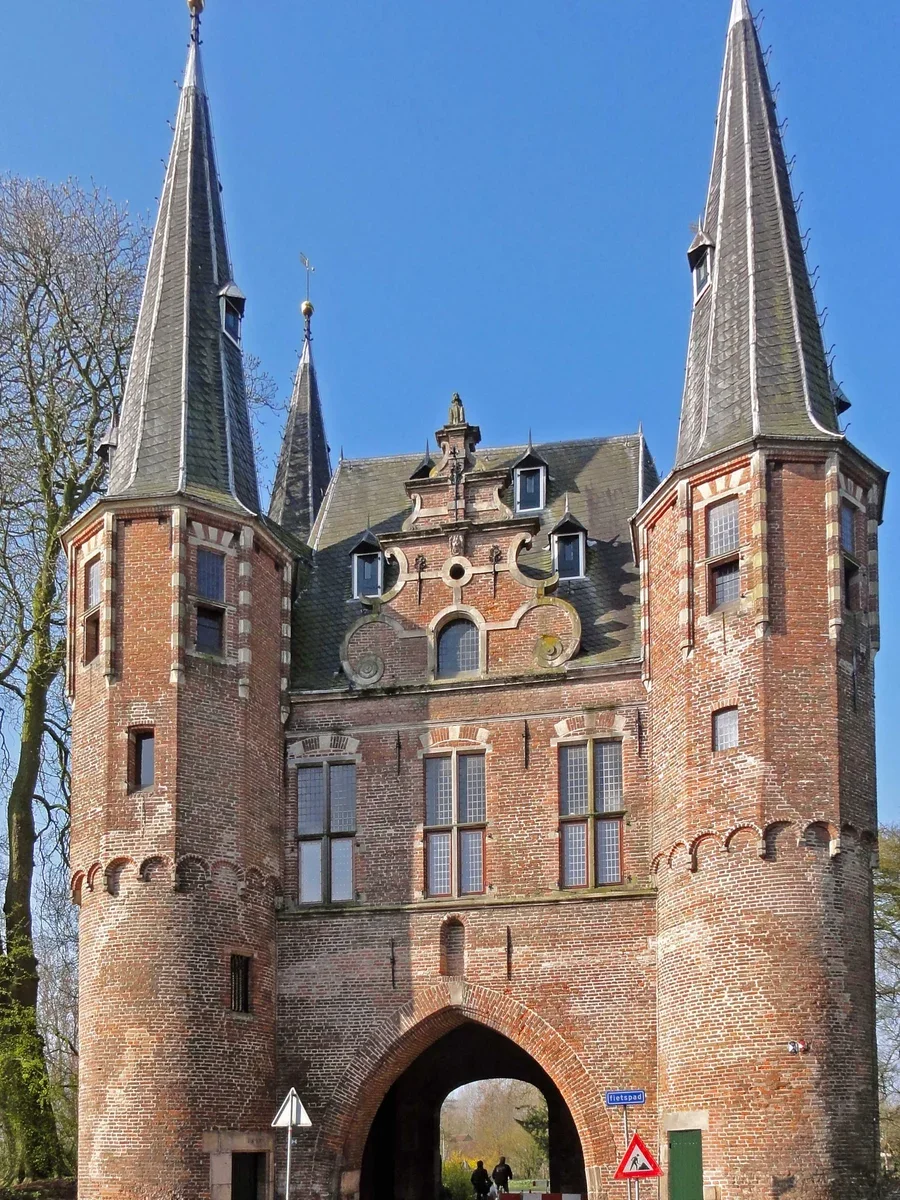
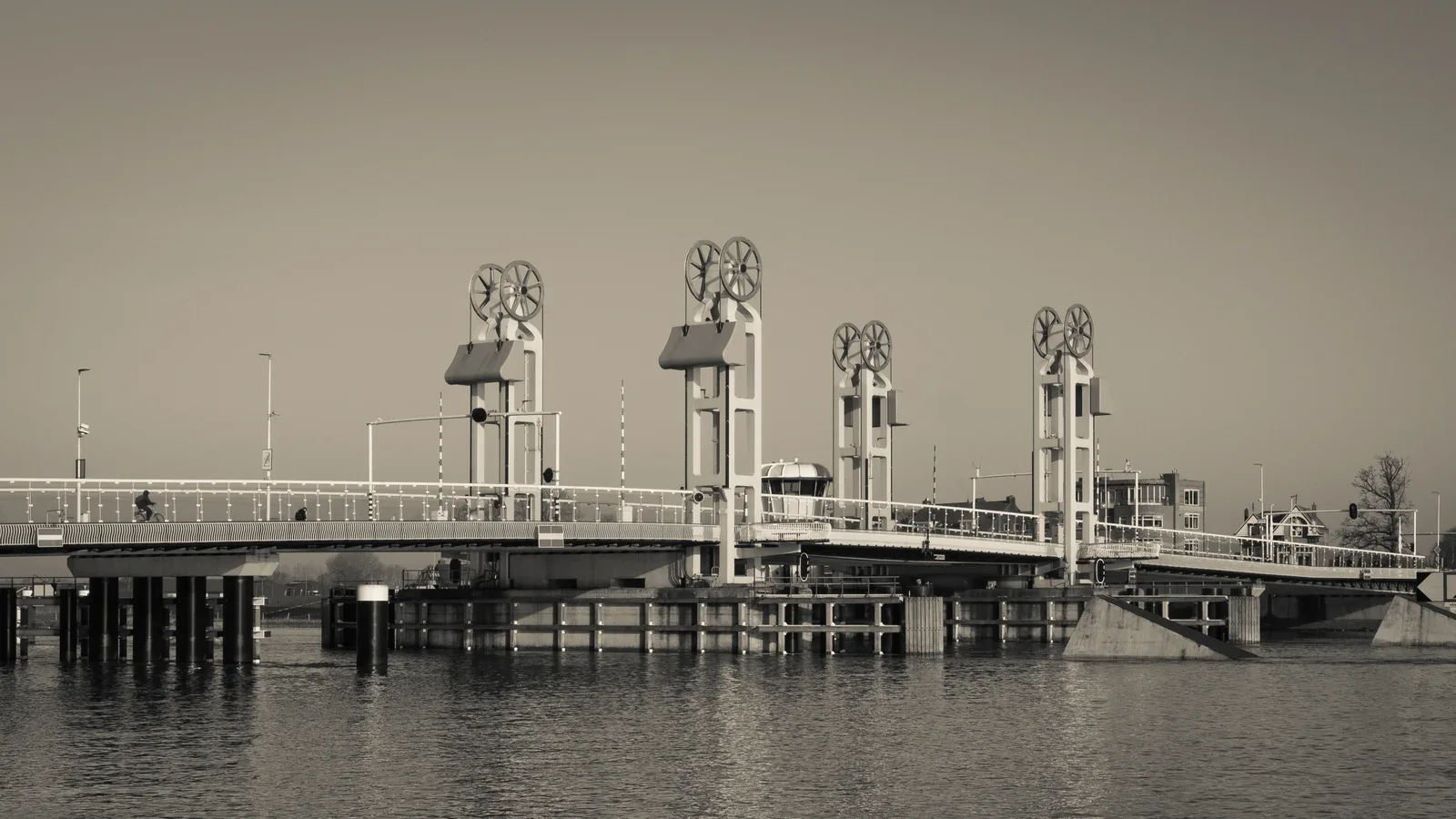
The Koornmarktspoort makes the link between city and river tangible. According to Visit Kampen, this oldest city gate of Kampen dates from the fourteenth century and stands between the IJssel and the old centre. Before the first bridge connected the two banks, the ferry to the other side left from here. The rooms above the passage later took on a variety of uses, including a prison and quarters for soldiers. The present Stadsbrug with its golden wheels is another landmark on the IJssel skyline.
On the landward side, two other gates remained standing. The Broederpoort on the Broederweg was built in the fifteenth century as part of an earthen defensive rampart. In the seventeenth century the architect Thomas Berendtsz gave it its Renaissance look with natural-stone decoration. The gate afterwards had very different occupants: the Surgeons’ Guild had a guild room there, and in the second half of the twentieth century a municipal museum was housed in it. Visit Kampen today calls it an exhibition space and wedding venue.
The Cellebroederspoort also dates from the city’s expansion in the fifteenth century. It replaced an older gate at the end of the Geerstraat, later took its name from the nearby Cellebroeders monastery and was rebuilt in Renaissance style. On the city side a Gothic pointed arch remained visible in the passage; on the park side, by contrast, there is a round arch. Those differing sides show how a defensive work changed over time. The three surviving large gates are the Koornmarktspoort, Broederpoort and Cellebroederspoort.
The new Hanseschatten project ties those older places to other stories. The panels also cover the Leeuwentoren, the cogs and the Hanse. Visit Kampen says visitors can start at any panel and then choose their own route; the Hanse coins in the pavement help with that. Anyone who would rather start at the water can take the Nautical Hanse Walk Benedenstrooms: it starts at the Stadskazerne on the Van Heutszplein and deals with Kampen’s maritime past. The route can be walked in one go or in sections.
For an autumn walk, the distinction between the routes is useful. The Hanseschatten direct the eye to historic locations with new drawings; the nautical walk follows the story of water and shipping. Along the way, the three city gates offer a tangible counterweight to the reconstructions. Visit Kampen mentions a protected city view and hundreds of national monuments, but a visit does not need to take in all of them. Start at a panel or at the Stadskazerne and pick a part of the city you want to see on foot.