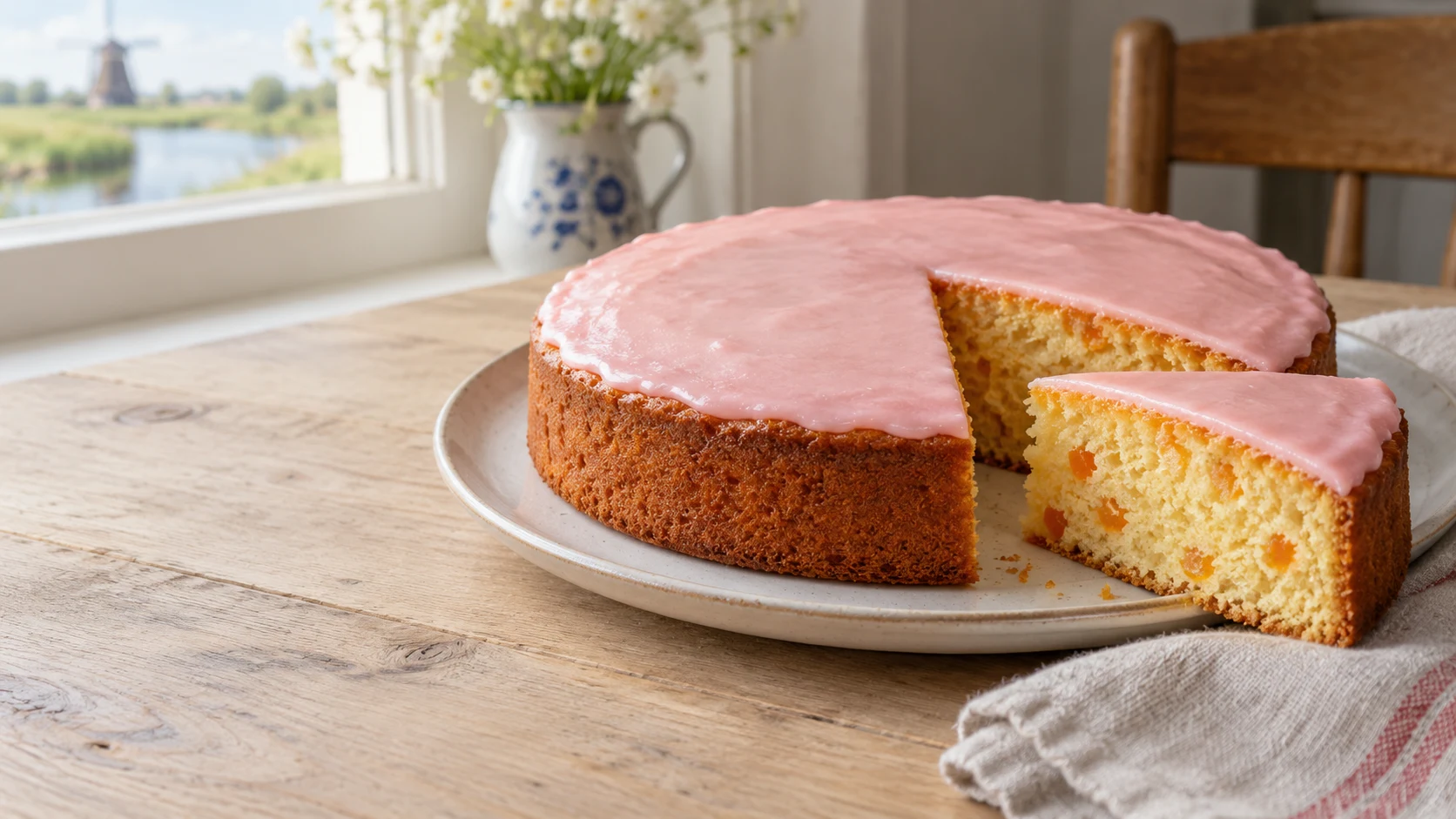
Frisian orange cake (oranjekoek): pink on top, orange inside
Order an oranjekoek and you get something pink. The name is hidden inside: slivers of candied orange peel baked into the batter. This home version is a flat 24 cm cake with a pinch of aniseed and an icing of icing sugar and orange juice.
Editorial team Holland Magazine ·
According to the Stichting Ambachtelijke Bakkerij (Foundation for Artisan Baking), oranjekoek is a typical Frisian treat: a flat cake, usually with pink icing. The name does not come from the colour but from the thin slivers of candied orange peel baked into it; aniseed is also part of the flavour. Recipes vary from bakery to bakery, and bakers often work with biscuit dough, almond paste and a swirl of cream. This is our own, simpler home version as a cake.
Times are guidelines; preheat during preparation where possible. Allow extra time to cool food before storing it.
Equipment
Springform tin (24 cm diameter), baking paper, electric mixer, mixing bowls, pestle and mortar, sieve, spatula, skewer and wire rack.
Ingredients
- 150 g soft unsalted butter, plus 5 g for greasing
- 150 g granulated sugar
- 3 medium eggs, at room temperature
- 225 g plain wheat flour, plus 10 g for the candied orange peel
- 8 g baking powder
- 1 g salt
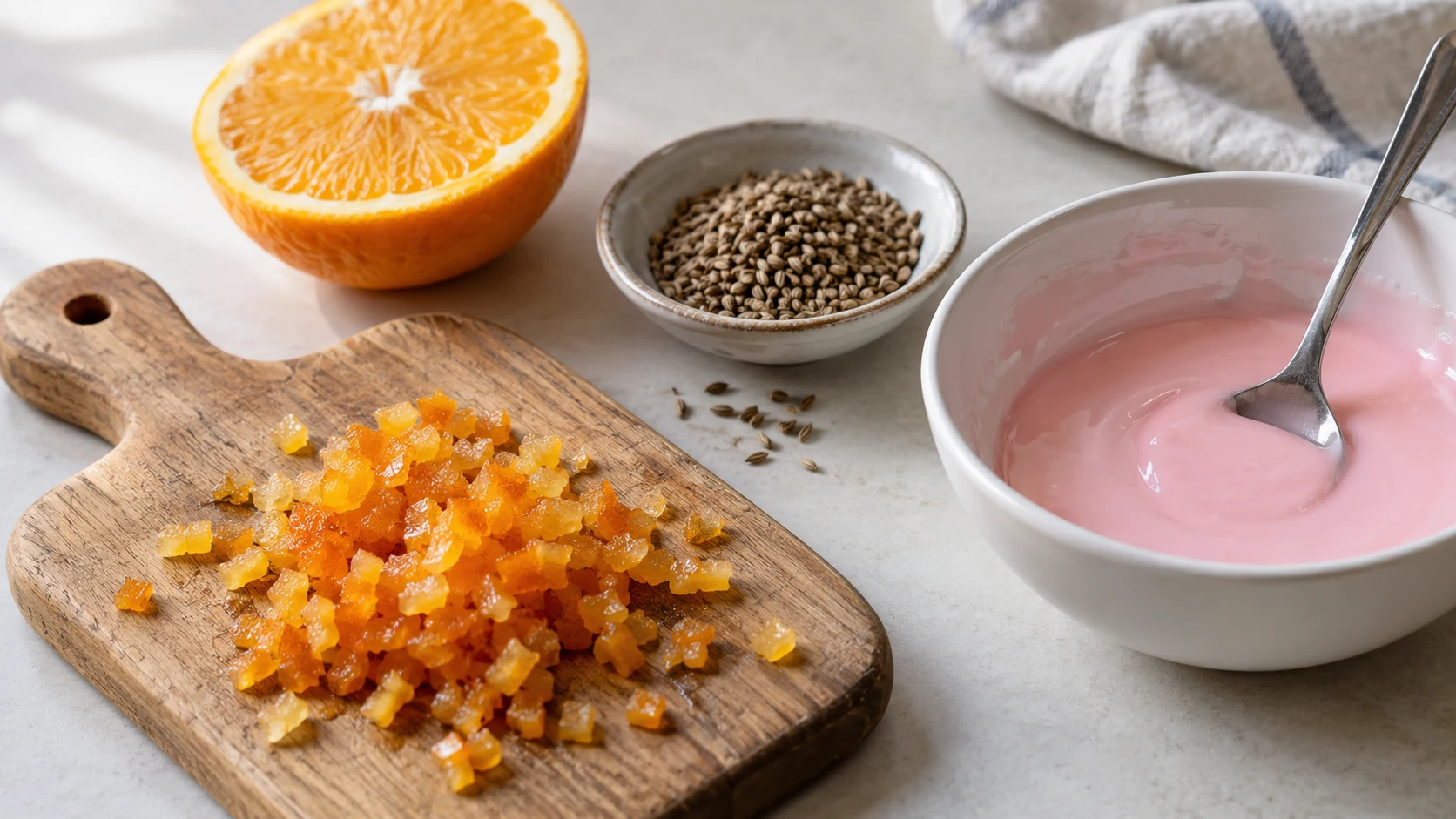
- 3 g aniseed
- 100 g candied orange peel
- 60 ml whole milk
- 150 g icing sugar
- 20–25 ml freshly squeezed orange juice
- 1–2 drops red food colouring
Method
- Preheat the oven to 170 °C, conventional (top and bottom heat). Grease the springform tin and line the base with baking paper. Finely chop the candied orange peel into 2–3 mm pieces and toss them with 10 g flour so they do not sink to the bottom. Lightly crush the aniseed in the mortar.
- Beat the butter and granulated sugar with the mixer for 4–5 minutes until pale and fluffy. Beat in the eggs one at a time; only add the next egg once the previous one has been absorbed.
- Mix 225 g flour with the baking powder, salt and aniseed. Fold this into the butter mixture in two additions, alternating with the milk, until the batter is just smooth. Fold in the candied orange peel.
- Spoon the batter into the tin and smooth the top. Bake on the middle shelf for 40–45 minutes, until the top is golden brown and a skewer inserted in the centre comes out clean.
- Leave the cake to rest in the tin for 10 minutes. Then remove the ring and leave it to cool completely on a wire rack for at least 60 minutes: icing melts away on a warm cake.
- Sift the icing sugar. Stir in the orange juice a little at a time until you have a thick icing that runs slowly off the spoon. Stir in the colouring drop by drop until it is pale pink. Spread the icing over the cooled cake and leave it to set for 30 minutes before cutting.
Storage
Store the iced cake airtight in a tin at room temperature and eat within 3 days; this is quality advice, not a shelf-life guarantee.
Allergens
Wheat/gluten, egg and milk. Check the label of the candied orange peel and the colouring (candied peel may contain sulphites).
Our own adaptation for home cooking, not kitchen-tested. Times are guidelines; check the result described in the method.