Doesburg lets the IJssel and mustard speak together
A walk through the Hanseatic city leads from the river past old fortifications to a museum where the mustard craft is still on view.
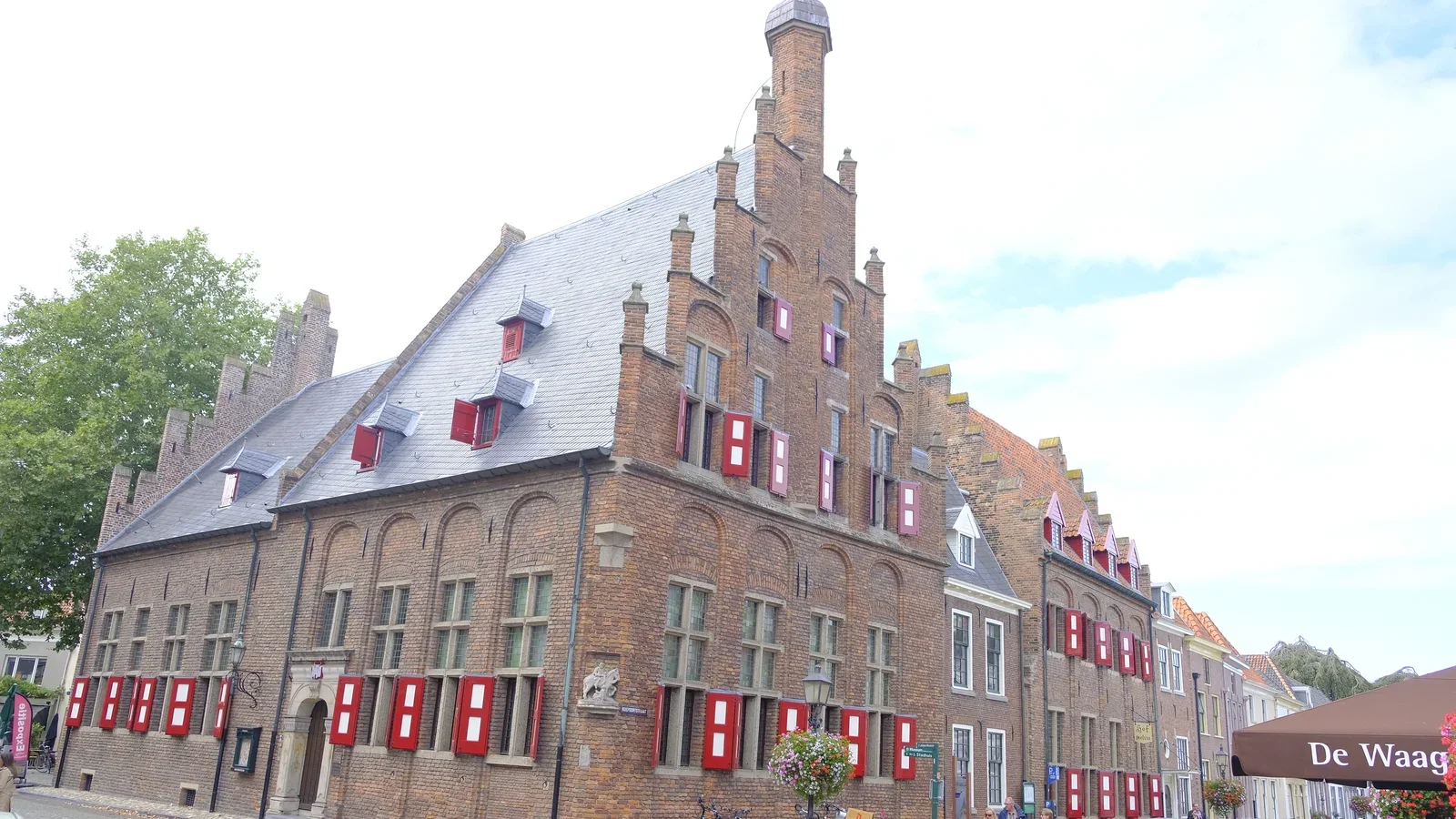
In Doesburg, two stories lie close together. Along the IJssel, the water explains why the town once became a trading place; in the Boekholtstraat, a small mustard factory shows how a local craft found its place in the townscape. Between them lie the historic city centre and the old fortifications. Anyone exploring the town on foot can link the broad river landscape, the little streets and the Doesburg mustard tradition in a single visit. It is a route that makes history tangible without needing a large programme.
Location was decisive for Doesburg. Here the Oude IJssel flows into the Gelderse IJssel. The municipality states that the settlement received city rights in 1237 and had belonged to the Hanse since 1447. The rivers connected the place with trade over water, but were also a threat: in 1343 the town was extended after the river had eroded land. The present Ooipoortstraat and Meipoortstraat then came within the city walls. So the water is not only in the view from the quay, but also in the shape of the city centre.
Trade made Doesburg prosperous, but that prosperity did not last by itself. According to the municipality, the decline began at the end of the fifteenth century, partly because the IJssel silted up. In 1552 it was decided to divert the river. Later the town mainly gained significance as a fortress. From 1607 Prince Maurits set it up as a border fortress; until 1945 there was almost continuously a garrison. The town’s role thus changed from trading centre to defended place, while the historic core remained within the ramparts.
At the edge of the centre those fortifications can still be followed. The Hoge and the Lage Linie were laid out to plans by Menno van Coehoorn in the first half of the eighteenth century. The municipality describes the Lage Linie as freely accessible via the paths from the Turfhaven or the Kraakselaan. The Hoge Linie is not freely accessible. That distinction is useful for a walk: you can experience the fortress from the accessible route, but should not treat the other side as an open city park. The ramparts give a visit a different scale from the narrow streets of the centre.
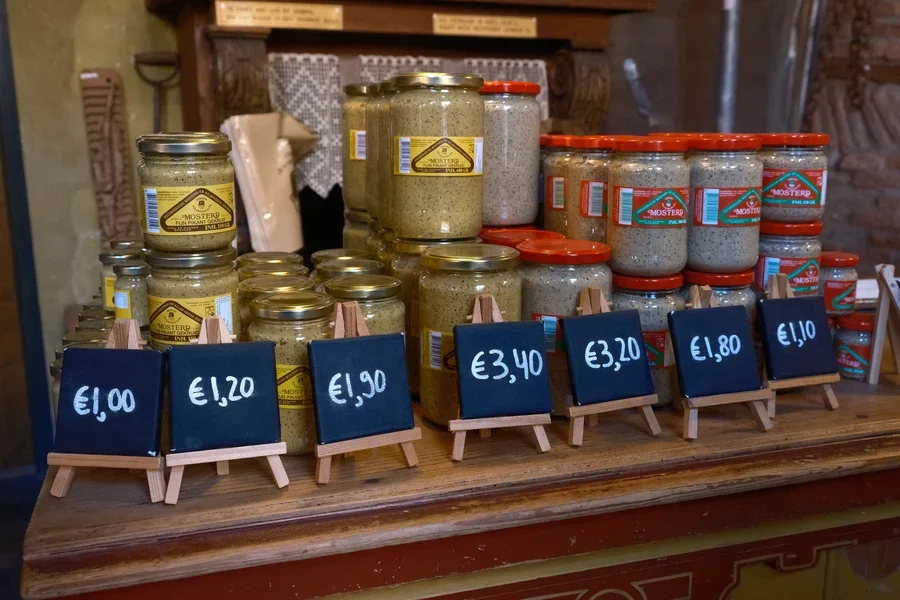
In the Boekholtstraat the urban past takes on a much smaller scale. The factory at Boekholtstraat 22 to 26 was expanded in 1974 with a museum in an old house and storehouse. The museum shows old mustard mills and tools from vanished small factories and demonstrates how farmhouse mustard is traditionally made. That links the history of a local product with the work it takes. It is more than a shop where you buy a jar.
Anyone who wants to look inside can, according to the museum, walk around on their own. For a demonstration the company asks for a group of at least ten people; for smaller parties, booking is not necessary. Its own visitor page gives hours of 11.00 to 16.00 from Tuesday to Saturday and states that it is closed on Monday and Sunday. The address is Boekholtstraat 22–26; according to the company, the shop and the museum have different opening hours.
A walk can begin at the river, go through the city centre to the mustard museum and then seek out the accessible Lage Linie. Along the way you see three successive roles of Doesburg: a place that grew through two rivers, a town that defended itself behind ramparts and a centre where craft is still shown. The museum is a concrete end point, but the route need not depend on a single admission ticket. The quay, streets and lines also tell, outside the museum door, why this very place became a Hanseatic city.