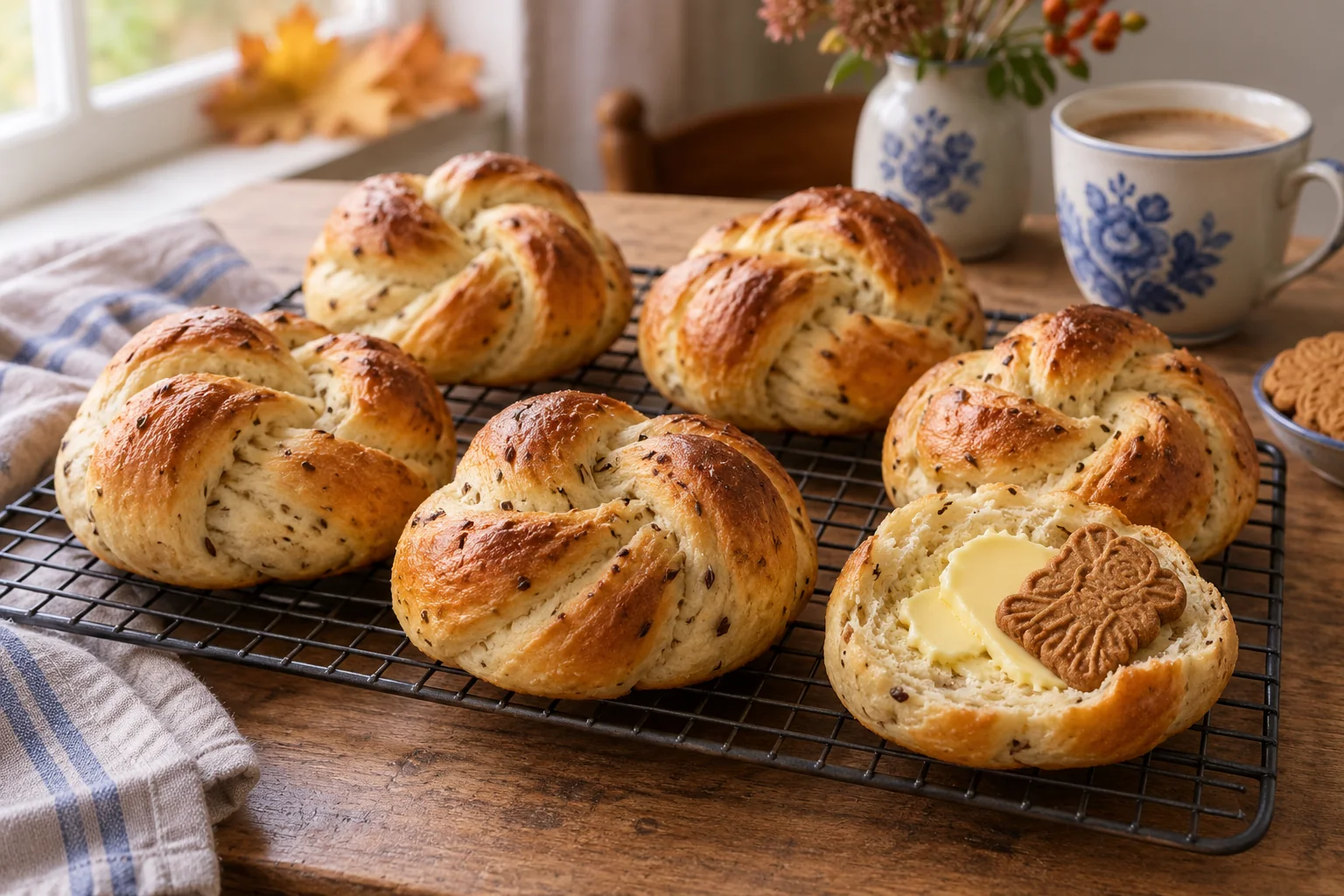
Anijskrollen: knotted white buns full of anise
A krol is a soft white bun with a knot in it and enough anise to scent the kitchen when the oven opens. In Veghel and the surrounding area, it is spread generously with butter and topped with a crisp speculaas biscuit.
Editorial team Holland Magazine ·
The anijskrol is a regional product of eastern Brabant, with Veghel its probable birthplace. It is also popular in places including Gemert, Uden, Schijndel, Sint-Oedenrode, Erp and Beek en Donk. ‘Krol’ is a Brabant dialect variant of krul, the Dutch word for curl: the name refers to the knot that the baker ties by hand in the rope of dough. The Veghel fair in September marks the start of the krollen season, with the busiest period around Sinterklaas; they are sometimes eaten until Carnival. A Veghel baker’s family, Van Bussel, referred to an old booklet: according to that account, krollen were already being sold there in 1865. This is our own home version using white wheat dough, rather than a fixed traditional baker’s recipe.
Times are guidelines; preheat during preparation where possible. Allow extra time to cool food before storing it.
Equipment
Large bowl, scales, mortar and pestle (or a saucepan for crushing the seeds), clean tea towel or cling film, 2 baking trays lined with baking paper, cooling rack.
Ingredients
- 500 g plain wheat flour
- 7 g dried yeast (1 sachet)
- 275 ml semi-skimmed milk, lukewarm
- 50 g unsalted butter, softened
- 30 g caster sugar
- 8 g salt
- 15 g anise seeds (whole)
- 15 ml milk for brushing
- To serve: butter and speculaas biscuits, to taste
Method
- Coarsely crush 5 g of the anise seeds in the mortar; leave the rest whole. Mix the flour, yeast, sugar, salt and all the anise seeds in the bowl. Add the lukewarm milk and softened butter, then knead to a smooth, supple dough that no longer sticks to your hands. Allow about 15 minutes for weighing, mixing and kneading together.
- Return the dough to the bowl, cover with a tea towel or cling film and leave to rise for 60 minutes in a draught-free place, until roughly doubled in size.
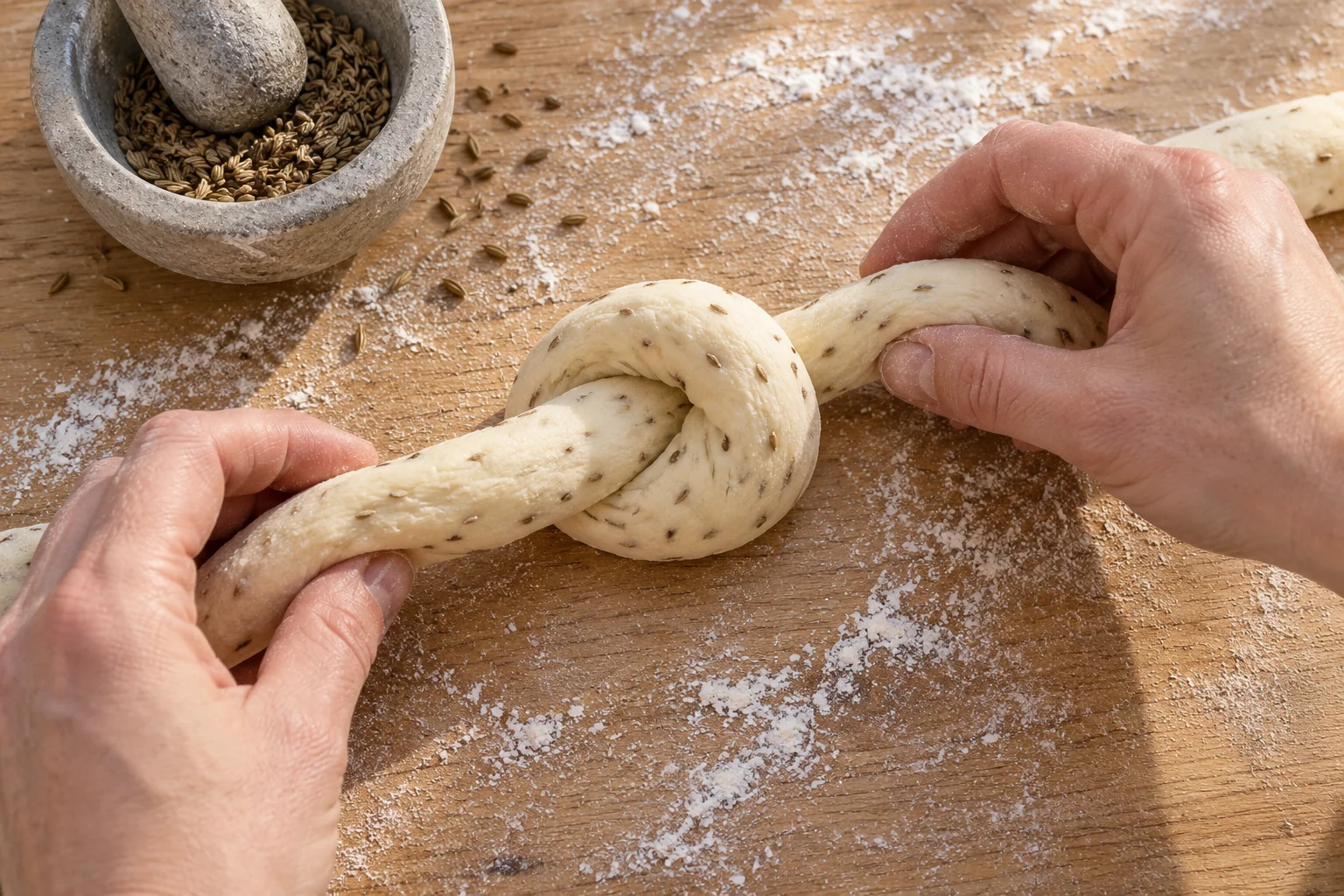
- Flatten the dough and divide it into 12 equal pieces, each weighing about 74 g. Roll each piece into a rope about 28 cm long. Tie a loose single knot, as you would in a rope, and tuck the ends partly underneath the bun. Space the buns out on the two baking trays. Shaping takes about 15 minutes.
- Cover the buns loosely and leave to rise again for 40 minutes, until visibly plump. Meanwhile, preheat the oven to 180 °C fan.
- Brush the buns lightly with the milk. Bake both trays together for 15–18 minutes, swapping their positions after 9 minutes. The buns are ready when golden brown and hollow-sounding when tapped underneath with a finger.
- Leave the buns to cool on the rack for 20 minutes so that the crumb sets. Split them, spread generously with butter and add a speculaas biscuit just before eating.
Storage
Keep cooled buns in a closed tin or bag and preferably eat them on the same or following day. Freeze any that you will not eat soon in a freezer bag; thaw at room temperature and warm briefly in the oven.
Allergens
Wheat/gluten and milk (milk and butter). Speculaas contains gluten and may contain milk, soya or nuts: check the label.
Our own home adaptation, not test-baked. Total time: 2 hours 48 minutes, comprising 30 minutes of active work (15 minutes kneading, 15 minutes shaping), 18 minutes baking and 120 minutes waiting (60 minutes rising, 40 minutes second rise, 20 minutes cooling). Times are guidelines; check the described result.