
More than 100 stalls in a town with 134 listed buildings
Candlelight Shopping in Heusden runs for two evenings, 11 and 12 December. The fortified town on the Maas has 134 listed buildings and was restored after 1968.

On Friday 11 and Saturday 12 December 2026, Heusden celebrates the 21st edition of Candlelight Shopping. On both days the event runs from 3 pm to 10 pm. There are more than 100 stalls and food trucks, shops and cafés in the fortified town stay open until 10 pm, and entry is free. Illuminated dresses and suits are part of it, and there is music.
That so many stalls fit into the streets is down to the town itself. Heusden has 134 listed buildings and has still not become an open-air museum: people still live, work and spend their free time there. Its history goes back to the Middle Ages, around 1200. In 1577 the town council sided with William of Orange, and the defences were adapted to keep Spanish troops out of Holland. In the 17th century Heusden was called the impregnable fortress and received the title ‘tLands Sterckte’.
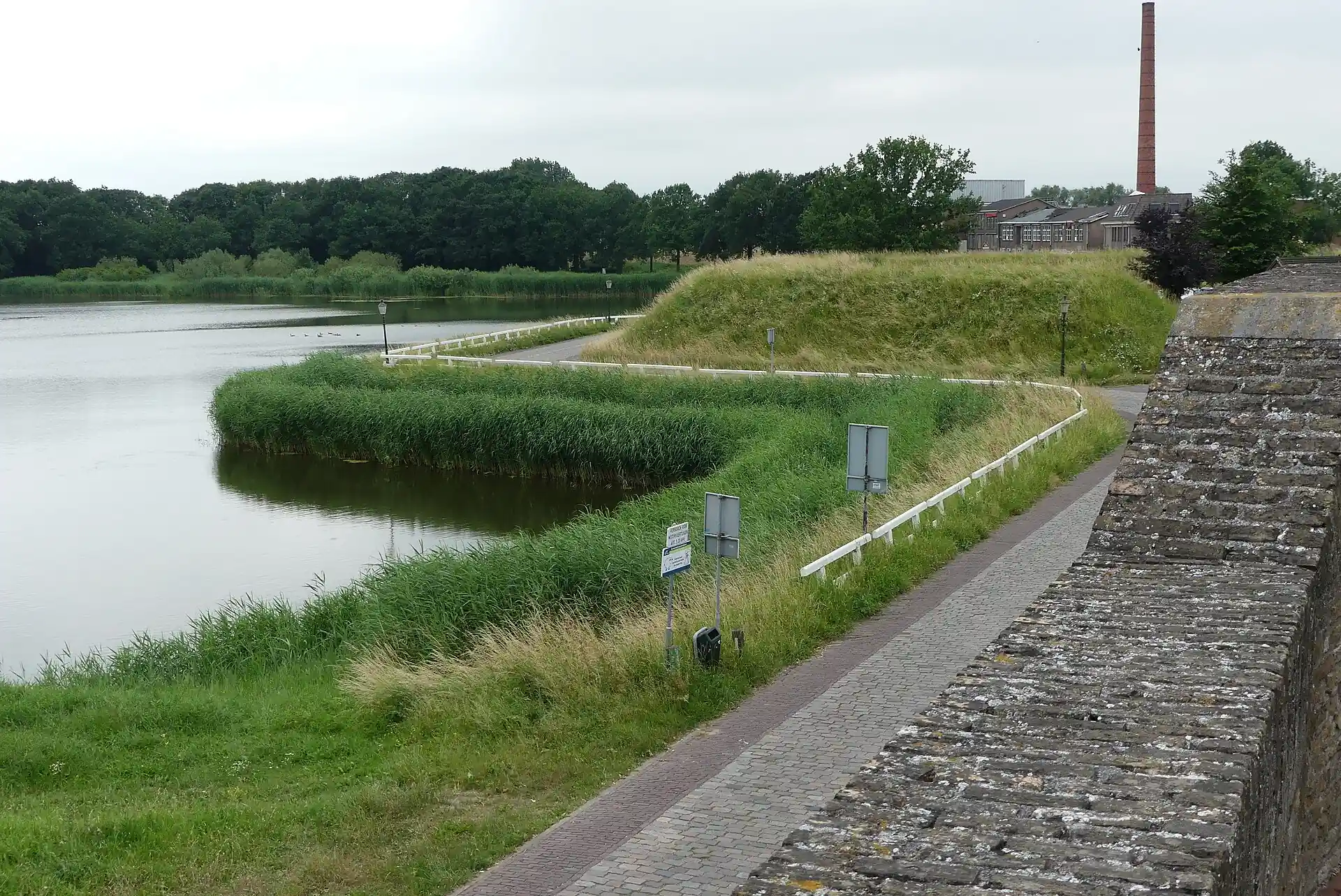
After 1968 the town was thoroughly restored. The starting point was Blaeu's map of 1649, so that the fortifications and the filled-in town harbour were brought back to their former state. With that restoration Heusden won the highest European restoration prize in 1980. From the ramparts you look out over the landscape of Brabant and Gelderland, the Bergsche Maas and the restored town. Heusden lies on the Maas and has a rich history; the green town ramparts and the restored facades form a historic backdrop.
The houses carry as many as 32 gable stones, each with its own story. The oldest is more than 400 years old: a stone from 1600 showing Saint George and the dragon, to be found in the Putterstraat. Another guided tour follows the Klepperman. He guarded Heusden as night watchman and also served as fire watchman and town crier. Along the way it becomes clear what role he played in the daily life of the town.
The tour of the fortifications starts at the scale model in the Tourist Information Point. A guide talks about the development and function of the defences, and about castle lords, civic guards, mercenaries and fortress farmers. It takes 1 hour and 3 quarters. The walk past the gable stones takes about 90 minutes and the tour with the Klepperman about an hour, bookable for groups of up to 10 or up to 20 people. A fourth walk asks how much you know about the history of Heusden, and covers how the fortified town developed over the years. The guide takes you past the places where those stories come to life. A free children's treasure hunt for children aged 4 to 10 can be done at the same time as a tour. The routes lead partly over cobbles, uneven paving and possibly over the ramparts.
The Gouverneurshuis at Putterstraat 14 tells the story of Heusden in a museum. Until 4 April 2027 it shows the exhibition ‘Molens van Heusden: machines van hout’ (windmills of Heusden: machines of wood). Windmills were the first machines that were driven not by people or animals but by an external source of energy. The exhibition focuses on three functions in the region: controlling the water level in the polders, making food and industrial uses. ‘They are wonders of technology with an impact we easily underestimate’, the museum writes. On a touch table in the middle of the room are all the windmills of the municipality of Heusden, the vanished ones and those that still exist. The museum is open on Thursday and Friday from 1 pm to 5 pm and on Saturday and Sunday from 11 am to 5 pm.
Every Sunday at 2.30 pm a guide sets off on a town walk through the fortified town, starting at the Tourist Information Point at Pelsestraat 17. That includes 22 and 29 November and 6, 13, 20 and 27 December. The walk goes over the cobbles, past old facades and through alleys and town gates. The boat tours on the Maas run from Easter until the end of September, so in December the boat stays at the quay.
As in previous years, the organisers expect quite a few visitors. The fortified town has few parking spaces and a strict parking policy. They therefore advise parking at one of the large car parks just outside the town. On Friday and Saturday, transport from the large car park on the Steenweg to the centre is arranged between 4.30 pm and 9.30 pm, for a small fee. An event like this deserves a home-made song, the organisers think, and the song exists. More than 100 volunteers and a group of sponsors make the two evenings possible.