Noord-Brabant
Moerdijk
Moerdijk lies in North Brabant and is surrounded by water: the Hollands Diep on the north side, the Volkerak on the west and the Mark and Dintel on the south. On 1 January 1997, Fijnaart en Heijningen, Klundert, Standdaarbuiten and Willemstad were added to Zevenbergen. Since 1 April 1998 the municipality has been called Moerdijk. On 1 January 2026 it had 38,467 residents in eleven villages.
Willemstad is named after William of Orange; Prince Maurits granted the town its city rights in 1585. The Mauritshuis from 1623 is now a visitor centre, and the Koepelkerk from 1607 is the first church in the Netherlands built for Protestant worship. In Klundert, bastions, ramparts and moats of the fortifications survive, and the National Flax and Sugar Museum is located there.
In winter the visitor centre Het Mauritshuis is open Wednesday to Sunday, with free admission. During weddings, hire and public holidays it may be closed or the hours may differ. The National Flax and Sugar Museum is open Tuesday to Saturday until 30 November and closed in December.
See and do
Visitor centre Het Mauritshuis, Willemstad
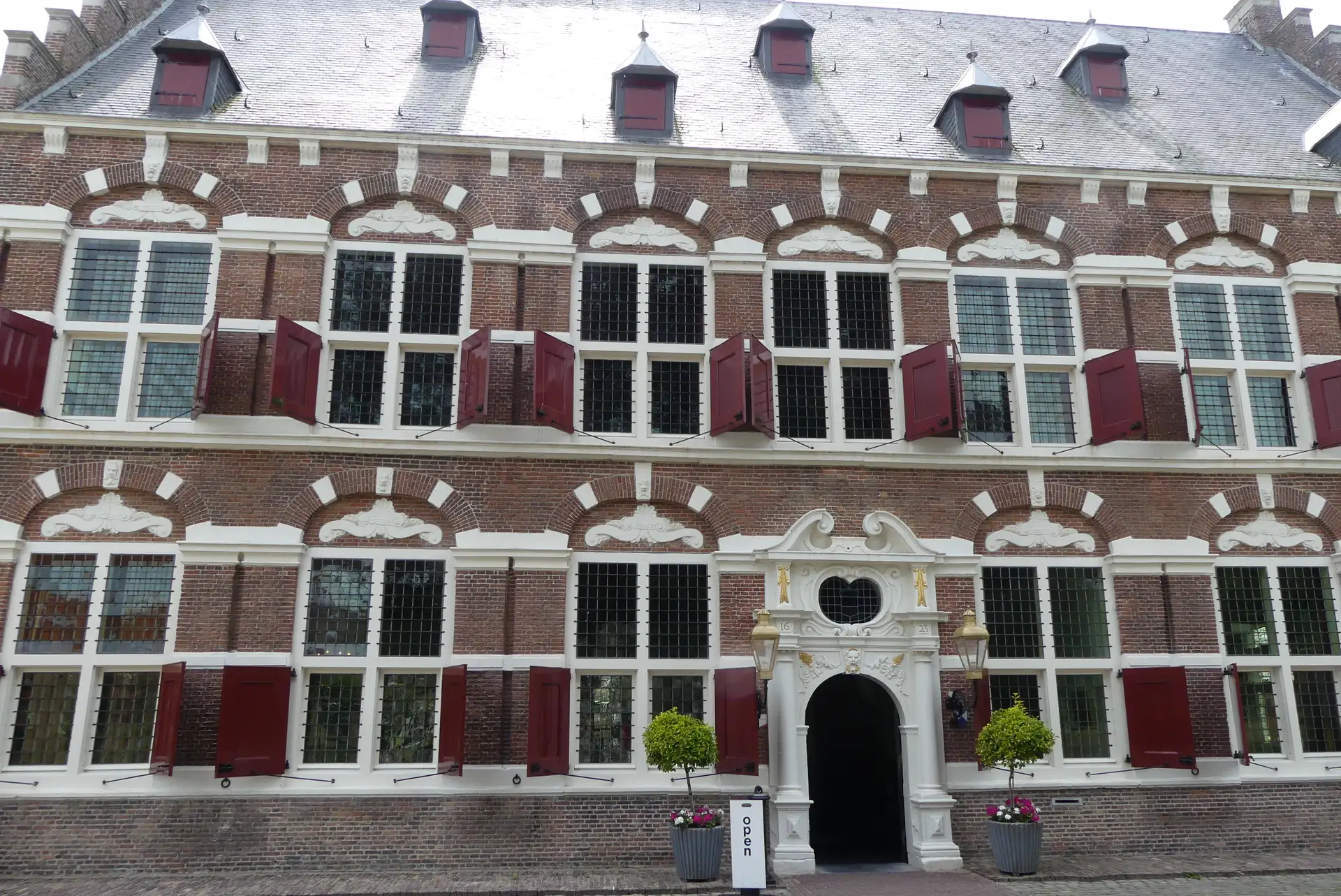
Prince Maurits had the Mauritshuis at Hofstraat 1 in Willemstad built in 1623 as the Prinsenhof. Today it is the visitor centre and museum of the Stelling van Willemstad, with a film about Prince Maurits and an interactive game in which you defend the fortress against the French. The attic holds Museum de Heemkundezolder. In winter it is open Wednesday to Friday from 11:00 to 17:00 and on Saturday and Sunday from 12:00 to 17:00. Admission is free. During weddings, hire and public holidays it may be closed or the hours may differ.
Koepelkerk, Willemstad
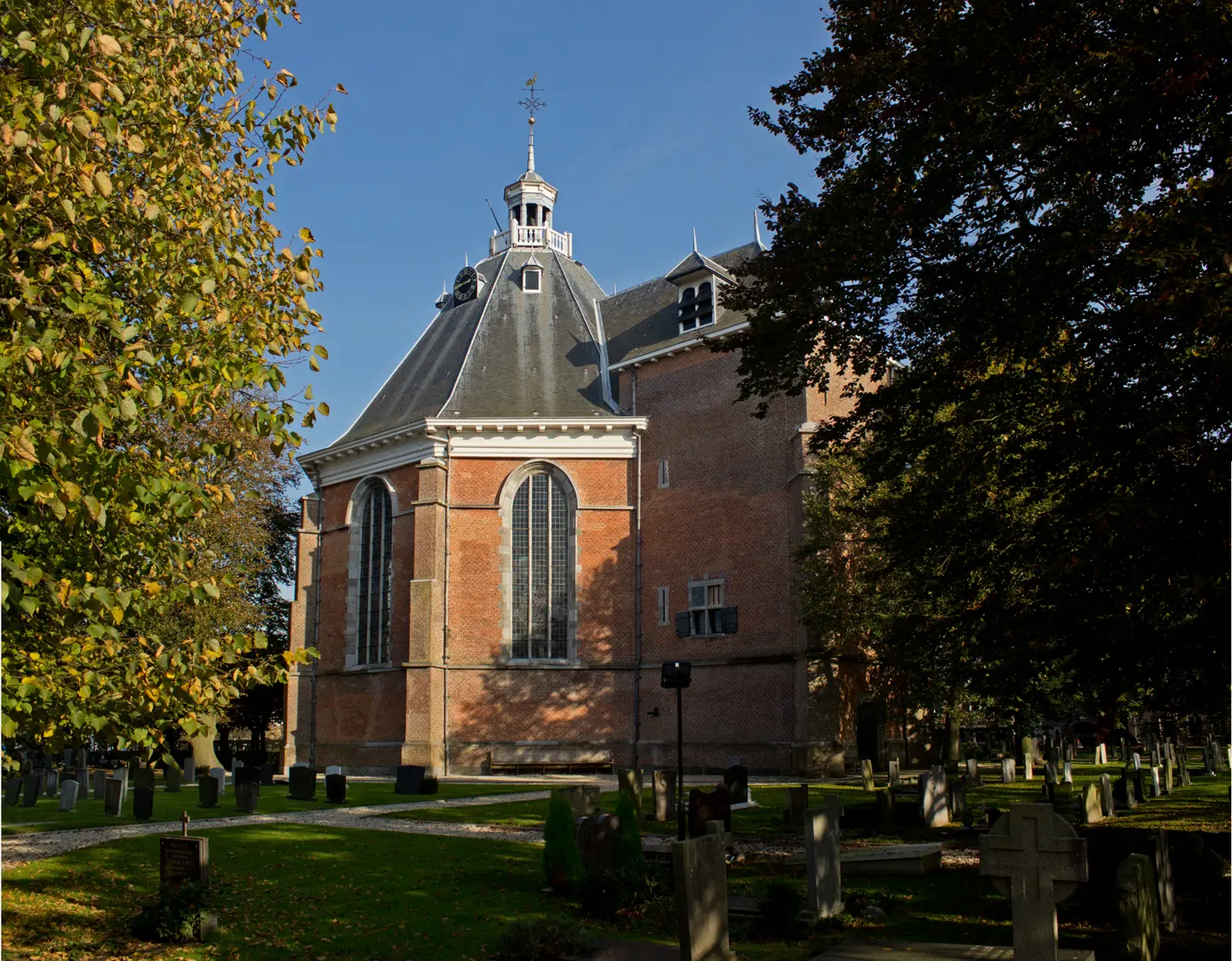
The Koepelkerk at Kerkring 19 in Willemstad was built between 1597 and 1607 and is the first church in the Netherlands built for Protestant worship. It is an octagonal central-plan building of red brick with an unfinished square tower. Inside, the church has a wooden dome vault. It was restored in 1791 and gutted by fire in 1950, during repairs of war damage. The churchyard around the church holds many gravestones.
National Flax and Sugar Museum, Klundert
The National Flax and Sugar Museum is at Stoofdijk 1a in Klundert, in a restored domain farm. De Vlasserij shows the processing of flax with original, restored machines. De Suiker includes objects, display cases with old sugar products in their original packaging and working models of sugar factories from the 1950s and 1960s. The museum is open from 1 March to 30 November, Tuesday to Saturday from 13:30 to 17:00. Museumkaart holders enter free.
Fortifications and Town Hall, Klundert
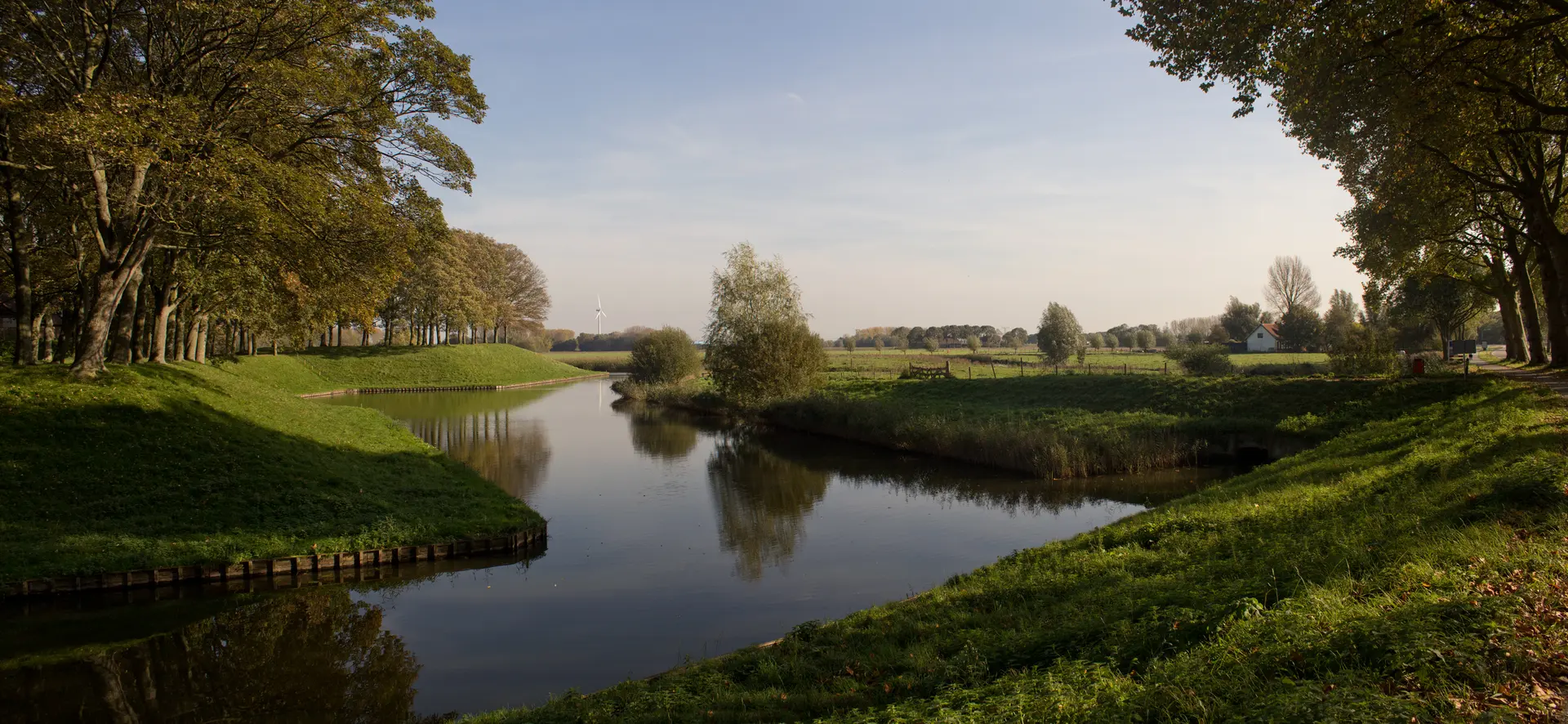
The fortifications of Klundert were laid out in 1584-1588 by the engineer Adriaan Anthonisz. On the north side, bastions, an earth rampart and a moat survive. On the south side lies the Kroonwerk Suykerbergh. The Town Hall at Stadhuisring 1, from 1621, was designed by Melchior van Herbach with a subsidy from Prince Maurits. The front gable has two stones reading 'Anna 1621' and a statue of Justitia. Both are national monuments.
A day in Moerdijk
A Saturday in November 2026 (7, 14, 21 or 28 November). The National Flax and Sugar Museum is open until 30 November and closed in December. The Mauritshuis is open on Saturdays from 12:00 to 17:00. During weddings, hire and public holidays it may be closed or the hours may differ.
10:00 · Walk through the fortress town of Willemstad
The Koepelkerk at Kerkring 19 was completed in 1607. The Old Town Hall at Raadhuisstraat 2 is a Renaissance building from 1587. The stone corn mill d'Orangemolen dates from 1734.
12:00 · Visitor centre Het Mauritshuis, Willemstad
The visitor centre at Hofstraat 1 is open on Saturdays from 12:00 to 17:00 and admission is free. The attic holds Museum de Heemkundezolder, with rooms set up as a shop, school, workshop, kitchen and living room. During weddings, hire and public holidays it may be closed or the hours may differ.
14:15 · National Flax and Sugar Museum, Klundert
The museum at Stoofdijk 1a is open on Saturdays from 13:30 to 17:00. A free audio tour is available in Dutch, German and English. Children can join a search game with the mouse Piep.
15:45 · Fortifications and Town Hall, Klundert
The north side of the fortifications has bastions, an earth rampart and a moat. The Town Hall at Stadhuisring 1 stands in the centre of Klundert.
Map and localities
Localities
- Willemstad
- Heijningen
- Klundert
- Oudemolen
- Fijnaart
- Moerdijk
- Zevenbergen
- Standdaarbuiten
- Noordhoek
- Langeweg
- Zevenbergschen Hoek
More about the Mauritshuis
The Mauritshuis in Willemstad is the visitor centre of the Stelling van Willemstad and has a local history museum in its attic.
When it was built in 1623, the Mauritshuis was called the Prinsenhof. The visitor centre tells over four centuries of history under one roof. In the Canonkamer a film plays about the life of Prince Maurits of Orange, and there are folders and walking and cycling routes for Willemstad, the Stelling and the surrounding area.
Museum de Heemkundezolder has a large permanent collection of thousands of objects, old photographs and maps. They show the life of farmers, townspeople and country folk in the fortress town and the Ruigenhil polder, with period rooms for a shop, school, workshop, kitchen and living room, among others, and for fishing and farming. Admission to the Mauritshuis and the Heemkundezolder is free.
Key figures and transport
Population
38,467
Area
184.03 km²
Water
24.79 km²
Localities
11
Reference date · 1 January 2026
Stations
Search Holland Magazine
Nature, heritage and culture
Willemstad and the Zuiderwaterlinie
The history of Willemstad begins around 1564, when the area was reclaimed from the water on the orders of Jan IV of Glymes, Marquis of Bergen op Zoom. This created the village of Ruigenhil. Almost twenty years later William of Orange had it fortified. The town withstood a siege by the French in 1793 but later had to surrender. In 1926 Willemstad ceased to be a fortress, and in 1970 the former fortress became a protected townscape.
In 1811 Emperor Napoleon visited the town. He ordered a new powder magazine and several forts south of Willemstad. The Kruithuis Bastion Utrecht was built in 1811 on Napoleon's orders and was used as a shelter during shelling in the Second World War.
Flax and sugar in Klundert
De Vlasserij shows how flax is processed: rippling, retting, breaking and scutching, using original machines. Guided tours and demonstrations are available only for groups of 10 to 60 people by appointment. De Suiker shows the sugar production process and objects from the sugar factory.
The models of sugar factories from the 1950s and 1960s are built at a scale of 1:32 and have moving parts.