Noord-Brabant
Halderberge
Halderberge lies in the west of North Brabant. On 1 January 2026 it had 31,484 inhabitants and an area of 75.21 square kilometres including water. The villages include Oudenbosch, Hoeven, Bosschenhoofd, Oud Gastel and Stampersgat.
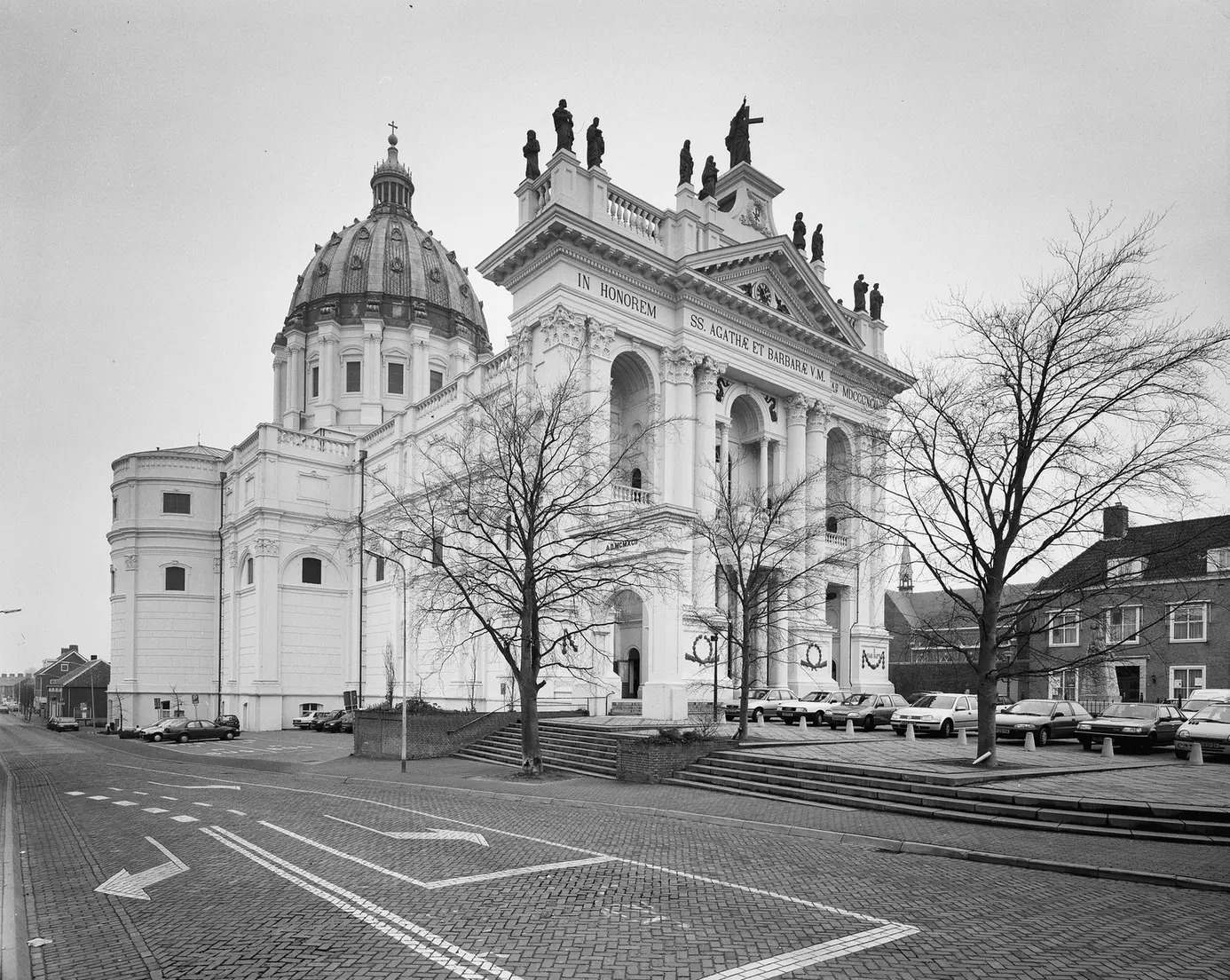
The tourist heart is in Oudenbosch, on the Markt. The Basilica of Saints Agatha and Barbara is a scaled-down copy of St Peter's in Rome. On the same square are the Dutch Zouaves Museum, about the volunteer soldiers of the pope, and the Natural History and Ethnology Museum.
Between Oudenbosch, Hoeven and Bosschenhoofd lies the Pagnevaartbos, a forest of about 35 hectares with an old peat canal. Hoeven also has the Hoevense Beemden, a polder landscape. In November and December the basilica is open daily from 10:00 to 16:00. Both museums are open on Saturdays and Sundays from 13:30 to 16:30.
See and do
Basilica of Oudenbosch
The Basilica of Saints Agatha and Barbara stands at Markt 57 in Oudenbosch. Pastor Willem Hellemons had it built from 1865 to a design by Pierre Cuypers. The building is a scaled-down copy of St Peter's in Rome: 81 metres long, 55 metres wide and 63 metres high. The church has been a basilica minor since 1912. Admission is free. From 1 October to 1 April it is open daily from 10:00 to 16:00.

Dutch Zouaves Museum, Oudenbosch
The Zouaves Museum at Markt 31 in Oudenbosch tells the story of the Zouaves, the volunteer soldiers of the pope. It covers the threatened Papal State, recruitment in the Netherlands, the journey to Rome and the return home. The museum is open on Tuesday, Wednesday, Saturday and Sunday afternoons from 13:30 to 16:30 and is closed at Christmas and on New Year's Day. Adults pay 5 euros.
Natural History and Ethnology Museum, Oudenbosch
The Natural History and Ethnology Museum is at Markt 30a in Oudenbosch, in the gateway. It has four permanent collections: nature, geology, ethnology and archaeology. An audio tour in seven languages covers 52 special objects, and children can follow a treasure hunt. The museum is open on Wednesdays, Saturdays and Sundays from 13:30 to 16:30. Adults pay 7.50 euros, children aged 5 to 12 pay 5 euros.
Pagnevaartbos, Hoeven
The Pagnevaartbos is a forest of about 35 hectares between Oudenbosch, Hoeven and Bosschenhoofd. It is freely accessible, except between sunset and sunrise. The Pagnevaart runs through the forest, an old peat canal to the harbour of Oudenbosch. Some of the paths are part of the Ommetje Bosschenhoofd walking route. A legend tells of a Spanish warship that ran aground here, with its remains still in the ground.
Hoevense Beemden, Hoeven
The Hoevense Beemden lie in Hoeven, north of the village. Peat was cut here in the 14th and 15th centuries. The area was later diked and became a polder used mainly as hayland. It is a quiet area with walking routes for walks of several kilometres. There is also a fishing pond, a well-known spot for anglers.
A day in Halderberge
A Saturday from 7 November to 19 December 2026. On Saturdays the basilica, the Natural History and Ethnology Museum and the Zouaves Museum are open. The Zouaves Museum is closed on 25 and 26 December 2026 and on 1 January 2027.
10.00 · Basilica of Oudenbosch
In winter the basilica at Markt 57 is open daily from 10:00 to 16:00. Admission is free. The crypt holds a museum about the history of the basilica and a shop. The shop is open daily from 13:00 to 16:00.
11.30 · Walk through the Pagnevaartbos, Hoeven
The forest of about 35 hectares is freely accessible, except between sunset and sunrise. Some of the paths are part of the Ommetje Bosschenhoofd walking route.
13.45 · Natural History and Ethnology Museum, Oudenbosch
The museum at Markt 30a is open on Saturdays from 13:30 to 16:30. Its collections cover nature, geology, ethnology and archaeology. Adults pay 7.50 euros.
15.00 · Zouaves Museum, Oudenbosch
The museum at Markt 31 is open on Saturdays from 13:30 to 16:30. Adults pay 5 euros and children under 12 pay 3 euros. Admission is free with a Museumkaart.
Map and localities
More about the building of the basilica
Pastor Hellemons had a scaled-down copy of St Peter's built in Oudenbosch, to a design by Pierre Cuypers.
Pastor Willem Hellemons came to Oudenbosch in 1842. He had studied in Rome and found the old St Agatha church, built in 1425, too small for the growing parish. His models were the basilicas of Rome, including St Peter's and St John Lateran.
Construction began in 1865 to a design by Pierre Cuypers. Oudenbosch then had about 3,500 inhabitants. The facade is by G.J. van Swaay and follows St John Lateran. Kees Raaijmakers, a native of Oudenbosch, painted and decorated the interior until the end of the Second World War.
Key figures and transport
Population
31,484
Area
75.21 km²
Water
0.73 km²
Localities
5
Reference date · 1 January 2026
Stations
Search Holland Magazine
Nature, heritage and culture
The Zouaves in Oudenbosch
The Zouaves were volunteer soldiers who fought for the pope. The Zouaves Museum covers the threatened Papal State, recruitment in the Netherlands, the journey to Rome, the course of the fighting in Italy and the return to the Netherlands.
Oudenbosch was a gathering place and a reunion site for former Zouaves. In 1911 a Zouave monument was placed on the square in front of the basilica.
Peat and polder near Hoeven
The Pagnevaart is an old peat canal that runs through the Pagnevaartbos. It ran to the harbour of Oudenbosch and carried peat towards Breda and Dordrecht.
Peat was cut in the Hoevense Beemden in the 14th and 15th centuries. The area was later diked and became a polder, used mainly as hayland.