On the Waddenzee, bird migration carries the season onward
By mid-October the wader migration on Schiermonnikoog is almost over. At Zwarte Haan, avocets and curlews are still a reason to look out over the mudflats.
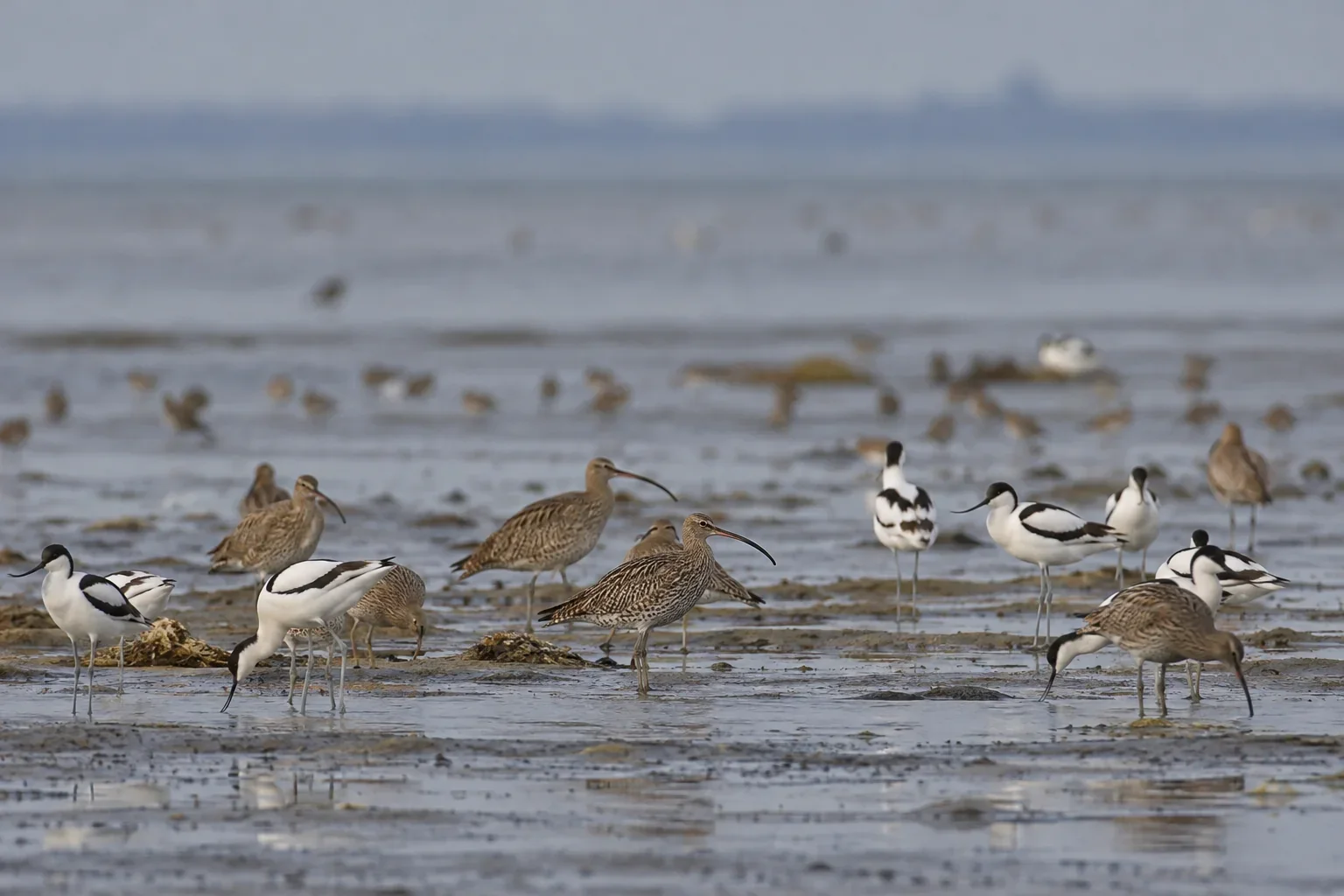
Every spring and autumn, millions of migratory birds visit the Waddenzee, according to the Waddenvereniging. Birds that breed in the north come to the area in late summer. Some overwinter there; others travel on south. The Waddenzee is thus a stop on a much longer route.
Natuurmonumenten describes the Wadden area as a link on the East Atlantic flyway, from Siberia and north-eastern Canada via the Waddenzee to the West African coast. On the Rif at Schiermonnikoog the autumn migration is busiest from late July to about mid-October.

At high tide, curlews, oystercatchers, redshanks, shelducks and gulls, among others, rest at the edges of the Rif, according to Natuurmonumenten. That is a different picture from a continuous stream of birds above the beach: many animals use the mudflats precisely to rest.
At Zwarte Haan, VisitWadden mentions avocets, red knots, curlews, dunlins and bar-tailed godwits. The tourism site sees August to October as a good period, with large groups of avocets and other waders. Around 14 October a visit therefore falls at the end of the busiest migration window on the Rif, but still within the season mentioned for Zwarte Haan.
Anyone going to look at Zwarte Haan can, according to VisitWadden, be there at least an hour before high tide. The dyke offers a view. The salt marsh at the foot of the dyke is unsuitable for approaching birds: there is a risk of disturbance and the water can rise quickly. The tide table for 14 October determines the suitable arrival time.
For brent geese the peak comes later. The Waddenvereniging writes that from late November or early December the area receives many geese again each year. The brent goose breeds on the Siberian tundra and migrates towards the Netherlands in autumn. Mid-October is therefore not a confirmed high point for that species.